Review Effectiveness of non-pharmacological interventions for fatigue in long term conditions: systematic review & network meta-analysis, 2026, Leaviss

Dolphin

Senior Member (Voting Rights)

Research•13 March 2026
publication details
open access icon
Open access


Effectiveness of non-pharmacological interventions for fatigue in long term conditions: systematic review and network meta-analysis​

Author affiliations


Joanna Leaviss1
orcid logo


,
Jessica E Forsyth1
orcid logo


,
Andrew Booth1

,
David Coyle2

,
George Daly1
orcid logo


,
Sarah Davis1
orcid logo


,
Helen Dawes3

,
Vincent Deary4
orcid logo


,
Kritica Dwivedi1

,
Kate Fryer1
orcid logo


,
Samantha McCormick5

,
Marissa Martyn-St James1

,
Julia Newton6

,
Shijie Ren1
orcid logo


,
Gillian Rooney1
orcid logo


,
Anthea Sutton1
orcid logo


,
Mon Mon-Yee1
orcid logo


,
Christopher Burton1
orcid logo
email

Hide authors

Abstract​

Objective To assess the clinical effectiveness of non-pharmacological interventions for fatigue in adults with long term medical conditions.

Design Systematic review and network meta-analysis.

Data sources Medline, Embase, CINAHL, APA PsycInfo, Web of Science Core Collection, and the Cochrane Central Register of Controlled Trials, from database inception to 28 September-3 October 2023, and updated 23-24 September 2024.

Eligibility criteria for selecting studies Randomised controlled trials of non-pharmacological interventions for fatigue in long term medical conditions where fatigue was a criterion for inclusion, the primary target of the intervention, or the primary or co-primary outcome. Excluded were studies of fatigue in people with cancer, in relation to or after infection, or resulting from injuries or developmental disorders. Studies were limited to European-style healthcare systems.

Results 88 randomised controlled trials were included, comprising 6636 participants for the end of treatment analyses, 1849 participants for the short term (≤3 months after the end of treatment) analyses, and 2322 participants for the long term (>3 months) analyses, allocated to one of 27 interventions. The most common condition studied was multiple sclerosis (51 studies). A range of interventions were identified, and heterogeneity was found within intervention groups and between individual interventions. Interventions varied by duration, delivery methods, and intensity. Compared with usual care, interventions based on cognitive behavioural therapy (CBT) significantly reduced fatigue at the end of treatment (standardised mean difference −0.63, 95% credible interval (CrI) −0.87 to −0.40, 17 studies) and at the long term follow-up (−0.40, −0.63 to −0.21, nine studies). Promotion of physical activity significantly reduced fatigue at all three time points: end of treatment (standardised mean difference −0.32, 95% CrI −0.62 to −0.01, seven studies), short term (−0.51, −0.84 to −0.17, one study), and long term (−0.52, −0.86 to −0.18, two studies). Self-management focusing on energy conservation was not significantly beneficial at the end of treatment (standardised mean difference −0.20, 95% CrI −0.52 to 0.12, 10 studies) or at the short term follow-up (−0.13, −0.51 to 0.25, seven studies) but at longer term follow-up, comparable benefit with other interventions was suggested (−0.42, −0.90 to 0.09, three studies). The standard deviation of the variation between studies in the end of treatment, short term, and long term network meta-analyses indicated moderate heterogeneity of studies in each of the analyses. No significant inconsistency was detected within the networks.

Conclusions Interventions that support individuals to increase physical activity or that are based on CBT were effective in reducing fatigue in people with long term medical conditions. The strength of the evidence was moderate to low. Although relatively few studies in any condition other than multiple sclerosis exist, the magnitude of effect seemed to be similar across different conditions.

Systematic review registration PROSPERO CRD42023440141.

What is already known on this topic​

  • Fatigue is common in long term medical conditions
  • Clinical trials in specific conditions suggest benefit from non-pharmacologic interventions for fatigue

What this study adds​

  • Interventions that support individuals to increase physical activity or that are based on cognitive behavioural approaches were effective in reducing fatigue in people with long term medical conditions
  • The strength of the evidence for these findings was moderate to low, with considerable heterogeneity between studies and within intervention categories

How this study might affect research, practice, or policy​

  • Clinical services should find ways to offer these interventions to people with fatigue associated with long term conditions
  • Research should evaluate the feasibility and effectiveness of providing interventions in a transdiagnostic way, rather than for individual medical conditions
 
We conducted a systematic review and network meta-analysis to investigate the clinical effectiveness of non-pharmacological interventions for fatigue in long term conditions. We chose to conduct a network meta-analysis to compare multiple interventions. The scope of the review reflects the specification of the funders in their call for commissioned research, which specifically excluded fatigue after cancer, fatigue after infection (including myalgic encephalomyelitis or chronic fatigue syndrome), and fatigue in conditions where the diagnosis relies only on symptoms. This evaluation of clinical effectiveness comprises one part of a larger evidence synthesis about interventions for fatigue in long term medical conditions: health economic30 and qualitative components (Booth, in press) are reported separately.

--

Population​

We included adults with a long term condition, based on the NHS definition as “an illness that cannot be cured but that can usually be controlled with medicines or other treatments.” The commissioning brief specifically excluded fatigue in people with cancer, in relation to or after infection (HIV, hepatitis C, long covid, and myalgic encephalomyelitis or chronic fatigue syndrome), or resulting from injuries or developmental disorders. Also excluded were conditions where symptoms, rather than observable pathology, were the defining features (eg, fibromyalgia or irritable bowel syndrome).
--
 

What this study adds​

  • Interventions that support individuals to increase physical activity or that are based on cognitive behavioural approaches were effective in reducing fatigue in people with long term medical conditions
Not really - see the next quote.
Self-management focusing on energy conservation was not significantly beneficial at the end of treatment (standardised mean difference −0.20, 95% CrI −0.52 to 0.12, 10 studies) or at the short term follow-up (−0.13, −0.51 to 0.25, seven studies) but at longer term follow-up, comparable benefit with other interventions was suggested (−0.42, −0.90 to 0.09, three studies).
So the few studies with long term follow up showed comparable benefit from 'energy conservation' and increasing physical activity. Doesn't that scupper the supposed point of the exercise interventions, just as the long term follow up of PACE showed no between group differences.
 
Although relatively few studies in any condition other than multiple sclerosis exist, the magnitude of effect seemed to be similar across different conditions
Obviously if you filter almost all of them out because they are of such abysmal quality, that only leaves a few, but then it makes that statement very dishonest. Wow is the abstract overall deceitful, though. It's so hard to reconcile this with this being the work of professionals.

Their exclusion criteria are completely arbitrary as well, but I guess it makes it easier to then argue for more trials on the basis that there aren't enough. Never enough trials. There must always be more trials, identical to all the ones already completed, it's the only rule of evidence-based medicine.

What's even more amazing is that those results (no difference) are the exact same as in the conditions they excluded, which nullifies the excuses they used. All that matters is that the gravy trolley keeps plowing through the tracks with the most victims. It is their only operating need as trolley conductors.

I really wonder how many systematic reviews we are at by now. Must be at least 40, likely 50. Probably twice as many if we go very wide and include anything vaguely about fatigue. Which would be far too many trials, let alone systematic reviews. None of which are systematic anyway, filtering out the near totality of trials while hiding the fact that they have to do it, and still only barely come out with "this might be helpful to some". Basically doing 99% cherry-picking and ending up with the smushed remains of what could be described that might have been a cherry.
So the few studies with long term follow up showed comparable benefit from 'energy conservation' and increasing physical activity. Doesn't that scupper the supposed point of the exercise interventions, just as the long term follow up of PACE showed no between group differences.
Unfortunately that's the downside, for patients, and upside, for serial trialists, of pretending that every patient is a special unique snowflake and everything must be personalized. Everything must be tried, including polar opposites. It all makes sense if you never, ever think about it.
 
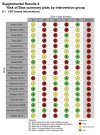
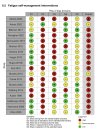
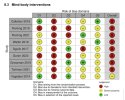
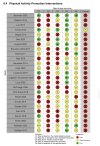
The strength of the evidence was moderate to low.
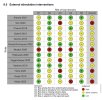
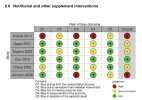
Yeah, sure, that’s what this risk of bias assessment indicates:
IMG_0644.jpegIMG_0645.jpegIMG_0646.jpegIMG_0647.jpegIMG_0648.jpegIMG_0649.jpeg

Why can’t people call a spade a spade and say that the research is fatally flawed and there is no evidence that instructing the patients to do X is better than letting them do what they think works best for them?
 
Back
Top Bottom