Review Effects of Positive Psychology Interventions on Inflammatory Biomarkers and Cortisol: A Systematic review.... - Eilertsen et al, 2025

Kalliope

Senior Member (Voting Rights)

Abstract​

There is growing interest in how well-being-enhancing activities influence stress and health.

Positive psychology interventions (PPIs) foster such activities, but evidence regarding their physiological effects remains fragmented. This review aimed to examine the effects of PPIs on two physiological indicators of stress via a systematic literature review and meta-analysis.

We included randomized controlled trials (RCTs) assessing the effects of PPIs on inflammatory biomarkers and/or cortisol in adult clinical and non-clinical populations. Searches were conducted in MEDLINE, Embase, PsycINFO, Epistemonikos, and clinical trial registries (from January 2000 to June 2023).

Two reviewers independently screened studies, extracted data, and assessed risk of bias. Random-effects meta-analyses using robust variance estimation accounted for statistical dependencies. Effects were reported as Cohen’s d with 95% confidence intervals (CIs) and heterogeneity as prediction intervals (PIs). Twenty-five RCTs (N = 1,641) were included. Common PPIs included music, nature exposure, gratitude, optimism, kindness, and meaning-focused activities.

The overall effect was d = 0.39 (95% CI: 0.16, 0.62). The effect estimates were significant for inflammatory biomarkers (d = 0.46, 95% CI: 0.02, 0.89), but not for cortisol (d = 0.30, 95% CI: − 0.10, 0.71). A significant effect was observed in clinical groups (d = 0.61, 95% CI: 0.17, 1.04); the effect in non-clinical groups was non-significant (d = 0.23, 95% CI: − 0.01, 0.79). High heterogeneity and risk of bias warrant cautious interpretation.

These findings suggest that PPIs may reduce inflammatory biomarkers. The clinical relevance of these effects remains uncertain and warrants further investigation, particularly in relation to long-term outcomes.

 
The Norwegian Institute of Public Health (FHI) is behind this review and had an article yesterday about it which was picked up by the newspaper Klassekampen. The newspaper boiled it down to - smiling leads to less inflammation -, so that seems to be the message. I'm pretty sure we'll se this review being used as proof for more mind-body approaches in general.

FHI : Positiv psykologi-aktiviteter kan redusere betennelsen i kroppen

Couldn't Google translate the article, so asked ChatGPT for a summary in English:

The Norwegian Institute of Public Health (FHI) reports that positive psychology activities—such as gratitude exercises, optimism training, listening to music, and spending time in nature—can lead to small to moderate reductions in inflammation markers in adults. These positive psychology interventions (PPIs) are structured activities designed to boost well-being and resilience. A systematic review of 25 studies showed moderate decreases in inflammatory biomarkers and C-reactive protein (CRP), especially among older adults and people with health issues; effects on cortisol were less clear. The findings suggest mind-body connections where psychological well-being activities might help reduce stress and inflammation, potentially benefiting overall health, though results vary and long-term effects are uncertain.
 
IMG_0547.jpeg
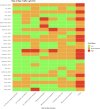
They seem to be saying that blinding doesn’t matter for these studies.

But if you assume that positive thinking can affect these biological variables, then you also have to assume that knowing you’re getting an intervention that might be beneficial in itself can affect the biological variables.

Therefore, lack of blinding is an issue, and all of the studies should have been rated as high risk of bias.
 
This stuff has nothing to do with stress, though. Among many, many other problems with it.

Most of this stuff has been pushed for decades by business consultants, to boost productivity. It has failed, and mostly stopped. The whole idea is silly anyway. Now there is a trend to go with things closer to 'biohacking', involving supplements and stimulants. It will also fails, because it is also silly nonsense. It's as if alchemy were still alive and had simply shifted away from chemistry and onto wellness. As if.
High heterogeneity and risk of bias warrant cautious interpretation.
smiling leads to less inflammation
Ah, well, nevertheless. Obviously nothing of the sort can be concluded, but this is evidence-based medicine, it's not as if it needs to be real, it just has to 'feel' like it's possible.
When grouping the PPIs by type of intervention—regardless of the outcome measure—no statistically significant effect sizes were found.
Single element PPIs included music interventions (k = 5), spending time in nature or gardening (k = 4), practicing gratitude (k = 3), exercises to foster optimism (k = 2), meaning interventions (k = 2), acts of kindness (k = 2), relationship strengthening (k = 2), development of realistic expectations (k = 1), and goal setting and achievement (k = 1).
Then obviously this means none of this is legitimate or makes any sense. It's the complete lack of questioning that is so bizarre. Whenever a discussion turns into psychosomatics, medical professionals basically turn into Joe Rogan, they accept anything, even especially things that don't make sense. It's very rare to see this level of groupthink and inability to even question the most basic nonsense outside of cults or coercive systems.

If someone were to make a joke discipline to embarrass science as basically rigged and clownish, this is what it would look like. I don't know what it will take for the medical profession to admit that this way of doing things is completely useless. Those tools, used the way they are, don't actually do what they think they do.

Frankly, to explain why the medical profession is so damn gullible over this stuff would probably require expertise in addiction, especially as it relates to gambling. There is clearly an element of that here.
 
Did they control for financial & housing stress, and being subject to endless arbitrary psycho-drama and morality play soaked impositions, for example, and try relieving that?

Start with the basics first.

Whenever a discussion turns into psychosomatics, medical professionals basically turn into Joe Rogan, they accept anything, even especially things that don't make sense. It's very rare to see this level of groupthink and inability to even question the most basic nonsense outside of cults or coercive systems.
This.
 
Back
Top Bottom