Andy
Senior Member (Voting rights)
Highlights
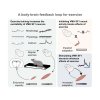
• The brain is a key intermediate for physiological improvement following exercise
• Exercise strengthens inputs to and increases the activity of VMH SF1 neurons
• Activation of VMH SF1 neurons following exercise is required to improve endurance
• Exogenous activation of VMH SF1 neurons following exercise enhances endurance gains
Summary
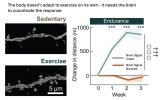
Repeated exercise produces robust physiological benefits and is the leading lifestyle intervention for human health. The benefits from exercise training result from the remodeling of skeletomuscular, cardiovascular, metabolic, and endocrine systems. In mice, we find that activation of the central nervous system following exercise is essential for subsequent endurance performance and metabolism benefits. Ventromedial hypothalamic steroidogenic factor-1 (SF1) neurons are activated following exercise, and repeated training results in increased post-exercise SF1 neuron activation. Exercise training increases the intrinsic excitability and density of excitatory synapses on SF1 neurons, suggesting that exercise history is encoded through hypothalamic plasticity. Inhibition of SF1 neuron output blocks endurance gains and metabolic improvements that result from exercise training. Conversely, stimulation of SF1 neurons following exercise enhances gains in endurance. These results demonstrate that exercise-induced hypothalamic SF1 neuron activity is essential for the coordination of physiological improvements following exercise training.
Open access
• The brain is a key intermediate for physiological improvement following exercise
• Exercise strengthens inputs to and increases the activity of VMH SF1 neurons
• Activation of VMH SF1 neurons following exercise is required to improve endurance
• Exogenous activation of VMH SF1 neurons following exercise enhances endurance gains
Summary
Repeated exercise produces robust physiological benefits and is the leading lifestyle intervention for human health. The benefits from exercise training result from the remodeling of skeletomuscular, cardiovascular, metabolic, and endocrine systems. In mice, we find that activation of the central nervous system following exercise is essential for subsequent endurance performance and metabolism benefits. Ventromedial hypothalamic steroidogenic factor-1 (SF1) neurons are activated following exercise, and repeated training results in increased post-exercise SF1 neuron activation. Exercise training increases the intrinsic excitability and density of excitatory synapses on SF1 neurons, suggesting that exercise history is encoded through hypothalamic plasticity. Inhibition of SF1 neuron output blocks endurance gains and metabolic improvements that result from exercise training. Conversely, stimulation of SF1 neurons following exercise enhances gains in endurance. These results demonstrate that exercise-induced hypothalamic SF1 neuron activity is essential for the coordination of physiological improvements following exercise training.
Open access