Rehabilitation providers’ experiences with long COVID care in Canada: a qualitative study, 2025, Leighton

Dolphin

Senior Member (Voting Rights)

Rehabilitation providers’ experiences with long COVID care in Canada: a qualitative study

Jaylyn Leighton, Isabel Heldmann, Kate Van de Ven, Logan Reis, Abirami Vijayakumar, Robert Simpson, Michelle LA Nelson, Christine Sheppard, Lawrence (Larry) Robinson, Rosalie Steinberg, Melody Nguyen, Mark Bayley, Nick Daneman, Charissa Levy, Chester Ho, Susie Goulding, Sander L. Hitzig & Marina B. Wasilewski

To cite this article:
Jaylyn Leighton, Isabel Heldmann, Kate Van de Ven, Logan Reis, Abirami Vijayakumar, Robert Simpson, Michelle LA Nelson, Christine Sheppard, Lawrence (Larry) Robinson, Rosalie Steinberg, Melody Nguyen, Mark Bayley, Nick Daneman, Charissa Levy, Chester Ho, Susie Goulding, Sander L. Hitzig & Marina B. Wasilewski (02 Dec 2025): Rehabilitation providers’ experiences with long COVID care in Canada: a qualitative study, Disability and Rehabilitation, DOI: 10.1080/09638288.2025.2583734

Abstract​

Purpose​

To examine the experiences, challenges, and recommendations of Canadian Rehabilitation Providers delivering care to people with Long COVID (PWLC), with the goal of informing best practices and guiding service and policy improvements.

Materials and Methods​

A qualitative descriptive study was conducted using semi-structured interviews with 32 Rehabilitation Providers from multiple disciplines and provinces across Canada. Participants were purposively sampled and interviewed between April 2022 and January 2023. Data were analyzed using codebook thematic analysis, incorporating inter-coder and inter-rater agreement and reflexivity practices.

Results​

Three central themes emerged: (1) Providers faced substantial barriers, including limited infrastructure, resource constraints, and misinformation about Long COVID; (2) In the absence of formal guidelines, providers adapted their practices through individualized care planning, trial-and-error, and peer learning; and (3) Participants emphasized key components of effective rehabilitation, such as validating patient experiences, promoting self-management and pacing, integrating caregiver support, facilitating peer connections, and fostering inter-professional collaboration.

Conclusion​

Rehabilitation Providers have been critical in addressing the evolving needs of PWLC despite inadequate systemic support. Their insights point to the need for coordinated, interdisciplinary, and patient-centered care models, alongside investment in professional training, system infrastructure, and integrated policy responses for current and future post-viral conditions.

IMPLICATIONS OF REHABILITATION​


  • Rehabilitation professionals are recommending individualized and flexible care approaches focused on symptom validation and energy conservation, due to the diverse and unpredictable nature of Long COVID.
  • In the absence of formal guidelines, rehabilitation professionals have adapted practices in real time, emphasizing the urgent need for standardized, evidence-informed Long COVID rehabilitation frameworks
  • Effective Long COVID rehabilitation includes patient and caregiver education, integration of peer support, and the promotion of self-management strategies to enhance recovery and reduce isolation.
  • Interdisciplinary collaboration and system-level integration are critical to ensure continuity of care and to build sustainable rehabilitation pathways for emerging chronic conditions like Long COVID.

Keywords:

 
Many Rehabilitation Providers described feeling uncertain and anxious about this re-deployment as they had to navigate new terrain. For example, Rehabilitation Provider 11 (Occupational Therapist) emphasized the fear Rehabilitation Professionals were experiencing, stating, “[Rehabilitation Providers] were just so afraid of pushing people [PWLC] too far, and making sure that they weren’t actually setting people back.” This fear contributed to uncertainty among Rehabilitation Providers, who lacked confidence in how to proceed safely with rehabilitation practices for PWLC.

Despite similarities to other chronic illnesses, Rehabilitation Providers noted that Long COVID had its own unique set of symptoms and needs that required specific attention. For example, Rehabilitation Provider 27 (Occupational Therapist), said, “[we] were definitely seeing new and unique symptoms that were coming up with post-COVID that we hadn’t seen in other conditions.”As a result, many Rehabilitation Providers shared realizing that traditional rehabilitation ideologies, such as that of “no pain, no gain, kind of model”(Rehabilitation Provider08, Psychologist) – clashed with the need for careful pacing and symptom management in Long COVID rehab, “it goes against everything we know about rehabilitation’ (Rehabilitation Provider08, Psychologist). As such, Rehabilitation Providers were cautious about their rehabilitation prescriptions and sought out ways to adapt their practices to be more appropriate for Long COVID
It’s nice to see this discussed, but I don’t know what they think they know about rehab. I have yet to encounter a single rehab study for any condition of sufficient quality and with convincing results. Have I missed any?
As well, Rehabilitation Provider06 (Physiatrist), mentioned that they were “working a lot with pacing and energy conservation…repeatedly teach people [PWLC] that if you get tired folding a shirt, then you only fold half a shirt today, tomorrow you can work up to folding a shirt and maybe down the road you can fold three shirts.”
And of course they have to do pacing up, because it wouldn’t be rehab without a conviction that they can do something to cause an improvement.

I’ve spent more time than I would like talking to people like this. I have yet to encounter anyone that can give any explanation for why pacing up would cause an improvement, other than just saying that that’s how the body works.

I think there’s an urgent need for some kind of writeup of why «it works for some» or «they got better so that means it worked» isn’t evidence of efficacy, especially in the absence of adequate evidence from proper trials.
 
"repeatedly teach people [PWLC] that if you get tired folding a shirt, then you only fold half a shirt today, tomorrow you can work up to folding a shirt and maybe down the road you can fold three shirts.”

It's always folding laundry in these examples, isn't it? So you'd get the impression patients are just too dim to realise they don't have to fold a whole load of laundry in one go.

It would help these therapists if they tried substituting some other activities, things that are actually difficult to pace and can't always just be abandoned mid-task, to maybe understand why patients don't automatically find it simple.

... repeatedly teach people that if you get tired putting your children to bed, then you only put half a child to bed today, tomorrow you can work up to a whole child and maybe down the road you can put three children to bed.

... repeatedly teach people that if you get tired brushing your teeth, then you only brush half of one tooth today, tomorrow you can work up to brushing two teeth and maybe down the road you can brush all your teeth.

... repeatedly teach people that if you get tired having to make a phone call to the DWP to try and understand why they've cut off your only income support, then you only make half a phone call today, tomorrow you can work up to a whole phone call...
 
The shirt example starting with folding half a shirt reminds me of someone I know being advised by an OT to make her trip (taken by car and wheelchair) to the local library more managable and less exhausting by breaking it up into stages over several days.

We had fun imagining where she was supposed to go between arrival at the library one day, selecting her books the next day, and travelling home the day after that.

The mind boggles at what idiotic things therapists say.
 
The shirt example starting with folding half a shirt reminds me of someone I know being advised by an OT to make her trip (taken by car and wheelchair) to the local library more managable and less exhausting by breaking it up into stages over several days.

We had fun imagining where she was supposed to go between arrival at the library one day, selecting her books the next day, and travelling home the day after that.

The mind boggles at what idiotic things therapists say.
How to fold one shirt:
  1. Go to the laundry room
  2. Take shirt down from clothesline
  3. Fold shirt
  4. Put shirt away
  5. Go back to the chair/sofa/bed
How someone can look at the list and think that the limiting factor is step 3, is truly beyond me.
 
I don't feel like reading this in-depth, maybe they do hint at it, but aside from the absurd assertion about this being new and never-before-seen, which does not suggest much about their ability to learn, they seem to completely miss the fact that in itself rehabilitation is not even close to be a working solution. It's not even 1% of the way to being good enough.

As they point out with difficulties folding a single shirt, it misses out completely on the fact that it's usually not possible to live like this. Help and support for this kind of illness is totally lacking and that even in the absolute best case scenario they will never actually move the needle more than the smallest possible fraction. It's fine if it's just a few weeks but then rehabilitation wouldn't be needed, so it would literally be needed the most by those it can help the least. This is totally broken.

So then what is the point? Because even if we were to compare this to the absolute best case, if there were enough clinics and therapists to provide sound rehabilitation to everyone, which is ludicrous, the resources don't exist for this and would probably be in the 100x ballpark compared to what exists, it still wouldn't be anywhere close to what's needed. It's simply not a solution, is a total dead-end.

I'm sorry but experts have to be able to say those things. If someone is tasked with digging a large dam and reservoir and all they're given is 5 dudes with shovels then they have to say "no way, this project will simply never work out". About the best historical comparison I can think of would be type 1 diabetes before insulin. They did all sorts of horrible things to them, in addition to the horror of the disease itself, and it was never anywhere close to being good enough, exactly as far as rehabilitation is for this type of problem. It's not even a stop-gap measure, it's a distraction.

Medicine's obsession with simple-but-wrong solutions to difficult problems has itself become one of its most limiting factors. They think and act small, fail to deliver, but still call it good enough and "let's keep at it" when it's so obviously a lost cause.

We need better. We deserve better. This will never be good enough and it has to stop.
 
Instructions for folding shirts:

1. Don't fold shirt.

2. If t-shirt, then throw into draw.

3. If collared, then throw over bedhead.

End.

----------------------

There are some actions/tasks which require you to do (more-or-less) the whole thing in one go, especially if you want to minimise the overall effort. Such as weekly shopping, washing a load of clothes, cooking a meal, many cleaning jobs (doesn't make sense to only sweep half the floor). You can't do half a visit to the dentist. Etc. It's a long list.

These people think we are feckless wayward morons who need to be firmly guided back to reality by wise superior experts to get the most minimal of daily tasks done in our lives.

It is beyond infuriatingly wrong, insulting, demeaning and cruel. It is also very dangerous to be portrayed and perceived that way by the rest of society.

Not that anybody here needs that pointed out to them.
 
We need a regular person to go undercover and expose the level of pointless BS “advice” we get. Apparently when we point out how dumb it is, we are the problem.
BRB just setting off to the library. Got my tent and sleeping bag, army supplies rations and phone, see you next week!
 
It's always folding laundry in these examples, isn't it? So you'd get the impression patients are just too dim to realise they don't have to fold a whole load of laundry in one go.
It also completely lacks the depth of what it means to be so limited. Ask any MD about diseases or conditions that are that limiting and disabling and they would have to think very hard if they couldn't bring up the obvious ones where there is a physical impairment such as paralysis, nerve damage and the like. And it would almost never be about a problem of energy, it would be more about things like Parkinson's where it's very hard, or temporary things like recovering from a heart attack or advanced cancer.

This isn't just limiting, it's completely ruinous. It's a level of impairment that makes any sort of normal living simply impossible. But they just never think in those terms. They don't understand that the gap between this and normal life is basically as wide as that of a destitute person living on the streets and a multimillionaire, and it's all because they seem to accept the absurd notion that it's all a problem of motivation, or something like it. A mindset, not a real limitation. Beliefs are still central to medical practice, maybe even more than ever.
We need a regular person to go undercover and expose the level of pointless BS “advice” we get. Apparently when we point out how dumb it is, we are the problem.
BRB just setting off to the library. Got my tent and sleeping bag, army supplies rations and phone, see you next week!
And it completely misses how absurd it is to think that making a living like this is feasible. It's not even 1% of the performance of a normal healthy person. Why would anyone pay more than 1% of a normal wage for it? It's completely out of touch with reality.
 
It also completely lacks the depth of what it means to be so limited. Ask any MD about diseases or conditions that are that limiting and disabling and they would have to think very hard if they couldn't bring up the obvious ones where there is a physical impairment such as paralysis, nerve damage and the like. And it would almost never be about a problem of energy, it would be more about things like Parkinson's where it's very hard, or temporary things like recovering from a heart attack or advanced cancer.

This isn't just limiting, it's completely ruinous. It's a level of impairment that makes any sort of normal living simply impossible. But they just never think in those terms. They don't understand that the gap between this and normal life is basically as wide as that of a destitute person living on the streets and a multimillionaire.
It’s absurd. I know many people that a very severely affected by neurodegenerative diseases, and while there are aspects of life where they are more limited than me, and they certain experience things that I wouldn’t wish upon anyone, they are still able to so many things that I just can’t. And I’m «only» severe.

ME/CFS feels like it affects every aspect of your life equally, while it feels like most other diseases only affect some aspects very severely, while others are much less affected, at least until the very late stages. So you can do some things despite your illness, where that’s just not an option with ME/CFS.
 
My friends who had, and died of Parkinsons' disease and motor neuron disease were more able bodied than me until they weren't and became totally incapacitated and then died. I don't think it's helpful to compare degrees of disability between diseases.
 
My friends who had, and died of Parkinsons' disease and motor neuron disease were more able bodied than me until they weren't and became totally incapacitated and then died. I don't think it's helpful to compare degrees of disability between diseases.
I understand where you’re coming from, but I do think there is a need to discuss how different diseases can affect people differently. So not the degree of disability, but rather the nature of the disability.

Most people have seen late stage Alzheimer’s, Parkinson’s, MS, cancer, paraplegia or similar diseases. If not in people close to them, at least through the media. So they have at least some ability to understand how it affects the people that have those illnesses.

Very few people have any reasonable conception of what ME/CFS looks like.

To me, ME/CFS feels like all of the walls have closed in on me at to mostly the same extent. While some of the other illnesses, at least until the later stages for the progressive ones, have some walls closing in faster than others, until everything collapses altogether.

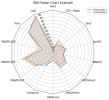
If you plot ME/CFS in a «disability radar chart» (like this example), it would be a pretty uniform circular shape. Most illnesses are more irregularly shaped, at least that’s my impression.
IMG_0525.png

That’s not to say that one is better or worse than another. Just that society at large has a difficult time conceiving of ME/CFS-like disability, which causes some particular challenges.
 
Doesn't everyone just shove the shirts into the drawer without folding them, like me???
It’s fiddling whilst Rome burns/deckchairs on titanic stuff distraction

But then most of us have been so brutalized for decades by the attitude we have we just end being grateful for the still useless story at least validating that we don’t have enough energy to go round vs the push thru idea.

But it’s not just terrible laziness it’s terrible harmful misinformation to people severe like me. I try and access things I need and am not taken seriously because this bs makes the person on the other side think I’m just struggling like they are as a well person with a busy life . They’ve no clue the energy to just try and explain to them the can’t lift arms at all to do anything for much of many days is in itself not possible even if they didn’t have secret blocks in their ears to not believe what’s so exhausting to try and say any way

Even I start wondering is it something else causing this in my arms and having to support my head. But can’t get it investigated without risk of the fnd type being locked up or forced into rehab type things that I think led to this in the first place.

Anyway it’s pretty terrifying having to wait to be able to move your arms and having to have faith that it will ‘come back’ . Even more so when you think even the ‘most understanding help’ is thinking at this level and that we’ve suddenly taken an intellectual dip to needing this, at the same time we’ve the biggest communication task in the world trying to convince someone who feels sorry for their own lot and ‘tired’ and isn’t being given any time or resources or anywhere good to shove us off too (only harmful places to shove us) and all other services are going to be awkward either way us because of misinformation … to be respectful enough to have a real conversation on something that matters

The folding laundry example is good because it shows how minimizations is chosen and sewn in

Of course we don’t have neat drawers and never have but when you can’t brush your teeth but people don’t believe you aren’t too unwell to work then making that the topic is just filibustering, heartbreaking filibustering so that they don’t give the patient time to try and educate them because they don’t want to hear or ‘get involved in’ what we have and what they can’t/won’t offer. Decades on of this and that being ‘managed’ technique is so common I know it down pat and it’s the most dehumanizing thing but happens so regularly from so many people
 
My friends who had, and died of Parkinsons' disease and motor neuron disease were more able bodied than me until they weren't and became totally incapacitated and then died. I don't think it's helpful to compare degrees of disability between diseases.
It's not about comparing diseases to one another, although it is something standard, this is why every study showing differences with healthy controls is criticized for not comparing to other illnesses, but rather that the level of impairment in ME/CFS is on the very low end for all diseases except, as you point out, in the late stages right before death or with some of the most horrible conditions out there.

There is something clearly wrong with how functioning is assessed. The level of functioning in ME/CFS is found to be among the lowest, but it's somehow dismissed as unimportant, because reasons. Even though the same level of impairment from most other diseases is the stage at which end-of-life care is about all that's left.

Comparing is fundamental to the human experience. Without it it's impossible to have proper context. It can be done absolutely, such as being so ill one can't even fold a few shirts, but that still falls flat because it can be conceived as a mental/behavioural problem rather than a 'true' limitation. Other than that it's common for physicians to dismiss our problems because we don't have cancer. Nevermind that lots of people with cancer can function better than we do. Until they can't. And the point of that is that this level of loss of function is on the extreme low end.

Medicine does those comparisons all the time. Which is a reason we kind of have to. Even though they never lead anywhere because in the end beliefs is all that really matters. It's not about who gets it worse, it's about the fact that our reality is fully denied. It wouldn't even make sense for any health care professional to offer rehabilitation to someone in end-of-life levels of impairment. It all depends on beliefs. Everything does.
 
And we live in a society where politicians have to chose what to spend money on, so they’ll always compare the alternatives.

I think the funding vs degree of disability or funding vs DALY are some of the most compelling political arguments for why ME/CFS needs more funding.

Or we could just point at the list or basic studies that have not been done yet, like this.
 
Back
Top Bottom