Opinion The role of co-infection in the pathogenesis of acute SARS-CoV-2 infection and development of post-acute sequelae: A perspective, 2025, Henrich et al.

SNT Gatchaman

Senior Member (Voting Rights)
Staff member
The role of co-infection in the pathogenesis of acute SARS-CoV-2 infection and development of post-acute sequelae: A perspective
Timothy J Henrich; Christopher P Montgomery; Joerg Graf; Nahed Ismali; Sindhu Mohandas; Mehul S Suthar; Hassan Brim; John M Coffin; Aayush Pagaria; Jeisac Guzmán Rivera; Urmila Vudali; Paul Keim; Guangming Zhong; Rebecca McGrath; Belinda Edwards; Adolfo García-Sastre; Maria Laura Gennaro

A major health challenge resulting from the COVID-19 pandemic is the manifestation of post-acute sequelae of SARS-CoV-2 (PASC). PASC (or long COVID) is a collective term used for clinical symptoms, various pathologies, and life-quality-changing functional impairment that persist for months to years after the initial SARS-CoV-2 infection. The mechanisms underlying PASC are not understood, although advances have been made in identifying factors that may contribute to long-term pathology.

Recent data have emerged, showing an association between SARS-CoV-2 viral persistence and non-SARS-CoV-2 infections (pre-existing, viral reactivation, or new infections) in facilitating or mediating PASC. However, the heterogeneous nature and timing of co-infections have made it challenging to understand, interpret, and contextualize their contribution to PASC.

Here, we summarize the impact of potential viral, bacterial, and fungal infections on SARS-CoV-2 pathogenesis, with a focus on their possible roles in the development of PASC. We also provide a framework to understand the mechanisms of PASC and inform basic, translational, and clinical research initiatives, including RECOVER, a large and ongoing research initiative to understand, treat, and prevent long COVID.

Web | DOI | eLife | Open Access
 
When there is real evidence for this, I had no escape having EBV and pneumonia together as my starting point of ME/CFS.
And as fas as I know I didnt even get covid, but all the more reason to keep as far away from it as I can.
 

News Release 10-Dec-2025

Could hidden infections be fueling long COVID?​

Peer-Reviewed Publication
Rutgers University


For millions suffering from long COVID, their persistent breathlessness, brain fog and fatigue remain a maddening mystery, but a group of leading microbiologists think they may have cracked the case.

The culprit for some long COVID cases, they suggest, might be other infections that accompany SARS-CoV-2.

A review published in eLife by 17 experts, including those from Rutgers Health, argues that co-infections acquired before or during COVID could cause symptoms to persist indefinitely for many people.

"This is an aspect of long COVID that is not talked about a lot," said Maria Laura Gennaro, a microbiologist at the Rutgers New Jersey Medical School who chaired the Microbiology Task Force for the National Institutes of Health's Researching COVID to Enhance Recovery initiative, a large-scale study of long COVID.

Long COVID symptoms, which have affected up to 400 million people worldwide, range from mild impairment to severe disability, striking the brain, heart, lungs and digestive system. Yet no proven treatments exist because the underlying causes remain unknown.

The new review synthesizes existing research and expert judgment to make a case that has received little attention: Infections beyond the coronavirus may be critical players.

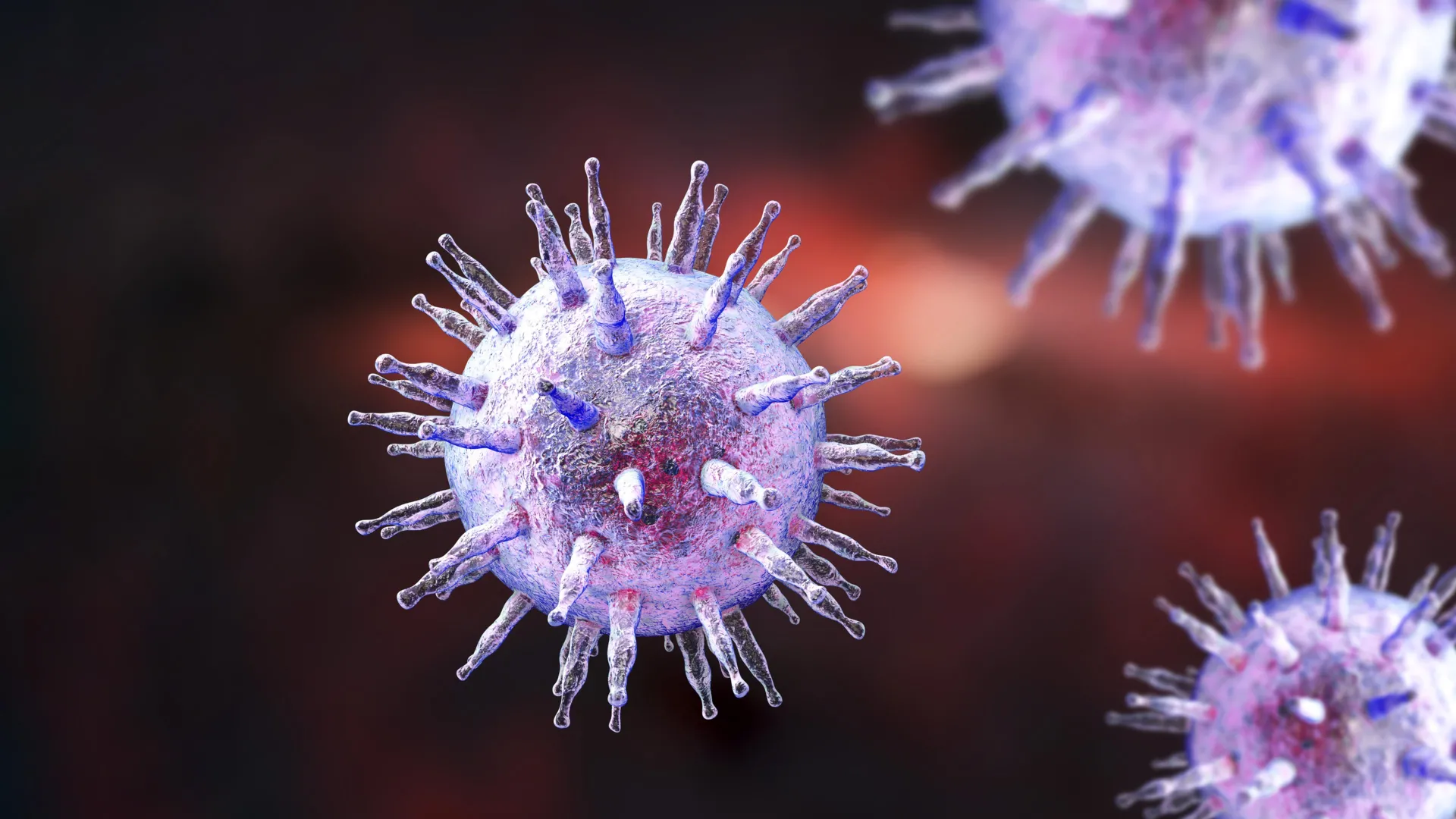
The most compelling evidence involves Epstein-Barr virus (EBV), the pathogen that causes mononucleosis. About 95% of adults carry latent EBV, typically without symptoms until an immune disruption such as COVID awakens the dormant virus.

Researchers of one early study found that two-thirds of people with long COVID showed signs of recent EBV activity, and those with more symptoms had higher antibody levels. Later research linked EBV reactivation to long COVID hallmarks such as fatigue and cognitive problems.

Tuberculosis (TB) is another potential culprit. About one-quarter of the world's population carries latent TB. Evidence suggests COVID can deplete the immune cells that normally keep TB in check, potentially triggering reactivation. The relationship runs both ways: TB infection also may worsen COVID outcomes.

The timing of co-infections matters, the researchers said. Infections before COVID could leave the immune system compromised. Infections during acute illness could compound tissue damage. Infections afterward could exploit post-COVID immune dysfunction.

The authors noted that 44 nations have experienced tenfold increases in at least 13 infectious diseases compared with pre-pandemic levels. One explanation they cite, called "immunity theft," describes heightened vulnerability to other infections following acute COVID.

If co-infections contribute to long COVID, existing drugs might help. Antibiotics and antivirals could potentially be repurposed to target underlying infections. Clinical trials could test whether treating specific co-infections relieves symptoms.

But the authors acknowledge their argument's limits. The associations they discuss are biologically plausible but remain speculative. No one has established a causal link between any co-infection and long COVID.

"Everyone has heard it a million times, but it bears repeating: Correlation doesn't equal causation," Gennaro said.

She said proving the hypothesis would require large epidemiological studies and animal experiments, which is complicated by the absence of good animal models for long COVID.

The researchers hope their work will open new lines of investigation. For the millions living with long COVID, the review offers no immediate answers, but its authors suggest that effective treatment may require looking beyond COVID itself.


Journal​

eLife

DOI​

10.7554/eLife.106308

Article Title​

The role of co-infection in the pathogenesis of acute SARS-CoV-2 infection and development of post-acute sequelae: A perspective

Article Publication Date​

20-Nov-2025

COI Statement​

Declared individually at the bottom of the paper, after citations.

 
Back
Top Bottom