“Are Dutch psychologists distancing themselves from graded activity in ME/CFS?” by Anil van der Zee

Dolphin

Senior Member (Voting Rights)
English-language version:
===
Automated translation from Anil van der Zee’s Facebook page

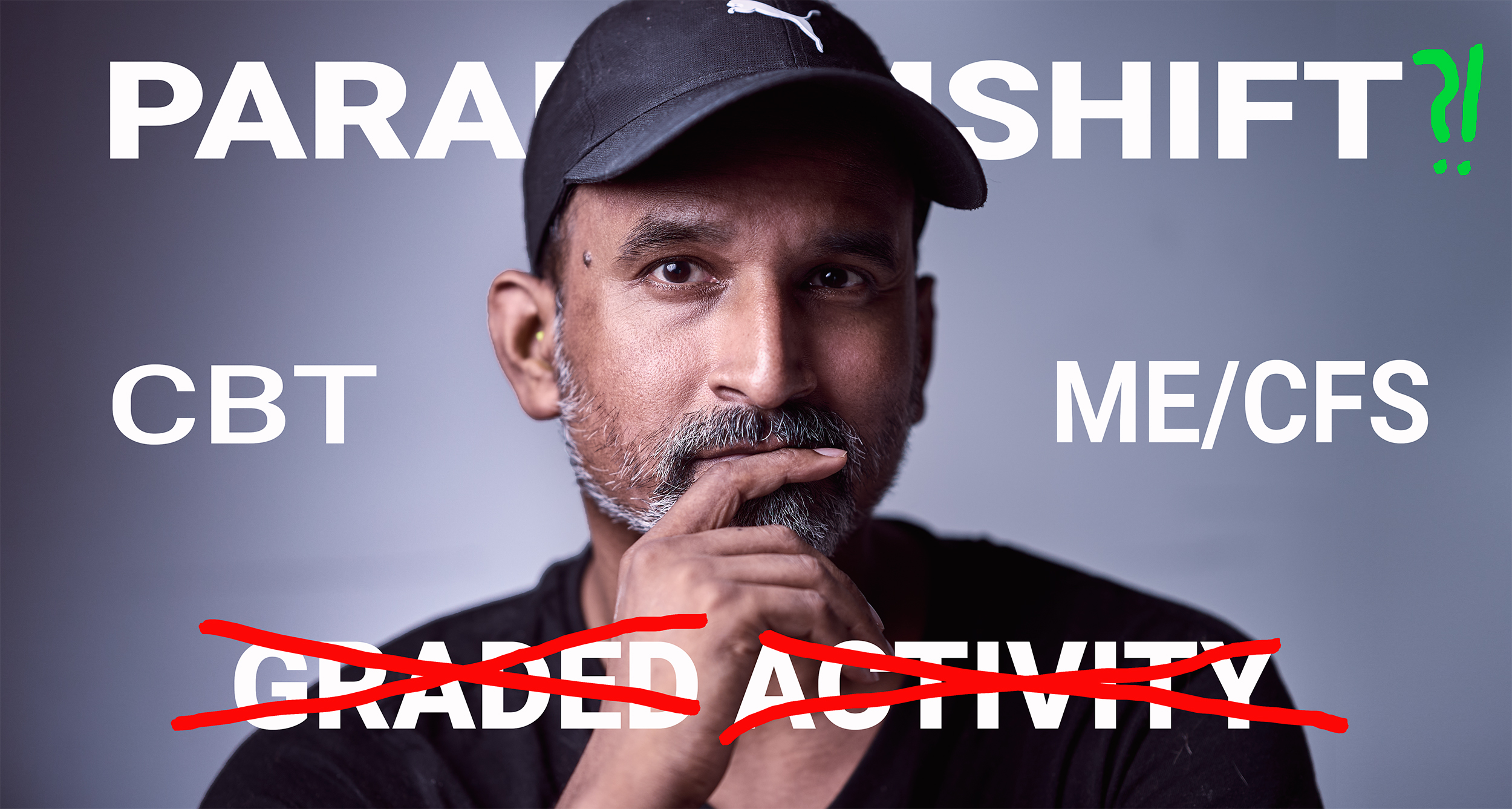
Clinical psychologists Klaas Huijbregts and Luuk Stroink published in the magazine Behavioral Therapy a critical article about the rigid application of #CGT at #MECVS with graded activity.

They state that this protocol approach violates the principles of CGT and regularly leads to iatrogenic damage. Compared to an earlier article by Huijbregts from 2021, there are clear forwarding insights.

Nevertheless, I found it a shame that the input of experienced psychologists and psychiatrists I know was missing. Because of that, in my opinion, the article contains factual errors and, despite positive elements, it remains partly adherence to potentially harmful approaches.

Neither did I always agree with their vision of how psychosocial care should be shaped.

That's why I dove deep into the matter. Hopefully that will help set some issues straight.

Despite these shortcomings, I see Huijbregts en Stronk's article as a positive development, even though it may take a much bigger step further.

Read how and why in my blog:


Thanks to everyone who provided feedback. ❤️
 
The article incorrectly uses the term ME/CFS for patients included in CBT research, even though CBT was developed and tested exclusively in CFS populations in which PEM was optional or even absent (Oxford, see also the PACE trial, Fukuda). For ME and ME/CFS, PEM, or becoming sicker after trivial exertion, is mandatory and appears historically in multiple terms and definitions.

The fact that ME was once reduced to (chronic) fatigue (syndrome), with PEM being ignored, has caused the patient community, which was barely heard, including by psychology, a great deal of iatrogenic harm.

Although patients did participate in studies, CBT studies are therefore not really about ME or ME/CFS, but about CFS. People with ME or ME/CFS always meet the CFS criteria, but people with CFS do not always meet the ME or ME/CFS criteria.

As a result, these studies do not represent the ME/CFS population well, and people with PEM may respond differently to treatment. The NICE guideline review therefore in part downgraded the strength of the evidence due to indirectness. Other reviews made the same distinction.

That is why I refer to CBT for CFS in the rest of the article. Using ME/CFS in this context is confusing and incorrect, and even later analyses that attempt to claim that CBT works for ME/CFS, and therefore with mandatory PEM, also show no objective improvement.

Unfortunately I think the argument made that patients defined by Oxford or Fukuda criteria and without PEM have "CFS", and not "ME or ME/CFS", is unhelpful and will just add to confusion amongst the patient population. Better, in my opinion, to say that Oxford and Fukuda criteria without PEM only identifies patients with chronic fatigue, especially if you continue to use "ME/CFS" as a term.
 
Unfortunately I think the argument made that patients defined by Oxford or Fukuda criteria and without PEM have "CFS", and not "ME or ME/CFS", is unhelpful and will just add to confusion amongst the patient population. Better, in my opinion, to say that Oxford and Fukuda criteria without PEM only identifies patients with chronic fatigue, especially if you continue to use "ME/CFS" as a term.
I completely agree. I think ME/CFS=ME=/=CFS is unhelpful and will just lead to further confusion amongst the patient cummunity and researchers.

Apart from that wasn't there an analysis showing that patients with PEM responded no different in PACE so isn't it all fairly irrelevant? In turn the article would then suggest that these therapies would be effective for chronic fatigue, because why else even mention all of that?

Edit: Or does one even want to argue that PACE should be re-run on patients identified by the CCC?
 
Last edited:
I really don’t understand the need to discuss the diagnostic criteria. None of the trials were good enough or demonstrated any benefit in any sufficiently reliable outcomes. There is no evidence for CBT or GET for any kind of conditions with chronic fatigue.

Just go after the results and methodology instead.
 
Diagnostic criteria is a critical part of the methodology in a treatment study.

But otherwise, I agree. It is largely irrelevant which criteria they use, none of the studies are demonstrating any consistent, sustained, robust, practically meaningful benefit, let alone genuine recovery.
 
Diagnostic criteria is a critical part of the methodology in a treatment study.
Arguments on diagnostic criteria influencing results are only relevant if you provide grounds for the belief that the interpolation from the CF population to the ME/CFS subpopulation doesn’t work. That is not the case in the piece above.

As far as I’m aware there is an analysis that suggests that the trial results look similar for them PEM population and argues for interpolating the results. Unless anybody provides a different analysis for this subpopulation (suggesting worse outcomes, higher dropouts or that the sample size is too small to say to say anything in the end), these arguments are not weak, they are counterproductive. Because all you're saying is actually that “we don’t know if it works because the wrong criteria were used” when in fact there’s an analysis suggesting the generalisability (or actually opposite) of the results. Which just means that you end up arguing CBT & GET work for ME/CFS. And afaik the trial hypothesis is that things should work even better with people with PEM, since these are the most “scared of exercise people”.

I think the situation is fairly simple:
  • The results hold for the CF population and interpolate to the ME/CFS subpopulation.
  • The results hold for the CF population but don’t interpolate to the ME/CFS subpopulation.
  • The results hold for the whole population and don’t show any meaningful clinical benefit, for example because all objective and long-term measures are null and because all other results are consistent with bias of open label trials which alter questionnaire answering.
The argument in the piece and the one that constantly comes up, most recently by a senior figure at Cochrane, is that of the second point, which is entirely counterproductive as I see it.
 
Yes, I think this argument about diagnostic criteria in relation to CBT is counterproductive. As far as we know it doesn't work however broad or narrow the cohort selection criteria.

Using CFS to cover 'non-ME/CFS chronic fatigue' is also very unhelpful. Chronic fatigue syndrome was not originally intended to mean chronic fatigue n.o.s. as far as I am aware. And there is no other fatigue 'syndrome' than ME/CFS as far as I know.
 
I agree that in relation to the symptom of fatigue that the criteria used in ME/CFS studies are not so relevant, for the reasons listed by others.

Chronic fatigue syndrome was not originally intended to mean chronic fatigue n.o.s. as far as I am aware.
IIRC, going back to at least the Holmes 1988 CFS criteria the symptom chronic fatigue has always been explicitly differentiated from chronic fatigue syndrome.
 
Back
Top Bottom