
A nationwide healthcare program for functional somatic disorders (FSD) in Denmark


ME/CFS is clearly included in the concept of Functional Somatic Syndromes, and Long COVID.Over the past decades, numerous specialty-specific functional somatic syndromes (FSS) such as irritable bowel syndrome, fibromyalgia, chronic fatigue syndrome, and most recently long-COVID have been introduced, and new syndromes continue to emerge. Studies consistently demonstrate a huge overlap between these syndromes [9,10]. The unifying evidence-based diagnosis bodily distress syndrome (BDS) was introduced in 2007 [2] This diagnosis has been rigorously validated across clinical settings [3], and it has been shown to be able to replace the functional syndrome diagnoses [9, 24]. In 2019, the BDS diagnosis was included in the Danish ICD-10 as a neutral R-diagnosis, thus avoiding controversies about psychiatric versus non-psychiatric classification [1,11]. The terminology was, however, changed to FSD to avoid confusion with the new but different ICD-11 diagnosis termed bodily distress disorder [1].
It's a bit weird to conflate people reporting symptoms after a vaccine with functional syndromes. Of course the linking of symptoms with a vaccine could well be wrong, but, in an environment where there is a lot of promotion of the idea of vaccine injury following a specific vaccine, it's to be expected. It doesn't mean the symptoms being reported are not true, it's just the linkage with the vaccine that becomes suspect.In response, the Danish Health Authority in 2018 initiated a national strategy to establish FSD as an acknowledged medical field . Several factors contributed to the development of a national strategy for FSD at that time. First, a convergence of key individuals with a strong interest in FSD emerged, including Professor Per Fink and the Health Authority Director General Søren Brostroem. In addition, a vaccination crisis arose when public criticism intensified following reports of multiple symptoms in young women attributed to the new HPV vaccine. This turning point led to several initiatives with the new national strategy as point of departure: the development of more specialized services, national public information, pre and post clinical education of healthcare professionals, a quality database aiming to improve care and reduce stigma and the establishment of the Danish Society for Functional Disorders.
That's a cunning plan. GPs are the gatekeepers to specialist and hospital care, so they are the ones that need to be trained to label anything not particularly clear as FSD, thereby ensuring that people with that label are quickly directed away from expensive investigations.The Danish healthcare system is tax-funded, and 98% of all Danes are listed with general practices, where general practitioners (GPs) serve as gatekeepers to specialist and hospital care. As part of the national FSD strategy from 2018, the Danish Health Authority mandated the development of FSD recommendations across all levels of care, i.e., local, regional, and highly specialized—ensuring equal access to coordinated and evidence-based care nationwide. The program is based on a stepped-care model where a minimum of 95% of patients are expected to be treated in primary care and at a non-specialized hospital care level. The recommendations encompass a diagnosis of FSD,specialized clinical services, and a clinical toolkit for GPs. Furthermore, physicians in relevant medical specialties are required to be skilled in the diagnosis and basic management of FSD (see Table 1).
I find all the rationale for the various labels (e.g. BDD, BDS, FSD) rather unclear and am not much motivated to understand it. But, the end result seems to be that, even if your GP has previously assessed you to be a person with no mental health issues, that is no protection from an FSD diagnosis.FSD unified the previous diagnoses of functional syndromes and is a central feature of the Danish model. Another rationale for developing the diagnosis FSD, was that the ICD-10/DSM-IV diagnosis somatoform disorder required symptoms to be attributed to a mental origin, which in
many cases could not be established.
At the same time, a systematic training program for general practice trainees was developed, alongside the establishment of a course in FSD at the Medical School. Since 2019, the five clinics have provided evidence-based, multimodal treatment delivered by a multidisciplinary staff including physicians, psychologists, physiotherapists, psychomotor therapists, nurses, and social workers while also functioning as hubs for professional training. The treatment programs have over the years been adjusted in accordance with the latest research to ensure a high standard of care.
A bio-psycho-social illness model and treatment options for FSD are presented. Treatment may include patient education, graded exercise therapy (GET), pharmacotherapy, and psychotherapy including group, individual and internet based
Two highly specialized inpatient units were established as a collaboration between the neurological rehabilitation and the FSD departments in the Capital Region and the Central Denmark Region. They provide care for patients with severe FSD including those with complex functional neurological disorders and CFS/ME who often have very low functional levels and may be bedbound and therefore cannot be managed in the outpatient service.
Pre-admission involves triage, diagnostic assessment and motivation
Diagnostic assessment and motivational work follow outpatient clinic procedures.
Inpatient admission at HHN consists of three phases: an initial assessment phase (1–2 weeks) to establish a therapeutic alliance; a specific rehabilitation phase with individualized treatment plans including graded physical exercise, environmental therapy, psychoeducation, psychotherapy, and home rehabilitation; and a discharge phase focused on municipal transition, coordinated post-discharge care, and follow-up. Aftercare continues at the Department of Functional Disorder’s outpatient clinic, AUH.
TerrifyingA nationwide healthcare program for functional somatic disorders (FSD) in Denmark
Background
Functional Somatic Disorders (FSD) are prevalent, costly for society and cause significant suffering for patients. The healthcare system has previously failed to provide adequate care for these patients, leading to prolonged and fragmented diagnostic processes. Major obstacles have been the lack of a clear classification of FSD and lack of prioritization of diagnosis and treatment of FSD by other medical specialties.
Methods
In 2018, the Danish Health Authority issued national recommendations to improve the quality of care for FSD nationwide across all levels of the healthcare system. The recommendations provide a framework to ensure evidence-based care.
Results
As part of the Danish program, FSD is included in the Danish medical specialty planning. The first Danish specialist department for FSD was established in 1999, followed by an additional four departments in 2019. Furthermore, two highly specialized inpatient services have been established. The unified FSD diagnosis is included in the Danish ICD-10 under the “neutral” and nonspecific R chapter. A national clinical database “FuncData” has been established as well as a compulsory educational program for GPs in training for specialization.
Conclusion
The Danish national strategy for FSD has been successfully implemented and integrated into the Danish health care system, achieving organizational integration and high levels of patient and physician satisfaction. The program provides a comprehensive, accessible, and evidence-based framework for managing FSD through a stepped-care approach and may serve as an inspiration for implementation in other countries.

21 is unblinded trial:Studies on patients in the longest-running clinic have shown that the treatment is effective and well tolerated by patients [21, 22].
 www.cambridge.org
Re- education I think is the term used instead of coercive psychology/brainwashing/straight coercion (behave right or we will keep you locked up until you will say you have something you don’t, own it, and then have that over your head lifelong )Outpatient treatment clinics
Inpatient services

I see no mention of efficacy.The Danish national strategy for FSD has been successfully implemented and integrated into the Danish health care system, achieving organizational integration and high levels of patient and physician satisfaction. The program provides a comprehensive, accessible, and evidence-based framework for managing FSD through a stepped-care approach and may serve as an inspiration for implementation in other countries.
That is exactly what it is happening. All because a few gargantuan egos can't admit they and the lurid fairy-tales in their heads are wrong.Sounds like a manifesto for forcing a dystopia where huge amounts of patients with real illnesses get systemically destroyed /taken apart /removed from rights

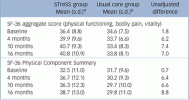
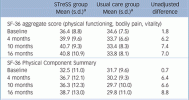
21 is unblinded trial:
Cognitive–behavioural group treatment for a range of functionalsomatic syndromes: Randomised trial | The British Journal of Psychiatry | Cambridge Core
Cognitive–behavioural group treatment for a range of functionalsomatic syndromes: Randomised trial - Volume 200 Issue 6
Primary outcome:
View attachment 31909
Fully compatible with bias alone.
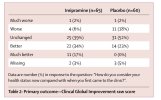
22 is this drug trial of Imipramine, a tricyclic antidepressant:
They used some weird outcome that will always favour the arm with bias, because it looks at in-group changes:
View attachment 31910
This commentary points out significant issued with blinding, maning the use of subjective outcomes problematic:
If this is all they’ve got to back up their approach, Denmark has some explaining to do..
Wait, so they renamed them, then renamed them, then renamed them again to avoid controversy and confusion. Even as they admit to play to the controversy over psychiatric attribution, which is systematically happening, with nonsensical explanations.Over the past decades, numerous specialty-specific functional somatic syndromes (FSS) such as irritable bowel syndrome, fibromyalgia, chronic fatigue syndrome, and most recently long-COVID have been introduced, and new syndromes continue to emerge. Studies consistently demonstrate a huge overlap between these syndromes [9,10]. The unifying evidence-based diagnosis bodily distress syndrome (BDS) was introduced in 2007 [2] This diagnosis has been rigorously validated across clinical settings [3], and it has been shown to be able to replace the functional syndrome diagnoses [9, 24]. In 2019, the BDS diagnosis was included in the Danish ICD-10 as a neutral R-diagnosis, thus avoiding controversies about psychiatric versus non-psychiatric classification [1,11]. The terminology was, however, changed to FSD to avoid confusion with the new but different ICD-11 diagnosis termed bodily distress disorder [1].
That's the perverse beauty of being in total control: no one has to explain anything here, they just do it and no one cares either way.If this is all they’ve got to back up their approach, Denmark has some explaining to do..
Yes it’s pure power.Wait, so they renamed them, then renamed them, then renamed them again to avoid controversy and confusion. Even as they admit to play to the controversy over psychiatric attribution, which is systematically happening, with nonsensical explanations.
Damn it's wild what people will justify when they can just do whatever they want but none of it is real.