[Abstract] Sera from dermatomyositis patients induce muscle weakness via activation of type I interferon (IFN) receptors, 2025, Kaewin et al.

jnmaciuch

Senior Member (Voting Rights)

[Abstract] Sera from dermatomyositis patients induce muscle weakness via activation of type I interferon (IFN) receptors​

Abstract/poster from the American College of Rheumatology 2025 conference

Suchada Kaewin, Cecilia Leijding, Kristofer Andreasson, Helene Alexanderson, Stefano Gastaldello, Ingrid Lundberg and Daniel C. Andersson

Background/Purpose: Dermatomyositis (DM) is a major subtype of idiopathic inflammatory myopathies (IIMs) and characterized by muscle weakness, systemic inflammation and cutaneous lesions. Expression of type I interferon (IFN)-stimulated genes have been found in muscle, skin tissue and peripheral blood cells which links to disease activity in DM patients. However, the mechanisms of muscle weakness in DM are incompletely understood. For instance, it is unclear to what degree systemic factors, eg IFN signalling, contribute to muscle weakness and disease phenotypes. This study aims to investigate whether inhibition of type I IFN signaling protects DM serum-induced muscle weakness and to determine the effects of IFN-a and/or IFN-b on muscle force generation.

Methods: An experimental platform was used in which isolated mouse muscles were exposed to DM patient serum or healthy control serum. Flexor digitorum brevis (FDB) muscles were isolated from healthy C57BL/6JRj mice and exposed to 10% dilution of serum from healthy controls or serum from DM patients for 24 hours. To determine whether inhibition of type I IFN protect DM serum-induced muscle weakness, an IFN-a/b receptor 1 (IFNR) blocking antibody was used. Isolated FDB muscles were pre-incubated with IFNAR1 antibody for 2 h and thereafter muscles were incubated in serum from DM patients with or without IFNAR1 antibody. To investigate the effect of IFN-a and/or IFN-b on muscle force generation, FDB muscles were incubated in 10% healthy control serum containing of 1,000U/ml of IFN-a and/or IFN-b. Muscle force was measured before and after incubation in a paired fashion.

Results: Serum from DM patients, but not from healthy controls, induced a decline in FDB muscle force. Treatment with an anti-IFN1R antibody protected from the DM serum-induced muscle force decline. Surprisingly, neither IFN-a nor IFN-b affected force production when incubated for 24h in isolation with the muscles. However in combination, IFN-a together with IFN-b, induceed a marked reduction in muscle force, which was rescued with addition of an IFN1R blocking antibody.

Conclusion: Serum from DM patients contain factors that can induce muscle weakness. One mechanism for this effect is mediated by pathways dependent on type I IFN Receptor signaling.

Link
 
Conclusion: Serum from DM patients contain factors that can induce muscle weakness. One mechanism for this effect is mediated by pathways dependent on type I IFN Receptor signaling.

The experimental conditions are so artificial that I think it is very difficult to judge whether this has anything to do with what happens in the disease. These muscle preparations aren't even vascularised, so all sorts of complex immune signalling systems will be upside down.
 
Recently rheumatology conference poster on dermatomyositis, an immune-mediated disease that presents with obvious muscle damage and muscle weakness. T cell infiltration and high type I interferon signatures are clinical features of the illness, though to what extent these findings are causal for the symptoms isn't well known. Treatments that specifically target T cells don't seem to be particularly effective for DM, and interferon receptor/JAK inhibitors are just starting to be investigated. Differential antibody levels have been found but it doesn't seem certain whether they are actually causal.

The goal of this study was to see if the specific cause of muscle weakness in DM could be teased out from all the different immune responses that are present in the disease.

1772388467769.png
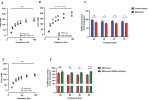
So when they exposed mouse muscle culture to serum from healthy controls and DM patients, only the DM patient serum induced weakness compared to the pre-exposure timepoint. Adding an antibody that blocks the type I interferon receptor seemed to remove that difference, making them think it's the type I interferon and not any other cytokines in the serum causing the weakness.

1772388778154.png

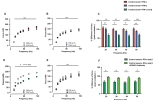
They try to confirm that by adding artificial interferon to the healthy control serum. Weirdly, adding IFNa or IFNb separately didn't cause any change. But since the DM serum contains both IFNs together, they tried adding both to healthy serum and saw that muscle weakness.

There seems to be some kind of a batch issue because the "pre-exposure" samples had different ranges between experiments. And they are showing SEM not standard deviation, so it's hard to tell how much the samples really varied between themselves. The two graphs that showed the biggest difference also happened to be the two where the "pre-exposure" values were the highest. It's an interesting experiment and might be useful for hypothesizing a mechanism of the muscle weakness pwME report sometimes, but might need to be replicated or have the data shown differently before I'd take it at face value
 
The experimental conditions are so artificial that I think it is very difficult to judge whether this has anything to do with what happens in the disease. These muscle preparations aren't even vascularised, so all sorts of complex immune signalling systems will be upside down.
Sure, you wouldn't be able to say for sure that this mimics exactly what happens in the disease. What it does show is that interferon induces differences in muscle force in an artificial setting, which could be helpful for teasing out what might have induced changes in similar artificial experiments in ME/CFS
 
Interesting comparison to Mughal et al.'s findings last year:
 
T cell infiltration and high type I interferon signatures are clinical features of the illness, though to what extent these findings are causal for the symptoms isn't well known.

As Jo Cambridge pointed out in the 1980s, dermatomyositis is different from polymyositis (another autoantibody-associated myopathy) in that there are significant numbers of B cell sin DM tissue but not PM. T cells go in to any inflammatory site so tell us nothing much. B cells don't, so there presence is interesting.
Treatments that specifically target T cells don't seem to be particularly effective for DM, and interferon receptor/JAK inhibitors are just starting to be investigated.

Yes, T cell targeting doesn't work. Rituximab produced remissions in at least some cases in the 2000s in our hands and Todd Levine's. I don't know what has happened since but I think rituximab is now a fairly standard treatment option. I don't think there is much doubt that the autoantibodies are pathogenic. Their targets correlate closely with pathological subtype. I don't think any one has found T cell reactivity to any of these, (although there is always someone who has a few clones that respond to whatever).

Autoantibodies in myositis mostly target proteins involved in protein synthesis - which makes sense since muscle is one of the tissue most dependent on daily protein synthesis in bulk. But DM is also charateristically associated with a vasculopathy that produces microvessel dilatation followed by local infarction, with regeneration, as seen in the classic nailfold lesions - distinct from scleroderma where regeneration fails.

The problem with an ex vivo mouse muscle system like this is that all the usual co-mediators like complement and endothelial adhesion molecules are factored out. I suspect that in the human autoantibodies poison cells, leading to structural failure in muscle and vessels because of blocking of protein based repair. In vivo in humans endothelial cells are exposed to 10 times as much antibody as other cells, which probably explains why vasculopathy is so often a feature of non-organ specific autoimmunity. That would not apply to a model without functional vessels. It all gets a bit irrelevant I think.

There seems to be some kind of a batch issue

Well spotted, I am not surprised. I am doubtful that this sort of experiment has ever really moved our understanding forward.
 
Well spotted, I am not surprised. I am doubtful that this sort of experiment has ever really moved our understanding forward.
I’m interested in it due to overlap with the Mughal study and the other “something in the blood” studies on muscle culture. Those studies may not tell us much about muscle functioning in ME/CFS either. But this abstract, even if it might have technical issues, means that there is a plausible link between interferon and muscle cell function so it’s a plausible candidate for what the “thing in the blood” might’ve been.

That’s one of the things I had wondered about the Ryback replication—it copied Fluge and Mella’s study to a T, except for actively encouraging participants to reschedule if they weren’t feeling well. Which, being someone already interested in interferon, makes me wonder if that’s why they got a negative result. Since collecting samples during PEM is a logistical nightmare, it might be more feasible to just do what this study did, and see if artificial IFNa + IFNb replicates the mitochondrial findings from the original Fluge and Mella study.
 
Back
Top Bottom