"An experimental new drug for stiff person syndrome restores mobility" Article, ScienceNews

Mij

Senior Member (Voting Rights)
There are no FDA-approved treatments yet for the disease known for affecting Celine Dion

A living drug could dial back the debilitating symptoms of stiff person syndrome.

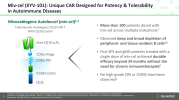
After just a single infusion, patients with the autoimmune disorder saw meaningful improvements in mobility, stiffness and disability, neurologist Amanda Piquet reported April 21 at the annual American Academy of Neurology meeting in Chicago.

The drug, an experimental cell therapy called miv-cel, stands out from current treatment options for several reasons — including how well it appears to work. “The results of this trial are truly remarkable,” Piquet, of the University of Colorado Anschutz in Aurora, said at an April 13 news conference. “The magnitude and consistency of functional improvement observed is unprecedented.”

"Kyverna plans to request FDA approval for miv-cel in the first half of 2026. If approved, the therapy would be the first CAR T cell therapy for autoimmune disease."
 
Isn't this stuff prohibiviely expensive? Is it conceivable that it will become affordable enough to be standard?

Will certainly be incredibly expensive but these treatments would usually be taken only once to put you into remission?

Imagine here in the US biologic therapy costs insurance about $7k a month and you have to take it for life! Do the numbers it becomes $ millions over the years
 

also see press release

https://ir.kyvernatx.com/news-relea...-longer-term-phase-2-data-miv-cel-generalized

and full presentation

https://ir.kyvernatx.com/static-files/4bc255f4-3bcc-4afa-b9a8-8e4cbdaa43fb
 
Last edited:

@Jonathan Edwards what do you think about their B-cell CAR-T tech and work in neuroimmune disorders (SPS, gMG, MS) as well as RA, lupus, etc? I always thought that RituxME did not definitively show that B-cell depletion doesn't work in ME or the B cells aren't implicated because we see in other B-cell mediated autoimmune disorders that mAbs don't work in a significant proportion of patients, they don't do a deep enough depletion to be effective and for various reasons.

My hope is that the dara ME study will be successful and will also provide impetus to researchers to move forward with CAR-T approaches like this, especially if a signif subset of patients do not respond

Screenshot 2026-05-06 at 09-23-50 Kyverna -Corporate Presentation_March 2026_FINAL.pdf.png

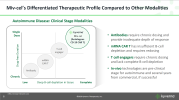
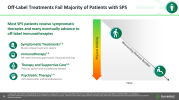
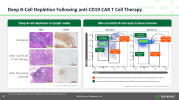
Screenshot 2026-05-06 at 09-10-59 Kyverna -Corporate Presentation_March 2026_FINAL.pdf.pngScreenshot 2026-05-06 at 09-10-40 Kyverna -Corporate Presentation_March 2026_FINAL.pdf.pngScreenshot 2026-05-06 at 09-46-55 Kyverna -Corporate Presentation_March 2026_FINAL.pdf.png
 
Last edited:
@Jonathan Edwards what do you think about their B-cell CAR-T tech

I don't think CAR-T is a viable option for proof of concept of B cell targeting for something like ME/CFS. We don't even know how much better it is for definite B cell mediated diseases than something like rituximab used intelligently. CAR-T is expensive and involves toxic preconditioning.
 
We don't even know how much better it is for definite B cell mediated diseases than something like rituximab used intelligently.
I believe if rituximab actually worked more or less as well (if it were used intelligently) then the cancer and autoimmune disease communities would have been using it properly by now and we wouldn't have the plethora of companies and research institutes developing CD19 CAR-T and other approaches (BCMA, etc). It really looks like mAbs do not deplete enough in important compartments like lymph nodes, only in peripheral blood (see slide 47 in presentation above for an example), and that there is a huge unmet need with many patients simply not responding to mAbs
 
I believe if rituximab actually worked more or less as well (if it were used intelligently) then the cancer and autoimmune disease communities would have been using it properly by now and we wouldn't have the plethora of companies and research institutes developing CD19 CAR-T and other approaches (BCMA, etc).

Firstly, I can assure you from years from now experience that people treating autoimmune disease do not have a clue about how to use rituximab intelligently. Rheumatologist have no clue about B cell dynamics - which is presumably why I was almost the only person to think of using rituximab for RA, lupus etc.. Oncology is quite different.

But that isn't the point. I have not seen good evidence for CAR-T working where rituximab did not work. There have been dramatic claims about cures lasting for ages for CAR-T but whenever Maria Leandro an I see presentations on this the data are no different from her results in 2000 on lupus with ritux. We had people staying well for years even then.

We know that depletion with standard ritux is not always complete, although for some of our cases it seems likely that it was and that the return of disease was because of survival of 'educator' plasma cell clones. I don't know of evidence on how complete depletion is with CAR-T. I suspect it may be similar - complete for some but not all.
 
CAR T cell therapy shows promise for treatment of stiff person syndrome

The results of a new phase II trial, presented by Amanda Piquet at the 2026 American Academy of Neurology Annual Meeting (18–22 April 2026, Chicago, Illinois, USA), indicate that a chimeric antigen receptor (CAR) T cell therapy is beneficial in individuals with stiff person syndrome (SPS). SPS is an autoimmune disease that causes muscle stiffness and painful spasms, and no therapies are currently approved for this condition.

Mivocabtagene autoleucel (miv-cel) is an autologous CD19-targeting CAR T cell therapy with CD28 co-stimulation that is designed to deplete B cells and ‘reset’ the immune system. In the KYSA-8 trial, 26 adults with SPS, all of whom had previously shown an inadequate response to immunomodulatory therapies, underwent lymphodepletion followed by a single infusion of miv-cel. After a median follow-up period of 6.5 months, the participants showed a median improvement of 4.8 s in the timed 25-foot walk test. The improvement was sustained at 24 weeks in 16 of the participants.

Published May 06, 2026: Nature Reviews Neurology

Paywalled
 
Back
Top Bottom