News from Austria and Switzerland

Hate to see infrastructure being built to support a more psychiatric view.

Although I have to say this doesn’t look like classical BPS/Psychosomatics more like if Biobabble and Psychiatry merged.
The treatment scheme used in the project, called “CoviKET,” begins with phytotherapy, followed by antidepressants and other psychotropic medications, sometimes in combination.
 

Long COVID Outpatient Clinic Planned – at the Department of Psychiatry at Vienna General Hospital (AKH Vienna)

AI Summary:


Studies where Lucie Bartova is involved:

FATIGEAT (in progress)


A particularly "charming" find are these presentation titles from the 50. Winterseminar "Biologische Psychiatrie":


Long Covid Outpatient Clinic Will Not Be Established After All

The Long Covid outpatient clinic planned at the psychiatric department of Vienna’s AKH will not be approved, the hospital announced. Previously, there had been strong criticism from experts of the proposed treatment concept, which was seen as equating Long Covid too closely with depression.

AI Translation:
The planned Long Covid outpatient clinic at the psychiatric department of the Vienna General Hospital (AKH) will not be approved, the hospital announced.
The decision followed strong criticism from experts regarding the proposed treatment concept, which was seen as equating Long Covid too closely with depression.

According to a written statement from the hospital’s press office, the hospital’s management did not approve the establishment of a Long Covid clinic at the University Clinic for Psychiatry and Psychotherapy because the treatment and especially the initial assessment of these patients primarily fall within the field of somatic medicine.
Patients with psychological symptoms can continue to be treated at the General Outpatient Clinic of the University Clinic for Psychiatry and Psychotherapy.

Until recently, internal planning for the clinic had apparently continued, and interested individuals could register on a telephone list.
ORF had previously reported on treatment attempts by a group led by psychiatrist and specialist in treatment-resistant depression, Lucie Bartova, at the University Clinic for Psychiatry and Psychotherapy at AKH Vienna.

The four-stage treatment concept used is based on a scheme applied for treatment-resistant depression.
It includes phytotherapy (herbal medicine), antidepressants, and other psychotropic drugs.
If these measures are ineffective, treatment with ketamine may be considered for a smaller group of patients.

Experts criticized the concept. Psychiatrist Georg Schomerus from the University Hospital Leipzig expressed surprise at the assumed similarity between Long Covid and depression, stating that there are clinically many differences from depressive disorders.
He also warned of a potential negative side effect: both the concept and the placement of a Long Covid clinic within psychiatry could reinforce the impression that Long Covid is a mental illness rather than a post-infectious immunological multisystem disease.
This, he argued, could have indirect consequences for overall medical care and further research efforts.

Further criticism came from German psychologist and psychotherapist Bettina Grande, who specializes in the care of Long Covid patients and in the multisystem disease ME/CFS, which can occur as a long-term consequence of Covid-19 infection.
She argued that Long Covid clinics should be located in immunology and neurology, or possibly in internal medicine, but clearly within somatic (physical) medicine.
 
Last edited:

A 3,000-word article exploring the challenges a 13-year-old girl with long COVID faces within the medical system in Basel, Switzerland.
By Lea Meister

The article contains particularly infuriating allegations against the Children’s Hospital in Basel (UKKB) where they would not even want to consider a diagnosis of Long Covid and instead practiced what I would consider child abuse:
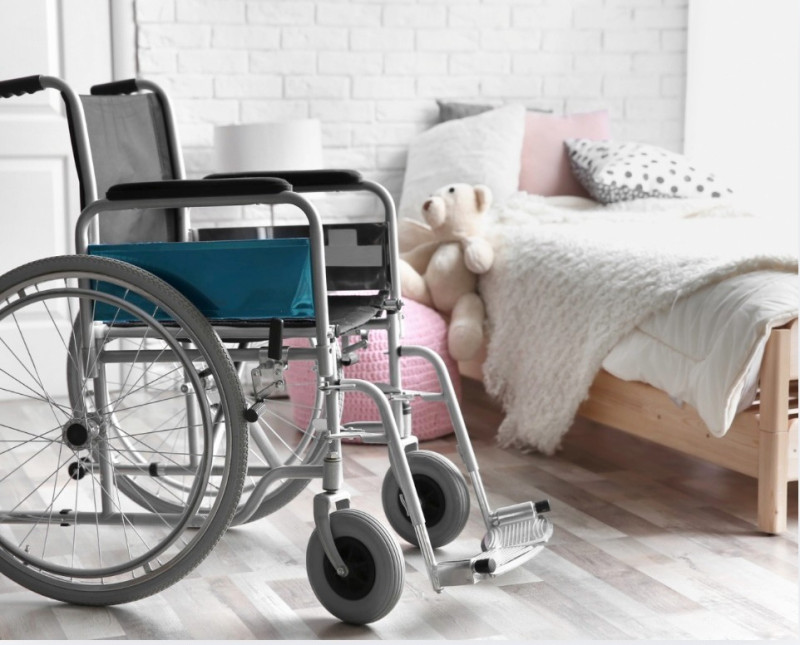
Her wheelchair was taken away – and Mira had to walk to Kleinbasel

“So we went to the University Children’s Hospital Basel (UKBB). In hindsight, that was a mistake,” Küng says. “They didn’t want to hear anything about a Long Covid diagnosis.” Mira’s gait disorder, she adds, was dismissed as “psychosomatic.”

At the time, Mira often relied on a wheelchair because even minor exertion left her so exhausted that her body would give out. At the UKBB, her wheelchair was reportedly taken away. “They locked it in a room,” Küng says. Afterwards, her daughter had to walk from the hospital to the Manor department store in Kleinbasel — on foot.

“That was very unpleasant for me,” Mira recalls. She says she repeatedly said she couldn’t go on. In the days that followed, she had pain in her legs and was extremely exhausted.

Mira says she did not feel taken seriously and felt that, “once again,” she had been pushed into the “psychosomatic” category. After ten days at the UKBB, Maya Küng took her daughter back home. Mira eventually received her Long Covid diagnosis in Baar, in the canton of Zug. She is now being treated by a doctor in Liestal.

UKBB responds to the allegations

The UKBB currently has no formal complaint on file regarding the allegations described, spokesperson Martin Bruni wrote in response to an inquiry from Prime News. Families and affected individuals can contact the hospital’s complaints management office “at any time and without complication.” The process is deliberately designed to be low-threshold so that feedback can be reviewed promptly and solutions can be found together.

The UKBB does not comment on “anonymized allegations in the media,” but says that feedback is taken “very seriously.” Differences in perception or expectations can occur. “We are always open to a personal conversation or a formal statement from the families concerned,” Bruni writes.

According to the hospital, treatment experiences and case numbers are “well documented” and provide no indication of a structural problem in the handling of Long Covid at the UKBB. The families involved are “explicitly” invited to present their perspective directly to the complaints management office so the case can be reviewed “professionally and carefully.”

AI Summary:
Thirteen-year-old Mira is a Long Covid patient in Switzerland. According to estimates, around 18,000 children and adolescents in the country may be affected. Many families report feeling left alone, not taken seriously, and confronted with a lack of willingness to properly investigate their children’s symptoms.

Mira was first infected with the coronavirus at age nine. After an initial recovery, her symptoms returned and lasted ten months. She suffered constant severe headaches, exercise intolerance, fatigue, and “brain fog.” At times, she could barely move between her bed and the sofa. After ten months, her condition improved and she was symptom-free for 14 months. In January 2024, she was infected again and has not fully recovered since. Her symptoms included exhaustion, sleep disturbances, cognitive decline, and a gait disorder. She often needed a wheelchair.

Her family sought medical help multiple times. At the Universitäts-Kinderspital beider Basel (UKBB), they felt Long Covid was dismissed and her gait disorder was described as psychosomatic. Her wheelchair was reportedly taken away during her stay, and she was made to walk despite exhaustion. Mira said she did not feel taken seriously. After ten days, her mother took her home. She later received a Long Covid diagnosis from a specialist in another canton and is now treated by a doctor in Liestal.

The association Long Covid Kids Schweiz reports that many affected families experience stigmatization and that children are often not taken seriously. Some are labeled as school refusers, and in certain cases parents have even lost custody rights. The association calls for greater recognition of Long Covid and ME/CFS as physical illnesses and for improved knowledge among medical professionals.

In Basel, few cases are officially known to the association, and the region is described as a “blank spot” in terms of diagnosis. The UKBB stated that it has received no formal complaint regarding the reported case and that there is no indication of a structural problem in handling Long Covid. Basel-Stadt officials say that complex cases are referred to the UKBB and that most children show improvement within a year, though no comprehensive cantonal data exist.

At the national level, the Swiss government has been tasked with developing a strategy to improve the situation of people with ME/CFS and Long Covid. The goal is to ensure equal medical care across the country, including timely diagnosis and access to evidence-based therapies.

Mira currently attends secondary school twice a week. Her school is described as understanding, but her request to follow lessons online from home was rejected for data protection reasons. Her family continues to focus on rebuilding her health, while hoping for further improvement.
 
Back
Top Bottom