

Formerhuman
Established Member (Voting Rights)
An abstarct was presented during the American College of Cardiology's 75th Annual Scientific Session & Expo, 28-30 March 2026
BACKGROUND Patients with postural orthostatic tachycardia syndrome (POTS) exhibit unique hemodynamics. Invasive cardiopulmonary exercise testing (iCPET) may provide insights into POTS pathophysiology.
METHODS In this prospective cohort (2016-2025), we performed iCPET (arterial line for blood pressure and gases; right heart catheter for pulmonary hemodynamics; CPET for assessing the cardiopulmonary system) in patients with unexplained dyspnea and/or exercise intolerance using a standardized protocol of maximal tolerated exercise with an upright cycle ergometer at a large academic center. POTS was ascertained through chart review. We evaluated iCPET variables at rest and at peak exercise. Cardiac output (CO) and right atrial pressure (RAP) were measured at each stage of exercise.
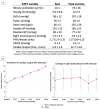
RESULTS Among 828 patients who underwent iCPET, 67 had a diagnosis of POTS: mean age 42 ± 14 years, mean BMI 27 ± 6 kg/m2 , 70% female. Mean effort achieved was 120 (IQR 100-140) Watts. CO reserve was less than 80% in 37% of patients (mean 85 ± 24%), CO percent predicted was less than 80% in 37% of patients (mean 89 ± 20%). Selected resting and peak exercise iCPET variables are shown in Panel A. There was a limited increase in CO and no significant increase in RAP (Panel B).
CONCLUSION Upright iCPET shows a blunted CO rise without a RAP increase, suggesting impaired venous return/preload may play a role in symptoms and limitations of POTS patients; iCPET clarifies the mechanisms of exercise intolerance and dyspnea in this population.
Source | PDF
Diego Ramonfaur, Bianca Honnekeri, Vaidehi Mendpara, Mohab Eid, Adele Watfa, Deborah Paul, Adriano R. Tonelli, Kenneth A. Mayuga
Cleveland Clinic, Cleveland, OH, USA
Cleveland Clinic, Cleveland, OH, USA
BACKGROUND Patients with postural orthostatic tachycardia syndrome (POTS) exhibit unique hemodynamics. Invasive cardiopulmonary exercise testing (iCPET) may provide insights into POTS pathophysiology.
METHODS In this prospective cohort (2016-2025), we performed iCPET (arterial line for blood pressure and gases; right heart catheter for pulmonary hemodynamics; CPET for assessing the cardiopulmonary system) in patients with unexplained dyspnea and/or exercise intolerance using a standardized protocol of maximal tolerated exercise with an upright cycle ergometer at a large academic center. POTS was ascertained through chart review. We evaluated iCPET variables at rest and at peak exercise. Cardiac output (CO) and right atrial pressure (RAP) were measured at each stage of exercise.
RESULTS Among 828 patients who underwent iCPET, 67 had a diagnosis of POTS: mean age 42 ± 14 years, mean BMI 27 ± 6 kg/m2 , 70% female. Mean effort achieved was 120 (IQR 100-140) Watts. CO reserve was less than 80% in 37% of patients (mean 85 ± 24%), CO percent predicted was less than 80% in 37% of patients (mean 89 ± 20%). Selected resting and peak exercise iCPET variables are shown in Panel A. There was a limited increase in CO and no significant increase in RAP (Panel B).
CONCLUSION Upright iCPET shows a blunted CO rise without a RAP increase, suggesting impaired venous return/preload may play a role in symptoms and limitations of POTS patients; iCPET clarifies the mechanisms of exercise intolerance and dyspnea in this population.
Source | PDF
