Murph
Senior Member (Voting Rights)
Abstract
The role of the immune system in regulating organismal lifespan remains poorly understood. Here, we show that CD4⁺ T cells release “telomere Rivers” into circulation after acquiring telomeres from antigen-presenting cells (APCs). River formation requires fatty acid oxidation at the T cell–APC synapse, which selectively excludes glyceraldehyde 3-phosphate dehydrogenase (GAPDH) from the telomere vesicles.
The resulting Rivers are depleted of glycolytic enzymes but enriched in T cell–derived stemness factors, enabling targeted rejuvenation of senescent tissues across multiple organs. In aged mice, adoptive transfer of young or metabolically reprogrammed CD4⁺ T cells triggered River production in vivo, and Rivers isolated from these animals could be transplanted into other aged mice to propagate the rejuvenation phenotype independently of T cells.
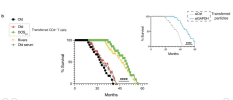
River therapy extended median lifespan by ∼17 months, with several mice surviving to nearly five years. This immune-driven telomere transfer pathway is conserved across kingdoms, including plants, defining the first systemic, transplantable programme of youth.
The role of the immune system in regulating organismal lifespan remains poorly understood. Here, we show that CD4⁺ T cells release “telomere Rivers” into circulation after acquiring telomeres from antigen-presenting cells (APCs). River formation requires fatty acid oxidation at the T cell–APC synapse, which selectively excludes glyceraldehyde 3-phosphate dehydrogenase (GAPDH) from the telomere vesicles.
The resulting Rivers are depleted of glycolytic enzymes but enriched in T cell–derived stemness factors, enabling targeted rejuvenation of senescent tissues across multiple organs. In aged mice, adoptive transfer of young or metabolically reprogrammed CD4⁺ T cells triggered River production in vivo, and Rivers isolated from these animals could be transplanted into other aged mice to propagate the rejuvenation phenotype independently of T cells.
River therapy extended median lifespan by ∼17 months, with several mice surviving to nearly five years. This immune-driven telomere transfer pathway is conserved across kingdoms, including plants, defining the first systemic, transplantable programme of youth.