ME/CFS Science Blog
Senior Member (Voting Rights)
Eccentric medium spiny neuron (eMSN) sometimes called eccentric spiny projection neurons (eSPNs) is the cell type that came up in Paolo Maccallini’s genetic analysis for ME/CFS. He used a meta-anaysis of DecodeME and the Million Veteran Program (Neff = 74,219). Using a tool called MAGMA, Paolo could match the DNA results with gene expression data from the human brain atlas published by Siletti et al. 2023. More about the methodology can be discussed in the thread on Paolo’s paper:
https://www.s4me.info/threads/biolo...encing-of-me-cfs-2026-maccallini-et-al.50225/
The genetic data for ME/CFS points to neurons, some brain regions, synapses, glutamergic signals even, but this is all still pretty general. The eMSN is intriguing because it is a bit more specific.
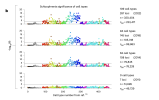
The human brain atlas by Siletti has around 460 cell types. I think Paolo only tested cell types in the brain, but the supplementary material still has like 2000 rows and only 52 of those were for eMSN. So think it’s a pretty clear signal if 14/19 significant results are for eMSN.
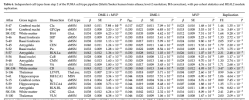
I looked at some of the genes associated with these cell types but each of them showed a rather weak signal in the DNA data for DecodeME. So, I think the DNA signal pointing to these eMSN is spread out across the genome and that it isn’t a couple of strong DNA hits that put them all on the top of the significance list.
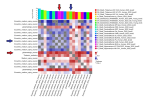
I don’t have much experience with this but I suspect the conditional analysis shown in figure 4 below tells the same story. The blue square that eMSN form show they cancel each other out indicating a signal across the genome. If it were just a couple of genes associated with ME/CFS, then there would be more asymmetry if you condition one eMSN on another (if I understand correctly).
So, I think this is something to take seriously. A recent study that used the same MAGMA approach of linking GWAS with gene expression found that the most significant cell type for schizophrenia was interneurons, for MS it was T and B cells, for Alzheimer disease microglia. For ME/CFS it’s apparently the eccentric medium spiny neuron.
https://www.nature.com/articles/s41593-024-01834-w
As Paolo explained in his paper, scientists have only recently discovered the cell type around 2018, first in mice and then in humans. Medium spiny neurons were known to be the dominant type in the striatum. They take glutamergic input are modulated by dopamine while using GABA as output to inhibit neural networks. People thought that there were only two types of these medium spiny neurons and they were grouped by their dopamine receptors D1 (enhances excitability) or D2 (decreases excitability). Simplified, D1 is associated with promoting selected actions while D2 suppressing competing or unwanted actions. Around 2018, people discovered is that there’s a third type that has both D1 and D2 and a separate genetic profile, which is why they are called ‘eccentric’. They are suspected to be involved in more complex behavior make that involves weighing conflict info, but their function is largely unknown. They were one of more than 10 cell types associated with schizophrenia in the study mentioned above.
There will likely be many more cell types associated with ME/CFS when statistical power increases (Paolo also found an independent signal for glutamatergic Neurons in White Matter). But I think the eMSN as the most prominent cell type is intriguing. It might make the ‘symptom signalling’ hypothesis that we discussed previously, a bit more concrete. The signal might for example consist of an excess of inhibitory GABA signalling across the basal ganglia.
The symptom signaling theory of ME/CFS involving neurons and their synapses | Science for ME
I also found a study that suggest that these eMSN might produce corticotropin releasing factor (CRF) as co-transmitter. More precisely it found that some spiny projection neurons in the nucleus accumbens produce CRF and that most of these have more markers typical of eMSN.
https://pubmed.ncbi.nlm.nih.gov/39005420/
That might tie with the reduction in CRF producing cells that the Dutch autopsy study found. It’s a bit of a stretch but perhaps the eMSN that are involved in ME/CFS (not particularly located to the nucleus accumbens but spread out across the brain) use CRF as a co-transmitter. Perhaps they are overactive, releasing too much CRH so that other CRH-producing cells like in the hypothalamus are epigenetically reprogrammed to stop making it?
https://www.s4me.info/threads/biolo...encing-of-me-cfs-2026-maccallini-et-al.50225/
The genetic data for ME/CFS points to neurons, some brain regions, synapses, glutamergic signals even, but this is all still pretty general. The eMSN is intriguing because it is a bit more specific.
The human brain atlas by Siletti has around 460 cell types. I think Paolo only tested cell types in the brain, but the supplementary material still has like 2000 rows and only 52 of those were for eMSN. So think it’s a pretty clear signal if 14/19 significant results are for eMSN.
I looked at some of the genes associated with these cell types but each of them showed a rather weak signal in the DNA data for DecodeME. So, I think the DNA signal pointing to these eMSN is spread out across the genome and that it isn’t a couple of strong DNA hits that put them all on the top of the significance list.
I don’t have much experience with this but I suspect the conditional analysis shown in figure 4 below tells the same story. The blue square that eMSN form show they cancel each other out indicating a signal across the genome. If it were just a couple of genes associated with ME/CFS, then there would be more asymmetry if you condition one eMSN on another (if I understand correctly).
So, I think this is something to take seriously. A recent study that used the same MAGMA approach of linking GWAS with gene expression found that the most significant cell type for schizophrenia was interneurons, for MS it was T and B cells, for Alzheimer disease microglia. For ME/CFS it’s apparently the eccentric medium spiny neuron.
https://www.nature.com/articles/s41593-024-01834-w
As Paolo explained in his paper, scientists have only recently discovered the cell type around 2018, first in mice and then in humans. Medium spiny neurons were known to be the dominant type in the striatum. They take glutamergic input are modulated by dopamine while using GABA as output to inhibit neural networks. People thought that there were only two types of these medium spiny neurons and they were grouped by their dopamine receptors D1 (enhances excitability) or D2 (decreases excitability). Simplified, D1 is associated with promoting selected actions while D2 suppressing competing or unwanted actions. Around 2018, people discovered is that there’s a third type that has both D1 and D2 and a separate genetic profile, which is why they are called ‘eccentric’. They are suspected to be involved in more complex behavior make that involves weighing conflict info, but their function is largely unknown. They were one of more than 10 cell types associated with schizophrenia in the study mentioned above.
There will likely be many more cell types associated with ME/CFS when statistical power increases (Paolo also found an independent signal for glutamatergic Neurons in White Matter). But I think the eMSN as the most prominent cell type is intriguing. It might make the ‘symptom signalling’ hypothesis that we discussed previously, a bit more concrete. The signal might for example consist of an excess of inhibitory GABA signalling across the basal ganglia.
The symptom signaling theory of ME/CFS involving neurons and their synapses | Science for ME
I also found a study that suggest that these eMSN might produce corticotropin releasing factor (CRF) as co-transmitter. More precisely it found that some spiny projection neurons in the nucleus accumbens produce CRF and that most of these have more markers typical of eMSN.
https://pubmed.ncbi.nlm.nih.gov/39005420/
That might tie with the reduction in CRF producing cells that the Dutch autopsy study found. It’s a bit of a stretch but perhaps the eMSN that are involved in ME/CFS (not particularly located to the nucleus accumbens but spread out across the brain) use CRF as a co-transmitter. Perhaps they are overactive, releasing too much CRH so that other CRH-producing cells like in the hypothalamus are epigenetically reprogrammed to stop making it?
Last edited: