Educating Doctors in Diagnosing ME/CFS

I’m not sure the inadequate doctors would care much about any diagnostic guidelines. It’s incredibly difficult to ensure adherence for even the basic stuff, let along complex topics.
There are different kinds of inadequacy. Doctors who weren't properly taught about ME/CFS and don't know about it and who want to provide informed care for their new patient who says they have an ME/CFS diagnosis are one sort of inadequate. Doctors with a deeply entrenched belief that people with ME/CFS are whiners who just need to get over themselves and off the sofa are another. The first may consult guidelines.


A doctor who doesn't understand should refer to one who does
As Utsikt says, but how do they identify a doctor who does understand?. Should they assume that the doctors that lead the Royal Colleges and medical infrastructure are the ones with the knowledge? And, should we assume that these doctors each individually hold all the knowledge?

Actually, I think it's worth repeating what Utsikt said:

You’re asking ignorant people to acknowledge their ignorance, and to be able to recognise who know better than them. In a system that stems from pure authority and eminence.

In the real world, doctors chat to their supervisor. We see numerous examples where their supervisors are even more poorly informed than their reporting staff.


one of the things I would push back against is arguing on the basis of 'NICE compliance'.
Sure, I agree. The NICE ME/CFS guideline is a long way from perfect, and some other NICE guidelines are very poor indeed. But, at least we can see the assumptions that are held up to be best practice. Maybe in the next revision they will be better. Guidelines can be the basis of training courses. The situation here in NZ where the Royal College of GPs is actively promoting the Lightning Process for people with ME/CFS at its training days is unlikely to happen in the UK, because NICE expressly says not to use the Lightning Process..


Hospital physicians never work according to guidelines. They have read the papers that guidelines are based on and discussed policy in much greater detail. They do things for good reasons. At least if they are any good. But the obsession with dumbing everything down to GP level has threatened even intelligent hospital care.
I'm very aware of hospital physicians disdain for guidelines. But, it's just not true that they have read the papers that guidelines are based on, not all the relevant papers for all of the conditions they are faced with. I've sat in hospitals for hours over the last two years and some of the practice is horrifying. Not all doctors are very good at interpreting the information in papers. Neither will they necessarily know what their treatments actually mean for their patients whereas nurses or patient advocacy organisations might. A guideline process draws on the expertise of lots of people.

I don't know how we deal with the hubris of the idea that a single clinician will automatically know everything they need to know or at least can ask another clinician who knows everything that needs to be known and so no one needs to refer to syntheses of good practice. Presumably physicians go to training days or read articles in magazines that update their knowledge? Are those less threatening to those doctors resistant to the idea of "recipes"? Those methods of communication can be based on the findings of a guideline process.


I understand what you are saying but to get back to the thread I am absolutely certain that if a doctor has to use diagnostic criteria he shouldn't be allowed anywhere near patients.
I would much rather have a GP go to our national health pathways system and look to check what the best medicine to use is than to just take a stab and confidently prescribe it, because they don't want to reveal the limits of their knowledge. I have seen doctors take the time to look something up online during a consultation and I appreciate it.

I take your point about the diagnostic criteria to some extent. It's a fact that many doctors have never heard of ME/CFS and have only the vaguest and usually inaccurate idea about 'chronic fatigue syndrome'. If someone is going to put a diagnosis of a serious untreatable disease on someone, then you'd really hope that they know what they are doing, and aren't just trying to interpret a diagnostic criteria.

But, it's very hard to think of many expert ME/CFS doctors. Most people with ME/CFS will never see them. It should be possible to somehow codify what the ideal expert ME/CFS physician knows so that less experienced doctors can still do a reasonably decent job of identifying ME/CFS. I think we have to strive for that. I think we collectively are (with the effort aided substantially by Jonathan's excellent contributions to documents that are, or at least look a bit like, guidelines).
 
Last edited:
Thank you for joining this discussion, @Jonathan Edwards . No doubt your point about making a diagnosis by means of knowledge and experience is great, but as others have already mentioned, the majority of patients with ME/CFS can't find such an expert. Most clinicians won't have access to experienced mentors because they are almost absent. In my view, guidelines such as NICE are a good step.

I don't mean that I'm looking for criteria which allow doctors to diagnose patients with their eyes closed. Rather, I'm looking for a supportive tool. And I just want to understand what tool is better. Because, for example, on the Charité website, German experts propose their checklist (Munich Berlin Symptom Questionnaire) that includes Canadian Consensus Criteria, IOM, and DSQ elements.

With regard to NICE criteria, I'm not sure that it's clear how to assess reduction of functioning. I quote:

"the person's ability to engage in occupational, educational, social or personal activities is significantly reduced from pre-illness levels"

That's my question for all participants of the discussion, if I may ask. Should assessment of functioning be clinical, or are any questionnaires such as FUNCUP or SF-36 a better option if a doctor uses NICE criteria?
 
The diagnosis of ME/CFS requires chronic disabling symptoms, and specifically identifying the person experiences PEM. I don't think the degree of disability needs to reach a specific level measurable by questionnaire in order to be diagnosed.

If the doctor wants to put a figure on it so they and the patient can track whether they are improving or worsening over time, they could get the pwME to choose which level on a disability scale best matches their current level. The MEA has quite a good 0 to 100 scale. This is much quicker and easier than filling in FUNCAP at the diagnosis stage.
 
I think medical education is indicated, but

instructions on diagnosing ME/CFS in adults
are not.

I think that the IOM/NAM 2015 criteria can be used in primary care for screening. The GP performs a workup and rules out common conditions.
I think the IOM/NAM criteria would be a useful part of an education module on ME/CFS for doctors, since most know nothing about ME/CFS, so they may help a doctor who never diagnoses ME/CFS to start diagnosing it. But that's about it. They produced a lot of shorter documents that would be helpful for clinicians e.g. the Report Guide for Clinicians.

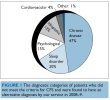
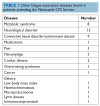
Educating doctors about the common misdiagnoses could be helpful, to make sure they miss fewer treatable conditions. Figure and table from Newton et al. 2011 ("criteria" here are Fukuda):
1764846309986.png
1764845033136.png

After that, the GP refers the patient to a neurologist. Before the appointment, the patient fills out the DSQ-1 and SF-36 (I understand that this can be too demanding for severely ill patients and that they require a gentler approach). The doctor then reviews the DSQ-1 and SF-36, rules out other possible conditions, and finally makes a diagnosis of ME/CFS if the patient meets the revised CCC.
I think there are a few issues here. The GP should refer to any specialism relevant to the person's particular presentation. But they don't need to be instructed to do that. I wouldn't insist on the specialism being neurology at this point, as having neurological conditions outruled means at best, "reassurance", and at worst, a diagnosis of functional neurological disorder or onward referral to their best mates, psychiatry.

Skip the DSQ-1 and SF-36. I don't think either would help diagnosis. We have no good evidence on how well the DSQ distinguishes ME/CFS from other fatiguing illnesses, which is what the GP/doctor has to do.

Skip the criteria. There is no evidence to suggest that people who meet any existing set of criteria have ME/CFS while those who do not meet that set of criteria do not. All we know is that more restrictive criteria pick out a sicker and more disabled group of people. The effect of insisting on a particular set of criteria at diagnosis stage would likely be to deprive a lot of people of a diagnosis of the condition they have. Insisting on a particular set of criteria for research makes more sense, as you often want people who are sicker.

Are the "revised CCC" the International Consensus Criteria 2011? If so, Maclachlan et al. 2017 (incl. Jason & Newton) explain some of the problems they see with the ICC:
The possibility that current criteria include symptoms that are not primary features of CFS, specifically in relation to the Canadian 2011 criteria which encompasses a broad spectrum of symptoms across body systems, and confounds clinical presentation and research, must be considered. The number of symptoms across many physiological symptoms included in the Canadian 2011 criteria may mean that, rather than diagnosing a more severe CFS phenotype, these criteria capture both CFS and other co-morbidities with non-specific symptoms. This may not only affect management and subsequent prognosis, but also give rise to an inaccurate and confused picture of which condition (or conditions) is being researched and serve to exacerbate the stigma associated with the condition.

Furthermore, it is possible that the inclusion of more widespread pain with or without hyperalgesia in the 2011 criteria may be a confounding symptom–particularly in view of the association between pain and both autonomic dysfunction and cognitive impairment (attention, psychomotor speed, verbal and working memory)[4042].

In my view, the most important messages to get across about diagnosis in any education module are:
  1. ME/CFS is a diagnosis with a characteristic presentation and history [enter IOM/NAM].
  2. Chronic fatigue≠CFS or ME/CFS. Don't give everyone you see with chronic fatigue the label of CFS or ME/CFS.
  3. Exclude other diagnoses and continue to watch out for developments that could indicate something else either instead of, or as well as, ME/CFS.
  4. Do not recommend exercise for ME/CFS.
  5. At diagnosis, give some basic info on pacing coupled with advice not to cut out more than you need to.
 
Last edited:
I don't mean that I'm looking for criteria which allow doctors to diagnose patients with their eyes closed. Rather, I'm looking for a supportive tool. And I just want to understand what tool is better.

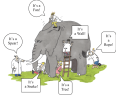
I can understand the desire for this but the problem we have is that whatever set of criteria are used the user has to have a realistic understanding of what the words mean. It is as bad as that. So if you have a recipe for making pavlova and it says first heat the oven to 200° and the reader does not know which object is the oven, or where the temperature knob is it does not help. 'Fatigue' is as easily misunderstood as 'oven' here.

I remember as a student going through a test of my skills of neurology examination and I found all the signs I was supposed to find but had no idea what to make of them. My tutor kindly prompted me to think through and I realised I had found the pattern typical of a stroke. Doing clinical assessment is like that - you do not know what you are looking at until you begin to see how it makes sense.

If a doctor does not have any idea of what ME/CFS is they will screw up whatever criteria you choose. And getting an idea of what ME/CFS is probably only comes from knowing someone who has it and talking to others who do - you suddenly see something happening to a person that makes no sense in ordinary medical terms but does in human terms.

There is also the basic point that criteria that might be used in the clinic are always different from those used in research. That has been understood for decades. The purpose of the criteria is different so they need to be different. But the reality beyond that is that no criteria are really any use in the clinic.
 
There is a webinar on Youtube by the North Western Melbourne Primary Health Network that aims at enabling doctors to "diagnose and manage" ME/CFS in primary care.

Even though it has some questionable parts like low dose psych drugs I think it is the best video around on teaching doctors about ME/CFS. If you want to put together something yourself I'd suggest to consider it as a starting point.

As a patient I made a lot of use of documentations on pacing. Therefore I think that it is very important for GPs and ME/CFS specialist alike to recommend those to patients as a priority and check-in with patients in the first time after diagnosis whether they have enough resources to learn it themselves or whether they need support.

I think that those by the OMF on PEM avoidance and the ME Association's guide on Pacing and Energy Management are the most valuable. But here it's important that patients follow their "tastes" also.
 
I suppose it's a bit like recognising a tern, isn't it.

First, you have to know it's a bird.
Then what colour and shape and size of bird.
Then where you're likely to see it.
Then when you're likely to see it.
Then how to separate it from other birds that live in the same places.

That's quite a lot of background knowledge before you even get to species, and most of it can't be assumed.

And if you're still hazy on how to tell terns from gulls, a handout about body shape, wing placement, feather patterns and tail streamers isn't going to result in you confidently separating common terns from Arctics.
 
If all doctors knew how to recognise PEM, and to tell people who experience PEM not to try to exercise their way out of it, but to ration their activity to try to avoid it, that would be a huge step forward.
I am fairly certain that, if I had been given the right advice early on, that I would probably not be disabled right now. Maybe I would have fully or mostly recovered, maybe I would be in a similar state as before it crashed hard, which wasn't great but was livable. I just kept hitting the damn wall.

Proper guidelines constrain the few good physicians who can achieve better than what simple recipes provide, although it does not bind them so it's no big deal, but more importantly it saves the patients from the vast majority who either don't know the basics, or couldn't apply them because they don't understand.

It's a compression system. It removes some of the high peaks but it mostly elevates the floor. The floor with us, without those recipes, is absolute rock bottom, abysmal failure. This is pretty much exactly what we should never see from experts, and it's happening precisely because everyone is either winging it, or following the bad recipes from people who winged it all the way and confused their own perception of reality for actual reality.
 
A doctor who doesn't understand should refer to one who does or start shouting at the top of their voice that there is no adequate service. Giving recipes to people who have no clue, is, as we are discussing on a daily basis, a recipe for perpetuating crap care.
You're right but this is a different problem with quality control. Obviously a wrong recipe will lead to bad outcomes, that's true of everything everywhere. No professional can do a good job if they are misled, just like no organization can thrive while having a drunk corrupt madman in charge.

But people do need to be in charge, and professionals do need to have bits of knowledge they can't arrive at on their own, and it doesn't make sense to say that physicians shouldn't follow guidelines because they could be bad any more than the idea that organizations should have no leadership in case some madman ends up running it.

The quality control process problem is totally independent of it, and we are trying our best at it. Because if this process can be fixed then everything follows naturally. No one working in health care wants to fail us, it's just that they don't know any better. But the flaw is not in the consult room, it happens much earlier than this.

It's also obviously much easier to fix the upstream problem that leads to disastrous clinical encounters than to change what each and every physician thinks and believes about this illness they know nothing about without this change being imposed from the top. It just won't happen, people are not reasonable most of the time, not even physicians. The need for recipes like this is a lesson learned in blood.
 
If we have to rely on people being good at their jobs, we won’t get anywhere anytime soon.
Ultimately, this. New distinct knowledge is incredibly hard to produce, and the vast majority of people will never produce anything useful on their own. This is why every job is constrained in those ways, medicine being its special little snowflake about it has never been a good thing, in fact it's been disastrous.

It's not even criticism on people's abilities. Learning new things, without being taught, is very hard and rare. It's the exception. No profession works like that. Not even medicine, this is exactly where it fails. All the things that medicine does well are the product of carefully-crafted heuristics and lessons learned from so many failures.

In fact it's pretty much one of the reason why it's failing for us: the professionals never see their failures. Early medicine was mostly built around wartime medicine, especially surgery. The feedback was usually immediate, and usually clear as day. With us there is no feedback mechanism, failures are routinely interpreted as success. If we can fix anything, it's this feedback process. It's the continuation of things that clearly don't work that breaks everything, and no clinician can reason through that on their own. They must be taught explicitly what to do and not to do, they won't achieve any of it on their own.
 
There are different kinds of inadequacy. Doctors who weren't properly taught about ME/CFS and don't know about it and who want to provide informed care for their new patient who says they have an ME/CFS are one sort of inadequate.
I know we are fairly certain that our diagnoses are right, but considering how many patients that probably get misdiagnosed (esp. with the BPS type), I don’t think a doctor can assume that any patient has what they say they have. So they’d have to do a check regardless.

Regardless, if they don’t understand PEM, they won’t understand pacing, and we’ll end up with some kind of pacing up variant.

Or we’ll end up with HCPs thinking that because one of their patients got better doing X, that’s going to apply to everyone. Like mine does.
Doctors with a deeply entrenched belief that people with ME/CFS are whiners who just need to get over themselves and off the sofa are another. The first may consult guidelines.
We’re going to need biomed treatments to deal with those doctors..
 
Obviously a wrong recipe will lead to bad outcomes, that's true of everything everywhere.

The trouble is that the way human minds actually work defies all this logic. We are not talking about wrong recipes. The problem here is that without knowing what the recipe means it is useless.
But people do need to be in charge, and professionals do need to have bits of knowledge they can't arrive at on their own, and it doesn't make sense to say that physicians shouldn't follow guidelines because they could be bad any more than the idea that organizations should have no leadership in case some madman ends up running it.

I disagree. This is arguing from authority or for authority and we live in a world where authority is more often than not idiots. If we say there should be authoritative guidelines then we have to put up with whatever garbage the idiots serve up - as they have. The madmen, or more often dunces, will always run things. That has been my experience my whole life. The argument that there must be leadership and authoritative documents gives BACME carte blanche. They are the natural leaders and scribblers.

The only thing that can ever be justified is whatever you end up with once you have adequate experience of the reality, plus reliable evidence, plus reasoning for what to do next that stands up to the sort of tough critique we get here. Engineers on the whole have learnt that and call a spade a spade. Sadly both doctors and patients elaborate reality with all sorts of biases and hang-ups that get in the way.
 
The only thing that can ever be justified is whatever you end up with once you have adequate experience of the reality, plus reliable evidence, plus reasoning for what to do next that stands up to the sort of tough critique we get here. Engineers on the whole have learnt that and call a spade a spade. Sadly both doctors and patients elaborate reality with all sorts of biases and hang-ups that get in the way.
Another argument for combined specialist research centres to take charge of ME/CFS - to avoid all of the HCPs that aren’t up for the task.
 
Another argument for combined specialist research centres to take charge of ME/CFS - to avoid all of the HCPs that aren’t up for the task.

Trouble is, things always end up being run by people who're good at running things. Painstaking researchers and innovative thinkers aren't necessarily good at (or interested in) management, administration and political back-scratching, so the grey suits get the job.

Or worse still, the same people who're currently running things. Their CVs show years of experience in the field, who could be better qualified?
 
I believe that diagnosing ME/CFS is necessary and important. I agree with @Utsikt that reassessment is necessary, but I see another issue among patients: some of them spend money year after year hoping to find the “real disease”.
People will do that with or without the diagnosis, and that may not be a bad thing given the prevalence of misdiagnosis often mentioned in this forum. I think it's really a matter of whether you are satisfied with the conclusion that what you have is indeed ME/CFS, not the diagnosis itself which has high level of uncertainty compared to other diseases with definitive diagnostic tests.

Depending on the country, a diagnosis is necessary to receive disability benefits.
Yeah, that's just about the only value I see in the diagnosis. But then, the government will want to make sure that you are indeed disabled, so they are likely to use even stricter standard than just a diagnosis from a doctor. It's just unfortunate that there will be many false negatives since we don't have a diagnostic test.
 
Trouble is, things always end up being run by people who're good at running things. Painstaking researchers and innovative thinkers aren't necessarily good at (or interested in) management, administration and political back-scratching, so the grey suits get the job.
To my mind, getting a relatively secure access to resources and patients would be a dream gig.

But I agree that this is a concern. I think I mentioned in the delivery plan thread that if the associations are going to push for a centre like that, they have to have someone lined up for running it as well. Judging by their recent work, MEA should probably not be anywhere near it, and AfME also seem to have ties to some questionable clinics here and there. Mayne @Jonathan Edwards knows someone?
I think it's really a matter of whether you are satisfied with the conclusion that what you have is indeed ME/CFS, not the diagnosis itself which has high level of uncertainty compared to other diseases with definitive diagnostic tests.
I don’t think most people are in a position to judge that.
 
Back
Top Bottom