Efficacy of heat-treated Lacticaseibacillus paracasei PS23 for individuals with [LC]: a double-blinded randomized control pilot study, 2026, Wu et al.

Chandelier

Senior Member (Voting Rights)
Full title:
Efficacy of heat-treated Lacticaseibacillus paracasei PS23 for individuals with long coronavirus disease-19 syndrome: a double-blinded randomized control pilot study

Shu-I Wu, Chen-Ju Lin, Ya-Ju Lin, I-Chieh Lin, Lee-Ching Hwang & Wan-Lin Chen


Abstract​

Long coronavirus disease (long COVID) refers to symptoms that persist beyond the acute phase of SARS-CoV-2 infection.
This study applied the World Health Organization (WHO) definition, which identifies post-COVID-19 condition as symptoms lasting at least two months and beginning around three months after confirmed infection.

Given limited evidence on probiotic use for long COVID, we conducted a double-blind, randomized, placebo-controlled trial to evaluate the effects of heat-treated Lacticaseibacillus paracasei PS23 (HT-PS23) in individuals with confirmed COVID-19 and self-reported prolonged symptoms.

Thirty-nine eligible participants were randomly assigned to receive either the heat-treated Lacticaseibacillus paracaseiPS23 (HT-PS23) or placebo for six weeks.
Assessments included validated neuropsychological tests (including executive function and working memory using Color Trails 1&2 and Digit Span and Coding), self-reported symptom scales of depression, anxiety, and quality of life, and blood biomarkers related to inflammation, immune response, and stress (e.g. cortisol, IFN-γ zonulin).

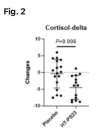
After the six-week trial, HT-PS23 group showed notable improvements in cortisol level (p = 0.006), a reduction in errors of CTT2 (p = 0.018), and symptom severity related to breathing difficulties (p = 0.016) and appetite loss (p = 0.030) compared to the placebo group.

HT-PS23 may be a feasible and well-tolerated intervention for relieving cognitive or physical symptoms associated with long COVID.
Further studies with larger samples are warranted.

https://doi.org/10.1038/s41598-025-27036-3
 
On the cortisol, given it was one of the few measures that differed significantly between the cohorts.
Comparisons of mean changes in the biochemical parameters and blood markers before and after the trial are shown in Figs. 2; Table 3. The HT-PS23 group exhibited significant improvements in cortisol levels during the 6-week intervention period (U = 51, p = 0.006). No significant differences in other blood markers were observed between the two groups before and after the trial (Fig. 2; Table 3).

Screenshot 2026-02-11 at 9.46.42 AM.png

The measure is the change in cortisol from each individual's baseline. As far as I can see, there is no information even about each individual's cortisol level at baseline. So, we have no idea if an individual's cortisol levels was high or low or completely normal, or that their cortisol level had anything to do with their symptoms. Given that, we can't know if a reduction in cortisol levels is a good thing or not.

Given that the usual story, unfounded, but widely put about, is that cortisol levels are pathologically low in people with ME/CFS, a reduction would seem to be a bad thing. Certainly, plenty of BPS researchers would suggest an increase in cortisol is the desired outcome.


The labelling on the y axis and the captions are both inadequate, it is not clear what the y axis unit is. I'm, assuming it is percentage change.

So, cortisol levels varied by less than plus or minus 10% from start to finish, for all participants. That's nothing much. The variation in the mean change between the two groups probably is just a chance effect, possibly related to changes in the timing of collection
 
This is Scientific Reports, which is not as prestigious as the main Nature journals, like Nature and Nature Medicine. This journal apparently has the largest number of articles/year of any journal, which suggests to me that they probably allow many less rigorous articles.
Right, I mixed up the the journals becuase of the „nature“ in the search bar when you open the link.
 
No significant between-group differences were found in psychological and quality of life measures, including insomnia, anxiety, depression, gastrointestinal discomfort, and overall life satisfaction.
The improvements were
Participants receiving HT-PS23 showed improvements in cortisol levels, executive function, breathing difficulty, and appetite compared to placebo.
Few of those have anything to do with ME/CFS-type Long Covid. The participants did not have to have had post-Covid symptoms long (2 months), most were young men and most increased their activity levels over the study.
Both groups mainly comprised single young (mean age: 22.6, SD: 2.5) males with college degrees


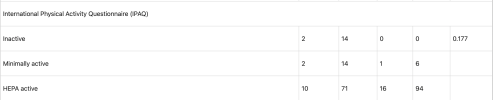
The really weird thing is the change in the percentage of the participants engaging in Health Enhancing Physical Activity (HEPA) (Table 2).

Screenshot 2026-02-11 at 10.17.33 AM.png
Screenshot 2026-02-11 at 10.17.56 AM.png
Look at the headings: V1 is after the treatment, V1-V0 is the change from baseline.
At the end of the trial, 94% of the participants who took the placebo were HEPA active, while only 71% of the people who took treatment were (and some of them were already that active at baseline). It looks as though most of the placebo group moved from inactive to active.


But, the table of baseline characteristics (Table 1) says something different. It suggests that most participants and nearly all of the placebo participants were healthily active at baseline.

Treatment group n, %; Placebo n, %
Screenshot 2026-02-11 at 10.32.11 AM.png

The same figures have been given for the baseline (V0) and after treatment (V1). I don't know what was actually happening there. But something is wrong. Goodness knows what stats for other measures are wrong.


To make this claim in the abstract on the basis of this study is just ridiculous
HT-PS23 may be a feasible and well-tolerated intervention for relieving cognitive or physical symptoms associated with long COVID. Further studies with larger samples are warranted.
 
Last edited:
Back
Top Bottom