Evaluation of a Gene–Environment Interaction of PON1 and Low-Level Nerve Agent Exposure with Gulf War Illness..., 2022, Haley et al

Trish

Moderator
Staff member
Full title:
Evaluation of a Gene–Environment Interaction of PON1 and Low-Level Nerve Agent Exposure with Gulf War Illness: A Prevalence Case–Control Study Drawn from the U.S. Military Health Survey’s National Population Sample
https://ehp.niehs.nih.gov/doi/10.1289/EHP9009

Abstract
Background
:
Consensus on the etiology of 1991 Gulf War illness (GWI) has been limited by lack of objective individual-level environmental exposure information and assumed recall bias.

Objectives:
We investigated a prestated hypothesis of the association of GWI with a gene–environment (GxE) interaction of the paraoxonase-1 (PON1) Q192R polymorphism and low-level nerve agent exposure.

Methods:
A prevalence sample of 508 GWI cases and 508 nonpaired controls was drawn from the 8,020 participants in the U.S. Military Health Survey, a representative sample survey of military veterans who served during the Gulf War. The PON1 Q192R genotype was measured by real-time polymerase chain reaction (RT-PCR), and the serum Q and R isoenzyme activity levels were measured with PON1-specific substrates. Low-level nerve agent exposure was estimated by survey questions on having heard nerve agent alarms during deployment.

Results:
The GxE interaction of the Q192R genotype and hearing alarms was strongly associated with GWI on both the multiplicative [prevalence odds ratio (POR) of the interaction=3.41, 95% confidence interval (CI): 1.20, 9.72] and additive (synergy index=4.71, 95% CI: 1.82, 12.19) scales, adjusted for measured confounders. The Q192R genotype and the alarms variable were independent (adjusted POR in the controls=1.18, controls=1.18; 95% CI: 0.81, 1.73; p=0.35, and the associations of GWI with the number of R alleles and quartiles of Q isoenzyme were monotonic. The adjusted relative excess risk due to interaction (aRERI) was 7.69 (95% CI: 2.71, 19.13). Substituting Q isoenzyme activity for the genotype in the analyses corroborated the findings. Sensitivity analyses suggested that recall bias had forced the estimate of the GxE interaction toward the null and that unmeasured confounding is unlikely to account for the findings. We found a GxE interaction involving the Q-correlated PON1 diazoxonase activity and a weak possible GxE involving the Khamisiyah plume model, but none involving the PON1 R isoenzyme activity, arylesterase activity, paraoxonase activity, butyrylcholinesterase genotypes or enzyme activity, or pyridostigmine.

Discussion:
Given gene–environment independence and monotonicity, the unconfounded aRERI>0 supports a mechanistic interaction. Together with the direct evidence of exposure to fallout from bombing of chemical weapon storage facilities and the extensive toxicologic evidence of biochemical protection from organophosphates by the Q isoenzyme, the findings provide strong evidence for an etiologic role of low-level nerve agent in GWI. https://doi.org/10.1289/EHP9009

Full text on PMC
 
Last edited by a moderator:
Organophosphate-based pesticides have been linked to a ME-like illness. My understanding is that Sarin is chemically similar to these organophosphates pesticides but much stronger. Now Sarin has been linked to a ME-like syndrome.

Can this tell us something about what might be going on in ME? That there is some damager that is occurring that is similar to that caused by organophosphate pesticides?

To clarify, ME is not like acute organophosphate poisoning but appears to be similar to the long term sequelae.
 
Merged thread

https://scitechdaily.com/after-30-y...sarin-nerve-gas-as-cause-of-gulf-war-illness/

The researchers tested the samples for variants of a gene called PON1. There are two versions of PON1: the Q variant generates a blood enzyme that efficiently breaks down sarin while the R variant helps the body break down other chemicals but is not efficient at destroying sarin. Everyone carries two copies of PON1, giving them either a QQ, RR or QR genotype.

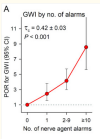
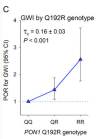
For Gulf War veterans with the QQ genotype, hearing nerve agent alarms – a proxy for chemical exposure – raised their chance of developing GWI by 3.75 times. For those with the QR genotype, the alarms raised their chance of GWI by 4.43 times. And for those with two copies of the R gene, inefficient at breaking down sarin, the chance of GWI increased by 8.91 times. Those soldiers with both the RR genotype and low-level sarin exposure were over seven times more likely to get GWI due to the interaction per se, over and above the increase in risk from both risk factors acting alone. For genetic epidemiologists, this number leads to a high degree of confidence that sarin is a causative agent of GWI.

“Your risk is going up step by step depending on your genotype, because those genes are mediating how well your body inactivates sarin,” said Dr. Haley. “It doesn’t mean you can’t get Gulf War illness if you have the QQ genotype, because even the highest-level genetic protection can be overwhelmed by higher intensity exposure.”
 
Last edited by a moderator:
This seems like a very compelling study. It's honestly one of the most exciting papers I've read because it provides strong support for a very specific lead.

The study found a strong gene-environment (GxE) interaction between exposure to sarin gas and the PON1 Q192R allele, which is known to affect how well sarin is metabolized. Meaning that not only is exposure to sarin associated with risk of GWI, but having the Q192R allele is associated with a greater risk from sarin. So the genetic evidence further supports that sarin is actually increasing risk, as opposed to being confounded by another variable.

There was also a monotonic (consistently increasing) dose-response relationship between GWI and the number of times an individual heard nerve agent alarms (proxy for nerve agent exposure), as well as GWI and number of Q192R alleles, which supports the main finding of the study:

1772329893805.png1772329910672.png

Here also is a link to a perspective published alongside the article:
Invited Perspective: Causal Implications of Gene by Environment Studies Applied to Gulf War Illness
Weisskopf, Marc G.; Sullivan, Kimberly A.
Web | DOI | PMC | PDF | Environmental Health Perspectives
 
Last edited:
It should be noted that there was a comment published which brought up a potential limitation of the study: there was no matching for ancestry between cases and controls, and thus the association between GWI and allele frequency, which varies with ancestry, may be due to ancestral confounding. Two responses to the comment were published, one from the authors, and one from another individual who authored the perspective about the study. Snippets:

Comment on “Evaluation of a Gene–Environment Interaction of PON1 and Low-Level Nerve Agent Exposure with Gulf War Illness: A Prevalence Case–Control Study Drawn from the U.S. Military Health Survey’s National Population Sample”
Curtis, David
An important concern is that the frequency of the R allele is known to vary considerably between ancestries. For example, in subjects of European, African, and South Asian ancestries, the allele frequencies are reported to be 0.286, 0.646, and 0.379, respectively.2 This means that if cases and controls tend to have different ancestries, then one will expect to observe differences in allele frequencies and genotype frequencies even if the variant in fact has no effect at all on the outcome. The study reported an allele frequency of 0.327 in controls and 0.470 in cases, both values being intermediate between those expected for subjects having European or African ancestry.
Web | DOI | PMC | PDF | Environmental Health Perspectives

Response to “Comment on ‘Evaluation of a Gene–Environment Interaction of PON1 and Low-Level Nerve Agent Exposure with Gulf War Illness: A Prevalence Case–Control Study Drawn from the U.S. Military Health Survey’s National Population Sample’”
Haley, Robert W.; Dever, Jill A.; Teiber, John F.
The sensitivity analysis for unmeasured confounders in our paper demonstrated that the estimated G×E interaction was sufficiently strong that the association between an unmeasured confounder and both the environmental exposure and the disease would have to be extremely strong to explain away the finding.3
In the initial draft of our manuscript, we included Black vs. other in our multivariable models to show that race/ethnicity had no significant effect on the G×E interaction. Given that it contributed virtually nothing to the model, after the initial journal review we removed it to avoid contributing needlessly to implicit racial bias, a growing concern in science,6 particularly among geneticists.7
Web | DOI | PMC | PDF | Environmental Health Perspectives

Response to “Comment on ‘Evaluation of a Gene–Environment Interaction of PON1 and Low-Level Nerve Agent Exposure with Gulf War Illness: A Prevalence Case–Control Study Drawn from the U.S. Military Health Survey’s National Population Sample’”
Weisskopf, Marc G.
Such case–control differences indeed may well have happened, but importantly, as Curtis points out,1 the resulting bias would be on the main effect of the gene, not the G×E interaction. (In our invited perspective,2 we outline the same scenario for recall bias of the environmental exposure.) The other question he poses, though—whether there could also be differences in nerve agent alarm exposure by ancestry—raises the possibility of G×E dependence, a violation of a key assumption necessary for the causal inference benefits of G×E interaction studies described in our perspective.
However, rather than just speculate about this possibility, Haley et al. assessed G×E dependence directly3—that is, genotype predicting exposure—in the controls (not among the cases because they would show G×E dependence if a true G×E interaction existed4). The authors reported an odds ratio of 1.18 (95% confidence interval: 0.81, 1.73) for the G×E dependence. Thus, regardless of the distribution of ancestry or whether ancestry (only an indirect proxy of genetics) predicts nerve agent alarm exposure, in these data the genotype does not predict exposure. This suggests G×E independence and that the observed G×E interaction is, if anything, biased to the null.4 Further, even if we ignore the significance and assume there is a dependence at the level of an odds ratio of 1.18, it can be shown mathematically that this level of dependence places a maximal bound on bias of the G×E interaction. This bound is far lower than the G×E interaction found by Haley et al.,3 further arguing that a true G×E interaction exists.
Web | DOI | PMC | PDF | Environmental Health Perspectives

I can't be sure the responses to the comment adequately address the comment's claim as I'm not an expert on this. Even if they don't, the study seems intriguing enough that it seems wise to go ahead and replicate with matching ancestry to eliminate doubt about it.
 
It seems to me there should be a whirlwind of research following up on this. If low level sarin exposure from a war can lead to a chronic condition like GWI, and it has taken decades to unravel that association, how many other associations are there that we don't know about yet between sarin or sarin-like exposures with GWI and GWI-like conditions?

They note an interesting other similar association of sarin and disease that might be worth looking into:
A similar body of epidemiologic and clinical evidence has demonstrated a neurocognitive syndrome and dysfunction of the central nervous system and postural instability similar to those in GWI in the Japanese survivors of sarin attacks (by the Aum Shinrikyo cult on a housing subdivision in Matsumoto, Japan, in 1994 and on the Tokyo subway in 1995) in whom the severity of the chronic illness increased with the documented dose of sublethal sarin exposure.7173
71.Yokoyama K, Araki S, Murata K, Nishikitani M, Okumura T, Ishimatsu S, et al. 1998. Chronic neurobehavioral and central and autonomic nervous system effects of Tokyo subway sarin poisoning. J Physiol Paris92(3–4):317–323, PMID: , 10.1016/s0928-4257(98)80040-5. [DOI] [PubMed] [Google Scholar]

72.Yanagisawa N, Morita H, Nakajima T. 2006. Sarin experiences in Japan: acute toxicity and long-term effects. J Neurol Sci249(1):76–85, PMID: , 10.1016/j.jns.2006.06.007. [DOI] [PubMed] [Google Scholar]

73.Yamasue H, Abe O, Kasai K, Suga M, Iwanami A, Yamada H, et al. 2007. Human brain structural change related to acute single exposure to sarin. Ann Neurol61(1):37–46, PMID: , 10.1002/ana.21024. [DOI] [PubMed] [Google Scholar]
 
Last edited:
This seems like a very compelling study. It's honestly one of the most exciting papers I've read because it provides strong support for a very specific lead.
Strongly agree, this study has interested me for a while but I never got around to reading it in detail. Thanks for the cliff notes version.

I assume we don't yet know how sarin could mechanistically cause GWI? I wonder if the related question of how organophosphates might be causing parkinsons has had more research. (Relatedly: it looks like there are some papers on PON1, organophosphate pesticide exposure and parkinsons but I haven't looked closely at them either yet.)
 
Back
Top Bottom