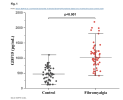
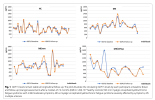
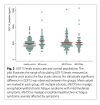
There have been some claims of higher GDF-15 in ME/CFS. I thought it could be useful to note studies that measure GDF-15 in ME/CFS and related conditions, and to think about whether this is something that should be investigated more rigorously.
It is claimed to be a biomarker of mitochondrial diseases. It is potentially interesting with respect to ME/CFS as it increases in response to both physical and mental exertion and hypoxia.
However, that makes it difficult to measure, as even a blood draw can elevate it. It seems to fluctuate considerably with time of day. Obesity and increasing age increase it.
The mitochondrial disease biomarker GDF15 is dynamic, quantifiable in saliva, and correlates with disease severity
It seems likely that at least some of the studies that measured GDF-15 in ME/CFS have not properly taken into account confounders. So, I'm wondering, what evidence do we have that GDF-15 is relevant to ME/CFS, how good is the evidence, should it be looked at in further studies and, if so, what things need to be considered to investigate it properly.
From the paper linked above:
It is claimed to be a biomarker of mitochondrial diseases. It is potentially interesting with respect to ME/CFS as it increases in response to both physical and mental exertion and hypoxia.
However, that makes it difficult to measure, as even a blood draw can elevate it. It seems to fluctuate considerably with time of day. Obesity and increasing age increase it.
The mitochondrial disease biomarker GDF15 is dynamic, quantifiable in saliva, and correlates with disease severity
It seems likely that at least some of the studies that measured GDF-15 in ME/CFS have not properly taken into account confounders. So, I'm wondering, what evidence do we have that GDF-15 is relevant to ME/CFS, how good is the evidence, should it be looked at in further studies and, if so, what things need to be considered to investigate it properly.
From the paper linked above:
Using a home-based saliva collection protocol, we show that similar to other stress-related metabolic hormones, saliva GDF15 is highest upon awakening and declines rapidly by 61.2 % within 45 min. Elevated saliva GDF15 levels persisted throughout the day in MitoD. Clinically, saliva GDF15 correlated with neurological symptoms, fatigue, and functional capacity.
Mechanistically, elevated levels of GDF15 have been shown in various conditions associated with impaired mitochondrial biology. Systemic GDF15 release results from the activation of the integrated stress response (ISR), which is triggered by mtDNA defects that impair energy transformation via oxidative phosphorylation (OxPhos) in mitochondria, leading to intracellular reductive stress (i.e., elevated NADH/NAD+ ratio) [[16], [17], [18], [19]]. A marked induction of GDF15 has been shown in skeletal muscles of patients with thymidine kinase 2 (TK2) defects, which causes mtDNA depletion/deletions and OxPhos dysfunction [20].