

Sly Saint
Senior Member (Voting Rights)
Salk Institute researchers are debuting a new epigenetic catalog that reveals the distinct effects of genetic inheritance and life experience on various types of immune cells. The new cell type-specific database, published in Nature Genetics on January 27, 2026, helps explain individual differences in immune responses and may serve as the foundation for more effective and personalized therapeutics.
“Our immune cells carry a molecular record of both our genes and our life experiences, and those two forces shape the immune system in very different ways,” says senior author Joseph Ecker, PhD, professor, Salk International Council Chair in Genetics, and Howard Hughes Medical Institute investigator. “This work shows that infections and environmental exposures leave lasting epigenetic fingerprints that influence how immune cells behave. By resolving these effects cell by cell, we can begin to connect genetic and epigenetic risk factors to the specific immune cells where disease actually begins.”
What is the epigenome?
All the cells in your body share the same DNA sequence. And yet, there are many specialized cell types that look and act entirely differently. This diversity is due, in part, to a collection of small molecular tags called epigenetic markers, which decorate the DNA and signal which genes should be turned on or off in each cell. The many epigenetic changes in each cell collectively make up that cell’s epigenome.
Unlike the base genetic code, the epigenome is far more flexible—some epigenetic differences are strongly influenced by inherited genetic variation, while others are acquired experientially across a lifetime. Immune cells are no exception to these forces, but it was unclear whether these two types of epigenetic changes—inherited versus experiential—affected immune cells in the same way.
“The debate between nature and nurture is a long-standing discussion in both biology and society,” says co-first author Wenliang Wang, PhD, a staff scientist in Ecker’s lab. “Ultimately, both genetic inheritance and environmental factors impact us, and we wanted to figure out exactly how that manifests in our immune cells and informs our health.”
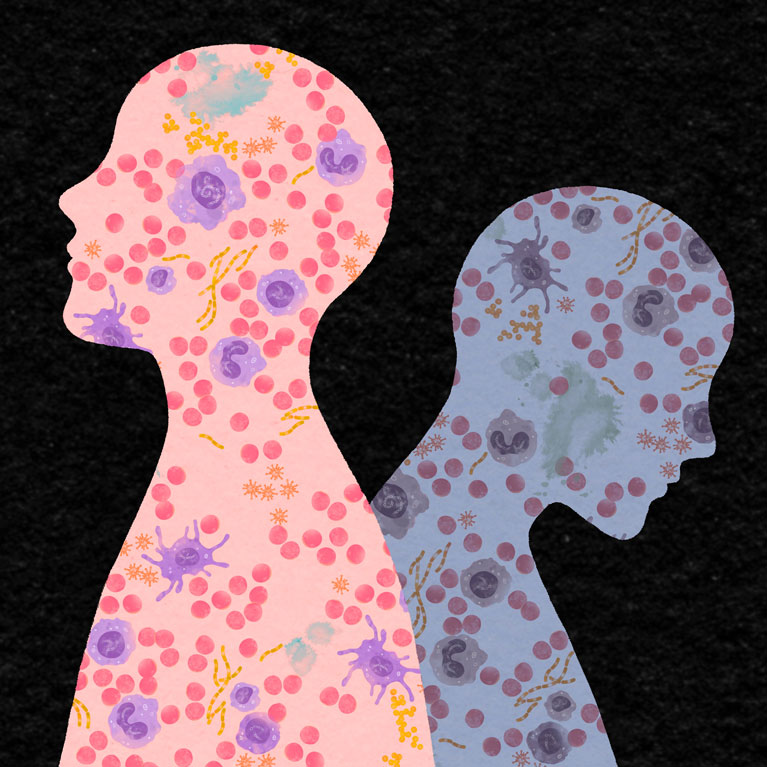
How do nature and nurture shape our immune cells? - Salk Institute for Biological Studies
Highlights Salk Institute researchers analyzed immune cells from 110 people and found that genetic differences and life experiences (sickness, vaccination history, environment) impact immune cells differently. The findings help explain why people respond differently to the same infections and...
 www.salk.edu
