GRIN2A null variants confer a high risk for early-onset schizophrenia and other mental disorders and potentially enable precision therapy, 2025, Lemke

Wyva

Senior Member (Voting Rights)

Abstract​

Rare genetic factors have been shown to substantially contribute to mental illness, but so far, no precision treatments for mental disorders have been described. It was recently identified that rare variants in GRIN2A encoding the GluN2A subunit of the N-methyl-D-aspartate receptor (NMDAR) confer a substantial risk for schizophrenia. To determine the prevalence of mental disorders among individuals with GRIN2A-related disorders, we enquired the presence of psychiatric symptoms in 235 individuals with pathogenic variants in GRIN2A who had previously enrolled in our global GRIN registry.

We identified null variants in GRIN2A (GRIN2Anull) to be significantly associated with a broad spectrum of mental disorders including schizophrenia compared to a longitudinal population cohort (FinRegistry) as well as missense variants (GRIN2Amissense). In our cohort, GRIN2Anull-related mental disorders manifest in early childhood or adolescence, which is substantially earlier than the average adult onset in the general population.

In 68% of co-incident epilepsy and mental disorder, mental disorders start after epilepsy offset and the age of epilepsy offset correlated with mental disorder onset. GRIN2Anull-related phenotypes appear to occasionally even manifest as isolated mental disorder, i.e. as schizophrenia or mood disorder without further GRIN2A-specific symptoms, such as intellectual disability and/or epilepsy. As L-serine is known to mediate co-agonistic effects on the NMDAR, we applied it to four individuals with GRIN2Anull-related mental disorders, all of whom experienced improvements of their neuropsychiatric phenotype.

GRIN2Anull appears to be the first monogenic cause of early-onset and even isolated mental disorders, such as early-onset schizophrenia. Genetic testing should be considered in the diagnostic work-up of affected individuals to improve diagnosis and potentially offer personalized treatment as increasing brain concentrations of NMDAR co-agonists appears to be a promising precision treatment approach successfully targeting deficient glutamatergic signaling in individuals with mental disorders, i.e. due to GRIN2Anull.

Open access: https://www.nature.com/articles/s41380-025-03279-4
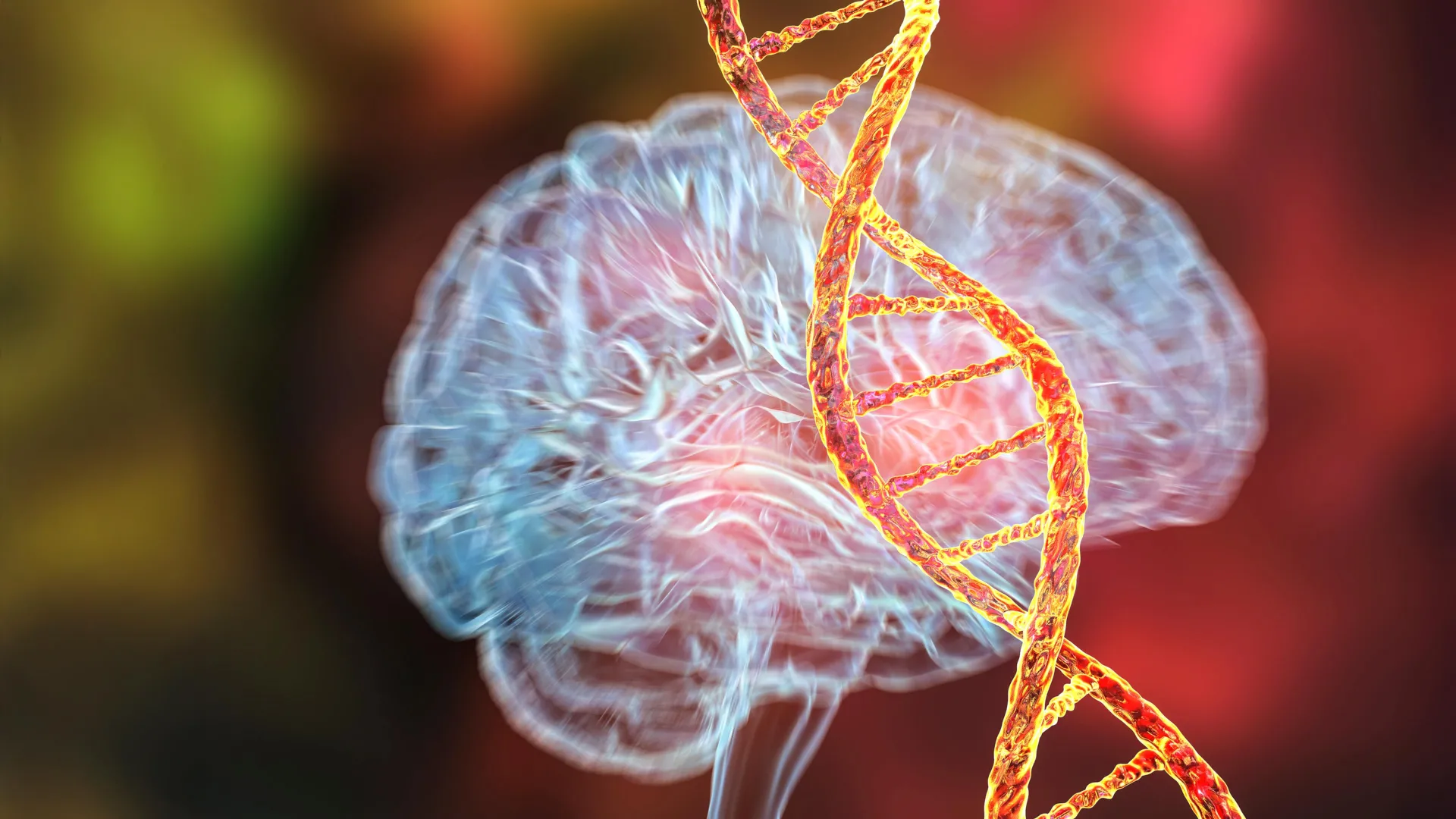
 
Article in Science Daily: Scientists discover first gene proven to directly cause mental illness

Summary:​
Scientists have discovered that a single gene, GRIN2A, can directly cause mental illness—something previously thought to stem only from many genes acting together. People with certain variants of this gene often develop psychiatric symptoms much earlier than expected, sometimes in childhood instead of adulthood. Even more surprising, some individuals show only mental health symptoms, without the seizures or learning problems usually linked to GRIN2A.​


For the First Time, Mutations in a Single Gene Have Been Linked to Mental Illness | WIRED https://www.wired.com/story/mutations-in-a-single-gene-have-been-linked-to-mental-illness/

In their article, published in Molecular Psychiatry, the researchers demonstrated that the gene mutation reduces the activity of the NMDA electrical receptor, which aids in neuronal communication, thereby increasing the risk of developing mental disorders.

The finding contradicts the general consensus on the polygenic origin of mental disorders. Until now, clinicians have considered that these diseases arise from the interaction of multiple factors, including genetic ones. This study demonstrates for the first time that a mutation in a single gene can decisively influence the development of a mental disorder.
 
The term 'mental illness' is so unhelpful, covering as it does diverse things like 'feeling very sad when something very sad has happened' and various biochemical disorders affecting the mind, but excluding other diseases like Parkinsons that also affect the mind.

I hope this is really good news for many people suffering the very difficult health conditions that have been labelled 'schizophenia'.


GRIN2 genes are mentioned in a few previous threads:

This one is about vascular issues in multiple sclerosis, but rather than mutations, it relates to differential expression.
Aiming at exploring vascular components in multiple sclerosis (MS) with brain outflow disturbance, we combined transcriptome analysis in MS internal jugular vein (IJV) wall with WES in MS families with vertical transmission of disease. Main results were the differential expression in IJV wall of 16 MS-GWAS genes and of seven genes (GRIN2A, GRIN2B, IL20RB, IL26, PER3, PITX2, and PPARGC1A) not previously indicated by GWAS but encoding for proteins functionally interacting with MS candidate gene products. Strikingly, 22/23 genes have been previously associated with vascular or neuronal traits/diseases, nine encoded for transcriptional factors/regulators and six (CAMK2G, GRIN2A, GRIN2B, N1RD1, PER3, PPARGC1A) for circadian entrainment/rhythm components.


This one is from the Zhang ME/CFS gene study. @forestglip, maybe you can remind us what you did there to come up with the GRIN genes?
Ok, I've run GSEA on the Zhang genes ranked by attention scores with the hallmark and canonical pathways collections:


This one is about PANDAS and PANS - paediatric disturbances of the mind after an infection.
Abrupt onset of severe neuropsychiatric symptoms including obsessive–compulsive disorder, tics, anxiety, mood swings, irritability, and restricted eating is described in children with Pediatric Acute-Onset Neuropsychiatric Syndrome (PANS). Symptom onset is often temporally associated with infections, suggesting an underlying autoimmune/autoinflammatory etiology, although direct evidence is often lacking. The pathological mechanisms are likely heterogeneous, but we hypothesize convergence on one or more biological pathways.
The other is expressed primarily at neuronal synapses (SHANK3, SYNGAP1, GRIN2A, GABRG2, CACNA1B, SGCE). Mutations in these neuronal genes are also described in autism spectrum disorder and myoclonus-dystonia. In fact, 12/21 cases developed PANS superimposed on a preexisting neurodevelopmental disorder. Genes in both categories are also highly expressed in the enteric nervous system and the choroid plexus.
Finally, 10 patients with autism spectrum disorder (ASD) were found to have pathogenic variants in GABBR2, TANC2, ADNP, GRIN2A, and GRIP2. These patients developed acute regression or PANS symptoms similar to our original findings of in patients with SHANK3 and SYNGAP1 mutations.
I think we are going to find that 'autism' is similarly a wide variety of things.
 
Last edited:
GRIN2A gets a mention in dispatches with LC too.

SARS-CoV-2 spike protein causes synaptic dysfunction and p-tau and α-synuclein aggregation leading cognitive impairment: The protective role of metformin (2025)

We observed that the expression of hypoxia-responsive genes was also altered, suggesting the involvement of HIF-1α signaling. Further analysis confirmed that S1 stabilized the HIF-1α protein in a hypoxia-independent manner, and siRNA-mediated knockdown of HIF-1α restored synaptic gene expression, including GRIN2A, SHANK1, and JPH3.

S1-injected rats and severe COVID-19 patients shared enriched GO terms related to apoptosis, synaptic transmission, and hypoxia response. DEG analysis for cognition-related genes (GO:0050890) identified 251 overlapping genes, including GRIN2A and SHANK1

To investigate the functional relevance of HIF-1α stabilization, we performed siRNA-mediated knockdown of HIF-1α in N2A cells. This intervention restored the expression of synaptic function-related genes, including GRIN2A, JPH3, and SHANK1.

S1 treatment led to a marked decrease in the expression of GRIN2A, JPH3, SHANK1, and GRIA2, whereas concurrent metformin treatment restored these levels to control values, suggesting a protective effect against S1-induced synaptic alterations.

Exploring the mechanisms of long COVID: Insights from computational analysis of SARS-CoV-2 gene expression and symptom associations (2023)

The common key genes identified in neuropsychiatric symptoms in long COVID patients are SCN1A, C9orf72, GABRG2, and GRIN2A.
 
This one is from the Zhang ME/CFS gene study. @forestglip, maybe you can remind us what you did there to come up with the GRIN genes?
Yes, so I did gene set enrichment analysis on the ranked list of genes from the Zhang study, meaning I took all ~17,000 genes, sorted by the attention score they got in the study, and tested which gene sets were over-represented among the highly ranked genes. In other words, going through hundreds or thousands of sets of pre-curated genes that describe various pathways, and seeing if more genes from a given set than would be expected by chance are ranked highly in attention score.

GRIN2A is part of the gene set "Disruption of postsynaptic signaling by CNV", which I think means the genes where copy number variations in these genes can cause problems with postysynaptic signalling. This gene set was over-represented among the highly ranked Zhang genes.

Though of the genes in this gene set, GRIN2A was not very highly ranked. It's ranked around 700 out of 17,000 if sorting by attention score or around 3500 out of 17,000 if sorting by p-value (I think now p-value might have been the better way to sort for GSEA). Other genes from this gene set like NLGN2 and SYNGAP1 were much higher in the Zhang ranking and driving the enrichment.

In essence, Zhang identified that mutations in certain specific genes involved in postsynaptic signalling might contribute to ME/CFS. GRIN2A is a gene that can also cause issues with postsynaptic signalling, but it was not necessarily one of the postsynaptic genes identified in the study.
 
Back
Top Bottom