

Dolphin
Senior Member (Voting Rights)
Gut microbiome-immune-metabolic axis in fatigue: mechanistic insights and food science approaches - Food Science and Biotechnology
Fatigue is a heterogeneous symptom associated with lifestyle, infection, exercise, and chronic disease, but its biological links with the gut microbiome remain incompletely defined. This review summarizes clinical and mechanistic evidence connecting gut microbiome alterations with...
 link.springer.com
Gut microbiome-immune-metabolic axis in fatigue: mechanistic insights and food science approaches
- Review
- Published: 31 August 2026
- (2026)
- Cite this article
Abstract
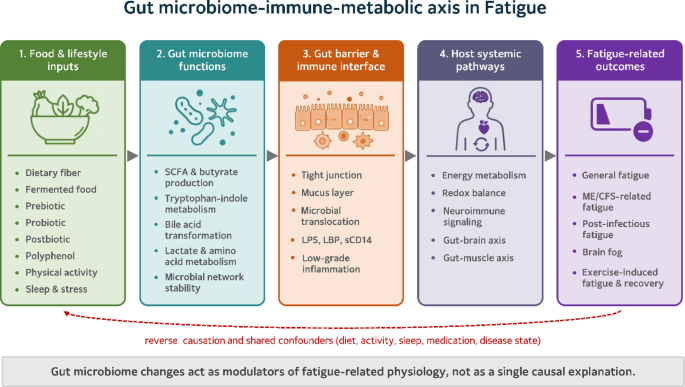
Fatigue is a heterogeneous symptom associated with lifestyle, infection, exercise, and chronic disease, but its biological links with the gut microbiome remain incompletely defined.This review summarizes clinical and mechanistic evidence connecting gut microbiome alterations with fatigue-related phenotypes, focusing on myalgic encephalomyelitis/chronic fatigue syndrome, post-acute COVID-19 syndrome, general adult fatigue, and exercise-induced fatigue.
Evidence was interpreted according to fatigue-related phenotype, microbiome function, microbial metabolite, gut barrier marker, inflammatory response, and food-based intervention.
Current studies suggest that reduced short-chain fatty acid production, impaired butyrate-producing capacity, gut barrier dysfunction, microbial translocation, low-grade inflammation, altered tryptophan metabolism, host energy imbalance, and gut-brain/gut-muscle axis signaling may contribute to fatigue-related physiological vulnerability.
Food components/ingredients, including dietary fiber, fermented food, prebiotic, probiotic, postbiotic, polyphenol, and polysaccharide, may support microbiome-mediated recovery pathways. Further controlled, phenotype-specific, multi-omics intervention studies are required.