Patient-Reported Treatment Outcomes in ME/CFS and Long COVID, 2024, Eckey, Davis, Xiao+

Thanks, I haven't looked at this in depth, but noticed this in the introduction:
I gave the following weights to minor/moderate/major: [1.0, 2.5, 5.0] for improvements and [-1.0, -2.5, -5.0] for worsenings, and 0 for ‘no change’. Formally, statisticians would hate me for this because it’s adding numerical information to ordinal data, but I don’t care
Doesn't the score you calculated then mainly reflect the (arbitrary?) weights you gave to the categorical variables 'minor', 'moderate', 'major'?

For example, I don't see why the gap between minor and moderate is 1.5 points, but between moderate and major is 2.5 points. Why not, for example 1,2, and 3 points for minor/moderate/major?
 
Did you take into account how long participants had used the drugs, what else they were trying at the same time, how long they had been ill, sample sizes for each drug, correction for multiple comparisons, subjective outcomes, and other confounding factors?
As an example of such complications: In the unblinded Daratumumab study positive effects (which we don't even know to be drug response) were possibly only seen in a subpopulation with certain NK-cells (which we have no idea about whether it was even a genuine effect and it wouldn't pass and it wouldn't pass a correction for multiple comparisons) and perhaps more importantly responses were only seen after several weeks after the drug was administered according to a certain dosis and in patients who had received a diagnosis and had been sick for at least 2 years.

The observations from the unblinded trial are very limited but I think we can be somewhat certain that if you'd apply the big data Twitter approach to Daratumumab you'd get no useful observations whatsoever. Similarly you could take conditions with known effective treatments and get no effects with this big data Twitter approach because your population wasn't diagnosed accurately, the treatment wasn't adhered to long enough or given at the right dosage etc. Treatments can be discovered purely by luck and possibly that'll also be the case in ME/CFS but that doesn't mean that the above approach is helpful in doing so.

I can appreciate that there was a lot of data out there and people didn't want that to just go missed, but I'm afraid that some data is just too bad to be of any use even if there's lots of it.

If anything one has to be sure that one treatment for the people in this study simply cannot exist. The authors tried to circumvent such problems with different comparisons and sub-group analysis and splitting ME/CFS and Long-COVID but then all the other problems still remain and you introduce additional post-hoc analysis problems.
 
Thanks, I haven't looked at this in depth, but noticed this in the introduction:

Doesn't the score you calculated then mainly reflect the (arbitrary?) weights you gave to the categorical variables 'minor', 'moderate', 'major'?

For example, I don't see why the gap between minor and moderate is 1.5 points, but between moderate and major is 2.5 points. Why not, for example 1,2, and 3 points for minor/moderate/major?
Yeah this was an arbitrary choice. I find major responses far more interesting and in my mind they are 5x bigger in terms of quality of life improvements, and also minor responses are more likely natural fluctuations. But the curtain with the [1, 2, 3] weighting was high (r = .88) according to the AI I worked with, but I didn't check how it calculated that.
 
I suspected you did the weighting to prioritise things that lead to more improvement but do we really know things such as:
minor responses are more likely natural fluctuations
Do we really know this? Plenty of medications that work tremendously well might only show minor responses at first or if given in a wrong protocol and similary you have to expect plenty of natural fluctuations that lead to complete remissions as seen in available data.
 
Regarding the data quality: I agree that there are issues, but I don't think it's worthless. I think the results can't really identify absolute effects but in terms of relative ranking of which treatments are more likely to yield significant results in a Phase 2 trial, I think it's fairly good. Still, I think it's unlikely though not impossible that one of the top 10 treatments would hold up.

I also note that there's probably bias towards more "extreme" (e.g. IV, in-clinic) treatments based on the (underpowered) statistical analysis of the 3 categories of supplements, Rx, and in-clinic/in hospital treatments.

Off-topic but I have a reply:
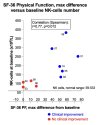
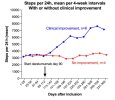
In the unblinded Daratumumab study positive effects (which we don't even know to be drug response) were possibly only seen in a subpopulation with certain NK-cells (which we have no idea about whether it was even a genuine effect and it wouldn't pass and it wouldn't pass a correction for multiple comparisons)
I am pretty skeptical of the NK cell narrative because the differences between groups were very small! Though mechanistically it could make sense.

Anyway we just need more well-designed RCTs :) I'm planning to write more about how to get there
 
I suspected you did the weighting to prioritise things that lead to more improvement but do we really know things such as:

Do we really know this? Plenty of medications that work tremendously well might only show minor responses at first or if given in a wrong protocol and similary you have to expect plenty of natural fluctuations that lead to complete remissions as seen in available data.
I think it's a fair assumption that fluctuations follow a normal distribution around zero, maybeee somewhat biased towards natural recovery, but there's definitely more minor improvements from natural processes than major ones going on!
 
There is also this study using LLMs to estimate drug effect sizes based on natural language reports online:

Natural language is different (more information dense, probably more accurate) from marking a number on a survey, but it provides some evidence that this kind of data is valuable in aggregate
 
Regarding the data quality: I agree that there are issues, but I don't think it's worthless. I think the results can't really identify absolute effects but in terms of relative ranking of which treatments are more likely to yield significant results in a Phase 2 trial, I think it's fairly good. Still, I think it's unlikely though not impossible that one of the top 10 treatments would hold up.
If it’s unlikely that any of the top 10 treatments that this data indicates is effective, actually is effective, then how is that data of any use?
I think it's a fair assumption that fluctuations follow a normal distribution around zero, maybeee somewhat biased towards natural recovery, but there's definitely more minor improvements from natural processes than major ones going on!
But under those assumptions you’d end up artificially inflating the effect of the randomness in the data if you put more weight on outliers.
 
One thing I noticed at the time on Twitter when this survey was done was that a lot of people trying out treatments were using multiple treatments at the same time and claiming they could tell which ones were working, or adding new ones every week or 2. It's all such a muddle.

Testing any treatment in a clinical trial for a fluctuating condition needs at least one year follow up not contaminated by adding other new treatments. Given the amount of experimenting going on I doubt anyone who filled in the survey had allowed a year between testing treatments they claimed were effective.
 
I think it's a fair assumption that fluctuations follow a normal distribution around zero, maybeee somewhat biased towards natural recovery, but there's definitely more minor improvements from natural processes than major ones going on!
Possibly, I don't know, my name isn't Lindeberg (and I think we've already seen data to indicate that it is not the case), but I don't see it mattering much to the problem you're dealing with here. I'm under the impression that the one has little to do with the other.

pretty skeptical of the NK cell narrative
So am I am. Of course the observed cut-off between groups in NK cells was anyways artificial in the sense of it being post-hoc and even if it were to exist will likely be different to how it is currently chosen for the trial.
 
Last edited:
I intepreted @Siebe comment to mean that all people in the non-responder group probably don't look very different to many of those in the responder group in terms of the current NK cell narrative. I think we've seen several people posting that these numbers anyways fluctuate quite heavily, them depending on a diet or being hard to interpret in the first place?
 
I intepreted @Siebe comment to mean that all people in the non-responder group probably don't look very different to many of those in the responder group in terms of the current NK cell narrative. I think we've seen several people posting that these numbers anyways fluctuate quite heavily, them depending on a diet or being hard to interpret in the first place?
I’m not sure what the current NK cell narrative is? But maybe we should keep that to one of those threads, my bad.
 
Thanks for the data! Looks like I misremembered - it was IgG depletion where responders/non-responders didn't differ much. But anyway yeah let's keep that discussion to that thread!
 
In post #16 on this thread, @forestglip posted charts of the treatments patients with ME and long covid found most useful. Numbers one and two for ME are enoxaparin ( a LMW heparin) and saline and interestingly, we have discussed experiences of both these as useful on the forum before.

I have had the opportunity to use both and would agree with the results. When flying long haul, I have been prescribed Fragmin/ dalteparin ( also a LMW heparin) for many years, injecting myself on the day before and day of travel both outwards and return. I do this because I have Factor V Leiden, sticky blood. It took a while but I eventually realised that I was tolerating these trips much better than expected. For my last trip, my GP prescribed apixaban orally for the same purpose but I notice it's much lower down the chart than heparin. I have only used it once so haven't drawn a conclusion but I do wonder if he would continue with Fragmin if asked since it helps.

I also found 4 days of saline on hospital admission very helpful and had no discernible reactions to extensive testing : including general anaesthesia, scans, hospital environment, stress echoes. Interesting to have these experiences confirmed by the study and the study confirmed by individual experiences reported here.

Am in PEM so am struggling to write. This has taken ages but personally, I would use saline regularly if available, probably not Fragmin since it has other disadvantages.
 
Back
Top Bottom