[IgG] Complexes from infectious ME/CFS, including post-COVID ME/CFS Disrupt Cellular Energetics and Alter Inflammatory Marker Secretion, 2026, Prusty+

Nightsong

Senior Member (Voting Rights)
See post #27 for peer-reviewed version.


Abstract:
Autoimmunity is a key clinical feature in both post-infectious Myalgic encephalomyelitis / chronic fatigue syndrome (ME/CFS) and Post-Acute Sequelae of COVID (PASC). Passive transfer of immunoglobulins from patients' sera into mice induces some clinical features of PASC. IgG-induced transfer of disease phenotypes has long been appreciated, yet the exact mechanism of disease development remains largely elusive.

Here, we demonstrate that IgG isolated from post-infectious ME/CFS patients selectively induces mitochondrial fragmentation in human endothelial cells, thereby altering mitochondrial energetics. This effect is lost upon cleavage of IgG into its Fab and Fc fragments. The digested Fab fragment from ME/CFS alone was able to alter the mitochondrial energetics, resembling the effect of intact IgG. In contrast, the Fc fragment alone induced a hypometabolic phenotype characterized by a trend towards reduced overall ATP content. IgG from ME/CFS and PASC patients induced distinct but separate cytokine secretion profiles in healthy PBMCs. Proteomics analysis of IgG-bound immune complexes revealed significant changes within the immune complexes of ME/CFS patients, affecting extracellular matrix organization, while the same from PASC patients pointed towards alterations in hemostasis and blood clot regulation.

We demonstrate that IgGs from ME/CFS patients carry a chronic protective stress response that promotes mitochondrial adaptation via fragmentation, without altering mitochondrial ATP generation capacity in endothelial cells. Together, these results highlight a potential pathogenic role of IgG in post-infectious ME/CFS and point to novel therapeutic strategies targeting antibody-mediated metabolic dysregulation.

Link | PDF (MedRxiv preprint, August 2025, open access)
 
Last edited by a moderator:
"IgG-induced mitochondrial fragmentation was not detected in the whole ME/CFS cohort. Only a subgroup of patients induced strong mitochondrial fragmentation"

Then goes on to say it was only in the women subgroup. How many women were in that subgroup?

This paper has a lot going on…
 
Why does it not make any sense? Would appreciate if you could explain.
I’ve worked with a lot of molecular biologists and translational immunologists (I’m an engineer, not biology but catching up). I’ve showed them prustys papers in the past and basically they were not too excited, he does a lot of correlations and throws a lot of jargon in to obscure. The last paragraph here seems to be the worst case of this. I’ve taken some basic biology and immunology courses now and even to me these correlations are sticking out like a thumb, so I wouldn’t be surprised to an industry scientist if this is all wonky.

There’s a reason on his twitter he’s complaining this paper wouldn’t get accepted by a decent journal, I don’t think it’s because it doesn’t have an “elite” stamp. Throw it in Gemini or ChatGPT deep research, ask it to find p-hacking and review the paper as if it was a Nature journal. That should give you a start.

I’m digging into the experiments and citations
 
It's...confusing honestly. We don't really have any conceptual understanding whatsoever of what immunoglobulins or fragments thereof would be binding to within a cell to modulate metabolism, if this even is an important phenomenon. It's fine to do general screens to see if certain measurable things are correlated as a way to direct more targeted research. But this is showing a correlation between two specific mechanisms that we really have no reason to believe are related, no mechanistic understanding of how they would be related, and the only thing shown are very weak differences between disease groups.

To make a potentially trivializing analogy, it's kind of like saying "we counted the amount of toe hairs on pwME, pwLC, and MS patients and then correlated this with measurements of gastric motility because we had prior studies showing that gastric motility and amount of toe hairs are different in pwME." If you strongly believe toe hairs are directly related to gastric motility in ME/CFS (let alone any context), you have a lot of groundwork to cover first. This group obviously believes there might be an important connection, but with such a weak set of correlations and no basic science to understand what the relationship could possibly be, I can understand why this paper is having difficulties getting published.
 
Last edited:
Why does it not make any sense? Would appreciate if you could explain.
Almost every sentence is outside what a competent immunologist would write. I could go through but just take the first two.

Autoimmunity is not a clinical features of anything. It is something you find on a test. Moreover, tests for it in MECFS are pervasively negative with just a few outlier reports of a slight difference from controls statistically.


PASC includes any symptom you like so if mice look a bit dodgy after an injection of antibodies from a foreign species, as you might expect, it doesn't tell us much.

Nobody is going to take this sort of thing seriously. I asked a well known friend and got the answer "they have absolutely no idea".

And for the antibody stuff it is as much like professional immunology as a chef chucking a box full of eggs in a pan and expecting to get an omelette. What has giving mice the back end of human antibody altering some tests of mitochondrial function to do with a disease where we don't even have any good evidence of poor mitochondrial function?

Sorry but I think it is worth my time discussing stuff on this forum because we so desperately need some professional science. What has passed for that in the past just isn't. We need a clean break. Fluge and Mella showed people how to do trials properly. DecodeME has shown people how to lab stuff properly. DecodeME isn't free of interpretation problems but Chris is right here giving honest answers to all the tricky questions.
 
Nobody is going to take this sort of thing seriously. I asked a well known friend and got the answer "they have absolutely no idea".
This is exactly what my colleagues said when I showed them old papers. I don't even think I'll show them this one, as it will just make them jaded toward ME/CFS research in general if this is what we're funding and talking about.

They were also surprised at the poor level of science happening; it was a world-shattering moment for me.
 
What has giving mice the back end of human antibody altering some tests of mitochondrial function to do with a disease where we don't even have any good evidence of poor mitochondrial function?

It's a bit unclear in the abstract, but I believe all the images and mitochondrial data were done on "primary human foreskin fibroblasts (HFFs) and 117 primary human umbilical vein endothelial cells (HUVECs)". They were just saying the reason they did all of this in the first place is because human IGG made the mice wonky in previous studies....
 
I have to stop looking at this paper, but how did they choose the cells here? Seems like it could induce a lot of bias....

"1042 A. Representative confocal microscopy images show mitochondrial architecture in primary
1043 HUVECs expressing stable GFP within mitochondria and exposed to 1\μg/mL purified IgG
1044 from ME/CFS, PCS-CFS, and MS patient and control sera. One representative image is shown
1045 for each condition.
1046 B. Quantification of average mitochondrial surface area in primary HUVECs exposed to
1047 1\μg/mL purified IgG from ME/CFS (n=39), PCS-CFS (n=15), MS (n=20) patients, and healthy
1048 controls (n=41). At least 10 cells were imaged for each sample derived from 3 replicates. In
1049 the left panel, each point represents the mean surface area across all images for each
1050 subject. In the right panel, each point represents the surface area measured from a single1051 image. Two-tailed Mann-Whitney U test. (Left) HD vs ME/CFS, ***P=0.0004. HD vs PCS-CFS,1052 *P=0164. HD vs MS, ns P=0.8676. (Right) HD vs ME/CFS, ****P<0.0001. HD vs PCS-CFS,1053 **P=0.0067. HD vs MS, ns P=0.4794.1054 "
 
It's a bit unclear in the abstract, but I believe all the images and mitochondrial data were done on "primary human foreskin fibroblasts (HFFs) and 117 primary human umbilical vein endothelial cells (HUVECs)". They were just saying the reason they did all of this in the first place is because human IGG made the mice wonky in previous studies....
Well yes
 
From what I gather they take blood from me/cfs patients and controls.
They then take endothelial cells from other healthy humans (umbilical vein etc).
They filter the blood to just it's IgG component, then put it in with the endothelial cells.
The healthy controls IgG has no real effect on the endothelial cells.
The patients IgG causes endothelial cells problems with mitochondia, at least in a subset of patients.

This sounds significant to me. What has the study done wrong to make this result not as clear as it seems?
 
What has the study done wrong to make this result not as clear as it seems?

The result isn't very clear because we don't really know what finding mitochondrial fragmentation in cells in a dish means in terms of what might happen in real life and anyway we don't have any evidence for endothelial cells in people with MECFS having a problem with mitochondria. But the real problem comes when we get to all the other things they have done to try and show that the effect is due to specific antibodies. It all gets very peculiar with Fc fragments inducing a 'hypometabolic phenotype' whatever that might be. A competent study would put some key data in the abstract so that an expert in the field can see directly what is being claimed.

It is hard to explain but having spent years in an immunology lab, likewise the colleague who sent me this with an opinion, you come to learn that things aren't always as simple as they seem. Things can go wrong at every stage of an experiment like this and results will turn up today that look fascinating but will be nowhere to be seen next week on repeat.
 
I was very skeptical with the earlier Prusty biomarker hype, but I don't see much problem with this?

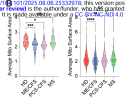
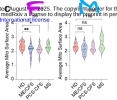
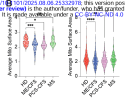
> Although the statistical significance was strong for the entire ME/CFS cohort (HD vs. ME/CFS, P=0.0004), IgG-induced mitochondrial fragmentation was not detected in the whole ME/CFS cohort. Only a subgroup of patients induced strong mitochondrial fragmentation. Hence, we conducted a gender-based analysis of the same, which revealed strong IgG-induced mitochondrial fragmentation in female ME/CFS and PCS-CFS patients compared to male patients (Figure 2)

1000049028.png
Left: average of multiple measurements, Right: each measurement separately

1000049029.png
Left: female, Right: male

Sure sample size isn't great, but not bad either? And I would've liked to see a dose-response curve regarding IgGs, because Claude (AI) tells me normal IgG levels in tissue fluid is 3-8mg/ml, which is 3000-8000x higher?
 

Attachments

  • 1000049028.png
    1000049028.png
    241.3 KB · Views: 0
I gotta say that the rest of the paper strikes me as messy, or at least hard to interpret for a layperson. I get the impression that they threw a lot of tests together and didn't properly correct for multiple testing. Most strikingly, they don't really find any evidence of mitochondrial dysfunction beyond the fragmentation/surface area alteration?
 
I was very skeptical with the earlier Prusty biomarker hype, but I don't see much problem with this?

> Although the statistical significance was strong for the entire ME/CFS cohort (HD vs. ME/CFS, P=0.0004), IgG-induced mitochondrial fragmentation was not detected in the whole ME/CFS cohort. Only a subgroup of patients induced strong mitochondrial fragmentation. Hence, we conducted a gender-based analysis of the same, which revealed strong IgG-induced mitochondrial fragmentation in female ME/CFS and PCS-CFS patients compared to male patients (Figure 2)

View attachment 27838
Left: average of multiple measurements, Right: each measurement separately

View attachment 27837
Left: female, Right: male

Sure sample size isn't great, but not bad either? And I would've liked to see a dose-response curve regarding IgGs, because Claude (AI) tells me normal IgG levels in tissue fluid is 3-8mg/ml, which is 3000-8000x higher?
Isn’t that classic p-hacking? Our first hypothesis didn’t significantly provide results since some cells didn’t fragment so we narrowed our search window and now the women’s group is extremely significant with all mitochondrial fragmentation.

Again I’d like to know how they choose the 10 cells to image, sounds like they could cherry pick the most fragmented cells for each group visually then run the analysis software… do we even know how endothelial mitochondria behave without IGG exposure in this experiment? If they just left them out to sit would they fragment? I can’t really find much on this type of experiment, it seems pretty novel.

This thing is like 3 papers in one, with the first part being the most “evidence” based and the other 2 just conjectures
 
Almost every sentence is outside what a competent immunologist would write. I could go through but just take the first two.

Autoimmunity is not a clinical features of anything. It is something you find on a test. Moreover, tests for it in MECFS are pervasively negative with just a few outlier reports of a slight difference from controls statistically.


PASC includes any symptom you like so if mice look a bit dodgy after an injection of antibodies from a foreign species, as you might expect, it doesn't tell us much.

Nobody is going to take this sort of thing seriously. I asked a well known friend and got the answer "they have absolutely no idea".

And for the antibody stuff it is as much like professional immunology as a chef chucking a box full of eggs in a pan and expecting to get an omelette. What has giving mice the back end of human antibody altering some tests of mitochondrial function to do with a disease where we don't even have any good evidence of poor mitochondrial function?

Sorry but I think it is worth my time discussing stuff on this forum because we so desperately need some professional science. What has passed for that in the past just isn't. We need a clean break. Fluge and Mella showed people how to do trials properly. DecodeME has shown people how to lab stuff properly. DecodeME isn't free of interpretation problems but Chris is right here giving honest answers to all the tricky questions.
So, you're saying that Bhupesh Prusty, Carmen Scheibenbogen, Ron Davis and Robert Naviaux are publishing stuff that isn't worth your time discussing?
Sorry, but that makes you look a bit conceited.
 
So, you're saying that Bhupesh Prusty, Carmen Scheibenbogen, Ron Davis and Robert Naviaux are publishing stuff that isn't worth your time discussing?
Sorry, but that makes you look a bit conceited.
This has nothing to do with anyone’s perception of themselves. Nobody owes it to anyone to spend any time or energy discussing their work if said works is of subpar quality.

If they publish quality work in the future, you can be sure that a lot of time and energy will be devoted to it. Just look at how much has been written already about DecodeME.
 
So, you're saying that Bhupesh Prusty, Carmen Scheibenbogen, Ron Davis and Robert Naviaux are publishing stuff that isn't worth your time discussing?
Sorry, but that makes you look a bit conceited.

I am sorry about that but I have been in this business long enough to know that a very high proportion of papers are not worth discussing. And all the scientists I know who have made significant progress in their field would say the same. Just because researchers have a high profile on social media does not mean that they can be relied on to produce useful work.

We need to be realistic about just how low expectations have been in ME/CFS research.
 
Back
Top Bottom