Increased illness experience preceding chronic fatigue syndrome: a case control study, 1998, Hall et al.

ME/CFS Science Blog

Senior Member (Voting Rights)

Abstract​

Background: Almost all published work on chronic fatigue syndrome (CFS) has involved retrospective surveys of cases, which may introduce recall bias. Only medical records collected before diagnosis of CFS can eliminate this.

Methods: Using data collected several years prior to the development of the illness, we performed a case control study, comparing the reported illness records of all people who subsequently made an insurance claim as a result of CFS, with those of future multiple sclerosis (MS) claimants, and those of non-claimant controls (NC).

Results: The study encompassed 133 CFS, 75 MS and 162 NC cases. CFS cases had recorded significantly more illnesses at time of proposal for insurance than the two control groups, and had significantly more claims between proposal and diagnosis of their disorder. Almost all disease categories were reported higher in future CFS sufferers, lethargy having the highest odds ratio after adjustment in a multivariate model.

Interpretation: The results of this paper on CFS patients who claim permanent health insurance do not support a specific viral or immunological explanation for CFS. We conclude that abnormal illness behaviour is of greater importance than previously recognised.

Link:

 
An older study that I hadn't seen discussed much. It uses insurance data of the company Medical Sickness Group. Found 133 CFS cases and compared them to MS patients and non-claimant controls.

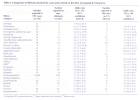
They could look at a median of 10 years before the claim of CFS. Results showed that ME/CFS patients in that period had more other illnesses than both control groups. The authors think this points to abnormal illness behavior and somatization, but it could be that ME/CFS had a weaker health before getting ME/CFS or that their ME/CFS was first (mis)diagnosed as other illnesses.

Notice that if the authors had looked only at anxiety/depression (as other groups have done) it would have appeared as if these psychiatric diagnoses had some special relationship with ME/CFS. We have seen similar findings in Long Covid where all illnesses/diseases are a risk factor, not just anxiety or depression.
1775990083452.png
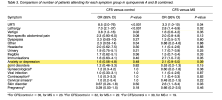
Table 3 is the logistic regression with only the most significant predictors retained. Looks like it confirmed viral infections and female sex as the most notable predictors for CFS (besides similar diagnoses such as lethargy).
1775990244513.png

This was in the 1990s though so psychiatric explanations were still very popular. Here's how the authors interpreted their results:
Our results, which indicate increased reporting of illness experiences long before establishment of chronic illness, support the view that abnormal illness behaviour is a major factor in CFS. We therefore conclude that CFS may be a manifestation of a tendency to succumb to illness, and that behavioural factors are of greater importance than previously recognised.

 
I wonder how they would have reported the MS study that found an increase in healthcare use 14 years prior to receiving a diagnosis.

And what about the people with endometriosis that go a decade before getting the diagnosis? Was it their repeated illness behaviour that caused their ovaries to succumb to cysts?

The bias is extreme.
 
Agree with Utsikt, also impressive that the patients seem to have doubled their rate of acute appendicitis via 'abnormal illness behaviour'.

But yes, setting aside their analysis, this kind of data is interesting. A bit odd the MS cases look so healthy (even better than the controls based on eyeballing the chart), I wonder how well they were matched? It's kind of intriguing that some conditions were elevated but others weren't. It would be cool to see a bigger, more reliable version of this.
 
Back
Top Bottom