Making Invisible Illnesses Visible: Recognizing and Responding to Infection Associated Chronic Conditions 2026 Iskander and Haridopolos

Andy

Senior Member (Voting rights)

Abstract​


The emergence of post-COVID conditions (PCC) has renewed attention to infection-associated chronic conditions and illnesses (IACCI), including myalgic encephalomyelitis/chronic fatigue syndrome (ME/CFS) and Lyme disease–associated chronic symptoms. Millions of Americans are affected by these debilitating, misunderstood conditions, which share symptom profiles and pathophysiologic abnormalities. IACCI have received insufficient clinical attention and research investment.

We outline elements of a patient-centered approach to care, emphasizing validation of patients’ experiences, multidisciplinary management, and symptom-focused treatment. Opportunities to strengthen clinical practice include a new CMS code for chronic condition management, extended visits, and creation of welcoming care environments. Advances in PCC and ME/CFS research provide a foundation for exploring shared mechanisms and developing targeted therapies. Improved surveillance, harmonized research, and inclusive trial designs are needed to define disease burden and accelerate therapeutic progress. Coordinated action by clinicians, researchers, and policymakers can help address longstanding gaps and improve outcomes for all individuals with IACCI.

Paywall
 
"patient-centered approach to care, emphasizing validation of patients’ experiences"

and of course nothing emphasises centering patients as much as your publication being behind a paywall meaning that the vast majority of them can't read it.... /s
 
Since this seems potentially important from a U.S. policy perspective, a few brief quotes -
Many patients with IACCI have faced longstanding skepticism about the very existence of what some have called “invisible illnesses”.4 Patients with diagnosed or suspected myalgic encephalomyelitis/chronic fatigue syndrome (ME/CFS) have long expressed concerns that their health status was not accorded sufficient clinical and policy scrutiny. ME/CFS likely represents a post-infectious response triggered by various pathogens. The U.S. burden of ME/CFS is important from health and economic perspectives, with approximately 2.5 million affected individuals and up to $24 billion annually in total costs
Actions clinicians can take immediately include acknowledging to their patients the realities of these illnesses which defy simple medical explanation and the severe effect they have on day-to-day functioning. Because of the lack of Food and Drug Administration approved treatments for any of these conditions, a focus on treating symptoms, preventing IACCI when possible,14 and improving quality-of-life15 must exist concurrently with the knowledge-building progress of evidence-based medicine.
Chronic pain, a symptom commonly seen across all forms of IACCI, should be recognized and managed according to professional guidelines.16,17 Beyond focusing on symptom relief, important principles of care for persons with IACCI include creating a welcoming practice environment for individuals who have experienced longstanding frustration with the healthcare system, engaging a multidisciplinary care team, and enabling patients to find and use reliable information and avoid potentially harmful interventions
Whenever feasible, longer appointments with such patients, especially ones new to the practice, should be scheduled. Such scheduling allows time for a complete medical history and physical examination but also conveys that patients with IACCI are welcome. Clinical providers should guard against unintentionally stigmatizing or marginalizing patients who have symptoms, but do not yet have a clearly definable disease process.
Long COVID and ME/CFS prevalence estimates indicate that over 20 million persons in the U.S. are affected by the physical and mental struggles intrinsic to IACCI. It is likely that this figure is underestimated due to underreporting and recall bias. This documented disease burden is sufficient justification for ongoing investment in clinical quality improvement, therapeutics focused research, public health surveillance, and the creation and dissemination of evidence-informed treatment guidelines.22 Even for patients who have not yet received a specific diagnosis, cross-cutting “living” clinical guidelines for IACCI are now available.23 A selection of evidence-informed guidelines are featured in Box 2.
There are other specific recommendations, such as using a specific CMS diagnostic code (G2211) for "IACCI" patients. It also touches on the lack of evidence for antibiotic therapy in post-acute Lyme and recommends a search for causes other than persistent infection.
 
It all sounds very sensible but does it actually provide any useful guidance. There is still a talk of multidisciplinary care - without any reason being given. It would be nice to have therapies but what is 'therapeutics-focused research'? In my experience it is doing the biology first so that you have some chance of knowing where to look. When there are therapies with evidence, they will get used. Guidelines and their dissemination will follow for those that want them.
 
emphasizing validation of patients’ experiences
Is any of this language found in illnesses that aren't disbelieved? Because I don't need someone to validate my experience, I need someone to understand it and do something smart and useful about it. I could not care less about validation, whatever it means to different people. It just needs to be treated normally, not separate from the rest of medicine.
Beyond focusing on symptom relief, important principles of care for persons with IACCI include creating a welcoming practice environment for individuals who have experienced longstanding frustration with the healthcare system, engaging a multidisciplinary care team, and enabling patients to find and use reliable information and avoid potentially harmful interventions
Like the above. This simply describes normal health care that works, based on science, as opposed to weird alternative medicine, biopsychosocial, not-care that doesn't work. Just do health care normally and stop being weird about it. I don't want smiling greeters at the door, I want competent physicians and nurses who know what they're doing because they understand the problem, with science. All of which requires throwing out the whole damn psychosomatic house of cards, with extreme prejudice.

I am not aware of any "symptom-focused treatment", in fact I don't really understand what it even means.

So many guidelines. I don't think any of them are any useful. This needs normalization and research, the rest is pointless.
 
Why do we accept ME/CFS being classified as an "infection-associated chronic condition" when something like 40% of us had non-infectious onsets (with a large % of those having clear non-infectious triggers)?
 
In the DecodeME cohort of more than 16.5k, 62% of participants indicated an infectious trigger, only 16% identified a non-infectious onset trigger, and 22% indicated that they didn't know what triggered their ME/CFS, so while I don't think these infection-associated chronic condition 'buckets' are particularly useful, I do think that viewing ME/CFS as infection-associated is the most sensible path to follow.
 
Last edited:
Because I don't need someone to validate my experience, I need someone to understand it and do something smart and useful about it.
Or admit they got nothing useful to offer, at this stage, beyond diagnosis and generic support and medical care.
Why do we accept ME/CFS being classified as an "infection-associated chronic condition" when something like 40% of us had non-infectious onsets (with a large % of those having clear non-infectious triggers)?
This is one of those issues where we simply don't have a good handle on it. It is quite possible all cases are infectious onset, but in some cases the initial infection is very subtle or even entirely asymptomatic, so the patient has no reason to associate onset with an infection.

I am agnostic about this. Like so much about ME/CFS, at this stage we just don't know.
 
It also touches on the lack of evidence for antibiotic therapy in post-acute Lyme and recommends a search for causes other than persistent infectio
There is so much to unpack here, and it all can be tied back into this presumptive and feel-good IACC genre, but to me this is at best misleading.

We already know persistence post abx occurs. It's just that it gets complicated after that. Blood diagnostics vs tissue testing, for example. The former catastrophically poor; the latter, rare. This holds true for a couple TBDs, not just Lyme. The efficacy of long-term antibiotics is still being keenly debated.

I'm also not confident in downstream diagnostics relating to EBV and HHV-6 and enteroviruses etc etc.

Persistence should probably remain on the table until we can truly rule it out.
 
This is one of those issues where we simply don't have a good handle on it. It is quite possible all cases are infectious onset, but in some cases the initial infection is very subtle or even entirely asymptomatic, so the patient has no reason to associate onset with an infection.
I really don't think that's realistic given how many people can point to clear non-infectious triggers. I'm not aware of any ME/CFS doctors/researchers (besides Maureen Hanson: see below) who actually argue that all ME/CFS cases were likely triggered by an infection (and that it just happened to coincide with these other non-infectious triggers); what those who are very focused on pathogens usually suggest is that these other triggers all reactivated dormant pathogens.

"By definition, every IACC was caused by an inciting infection."
Infection-associated chronic conditions: why long COVID is our best chance to untangle Osler’s Web Michael J Peluso, Maureen R Hanson, Steven G Deeks

I just made a Twitter post about this recently - way too many cases of clear non-infectious triggers to make the "they may have simultaneously acquired an infection mid-X" hypothesis plausible.

 
In the DecodeME cohort of more than 16.5k, 62% of participants indicated an infectious trigger, only 16% identified a non-infectious onset trigger, and 22% indicated that they didn't know what triggered their ME/CFS,
Can you tell me where in the paper it says that 16% identified a non-infectious trigger? I can't find that.
so while I don't think these infection-associated chronic condition 'buckets' are particularly useful, I do think that viewing ME/CFS as infection-associated is the most sensible path to follow.
I disagree that viewing ME/CFS as an infection-associated illness is the most sensible path to follow any more than I agree that viewing ME/CFS as a female-associated condition is the most sensible path to follow. Yes, a high % of people with ME/CFS report infectious onsets. Yes, a high % of people with ME/CFS are female. Both of these can give important clues to the pathophysiology of the illness, but clearly neither is required to develop ME/CFS.
 
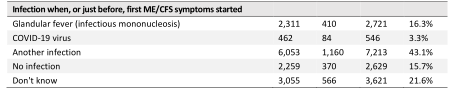
Table 1, columns are "Female", "Male", "Total", and "% of total":
View attachment 31828
It looks like that's not 15.7% of patients reporting a non-infectious trigger though, just that 15.7% said they did not have an infection (and 21.6% said they were not sure). As far as I am aware there was nothing in the DecodeME data specifically about non-infectious triggers.
 
It seems that no matter how you approach this there are assumptions at play.

Just to play Devil's Advocate, how would anyone know they didn't have a causal infection/trigger if a) they were asymptomatic for it, and b) the diagnostics were inadequate?
 
It seems that no matter how you approach this there are assumptions at play.

Just to play Devil's Advocate, how would anyone know they didn't have a causal infection/trigger if a) they were asymptomatic for it, and b) the diagnostics were inadequate?
I guess you can't, but again it comes back to: do you really believe it's realistic that all these people reporting clear non-infectious triggers like concussion/other physical trauma, surgery, toxic exposure, childbirth/miscarriage, vaccine, adverse drug reaction, etc. simultaneously acquired an infection at that exact same time?

Also to play Devil's advocate, for all these people who reported infectious onsets who did not actually get a laboratory confirmed diagnosis of an infection, how can you be sure that you actually had an infection since many of the symptoms of ME/CFS overlap with those of an infection? People report symptoms like fevers, congestion/sneezing, sore throats, etc. during PEM so how can you be sure that it was not just your first episode of PEM?
 
I guess you can't, but again it comes back to: do you really believe it's realistic that all these people reporting clear non-infectious triggers like concussion/other physical trauma, surgery, toxic exposure, childbirth/miscarriage, vaccine, adverse drug reaction, etc. simultaneously acquired an infection at that exact same time?

Also to play Devil's advocate, for all these people who reported infectious onsets who did not actually get a laboratory confirmed diagnosis of an infection, how can you be sure that you actually had an infection since many of the symptoms of ME/CFS overlap with those of an infection? People report symptoms like fevers, congestion/sneezing, sore throats, etc. during PEM so how can you be sure that it was not just your first episode of PEM?

Yes. You are right.

For me, at least, it's a dilemma.
 
Back
Top Bottom