ME/CFS and Long COVID Demonstrate Similar Bioenergetic Impairment and Recovery Failure on Two-Day Cardiopulmonary Exercise Testing
Todd Davenport; Staci Stevens; Jared Stevens; Mark Van Ness
Myalgic encephalomyelitis/chronic fatigue syndrome (ME/CFS) and Long Covid are characterized by post-exertional malaise (PEM). Similarities in disease presentation suggest important commonalities in bioenergetic impairment, but this hypothesis has not been demonstrated. The metabolic underpinnings of each disease can be elucidated by two cardiopulmonary exercise tests (CPET) administered 24 hours apart.
This retrospective study examined physiological responses on two-day CPET in people with ME/CFS (63 females and 21 males), Long Covid (52 females and 27 males), and matched non-disabled control participants (51 females and 20 males). Data were analyzed within sexes using repeated measures analysis of variance.
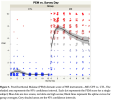
All participants met maximal effort criteria. There were significant reductions in oxygen consumption (O₂) and workload at the ventilatory anaerobic threshold (VAT) in both patient groups compared to non-disabled controls, with larger effect sizes at VAT than at peak exertion. Performance decrements were observed in both sexes. Females exhibited more pronounced abnormalities and significant group by test effects.
No significant differences were observed between patient groups. Severe disability based on impaired O₂ was prevalent in both patient groups. Hemodynamic and ventilatory measures were within normal ranges. ME/CFS and Long Covid both involve a functionally significant bioenergetic failure complicated by inadequate post-exertional recovery, which is similar between the conditions and unexplained by hemodynamic and ventilatory changes.
Findings support the utility of two-day CPET as an objective measure of PEM and functional impairment. Future studies may integrate mechanistic biomarkers with two-day CPET as trial endpoints and to establish likely responses to treatments for PEM.
Web | DOI | PDF | Preprint: Research Square | Open Access
Todd Davenport; Staci Stevens; Jared Stevens; Mark Van Ness
Myalgic encephalomyelitis/chronic fatigue syndrome (ME/CFS) and Long Covid are characterized by post-exertional malaise (PEM). Similarities in disease presentation suggest important commonalities in bioenergetic impairment, but this hypothesis has not been demonstrated. The metabolic underpinnings of each disease can be elucidated by two cardiopulmonary exercise tests (CPET) administered 24 hours apart.
This retrospective study examined physiological responses on two-day CPET in people with ME/CFS (63 females and 21 males), Long Covid (52 females and 27 males), and matched non-disabled control participants (51 females and 20 males). Data were analyzed within sexes using repeated measures analysis of variance.
All participants met maximal effort criteria. There were significant reductions in oxygen consumption (O₂) and workload at the ventilatory anaerobic threshold (VAT) in both patient groups compared to non-disabled controls, with larger effect sizes at VAT than at peak exertion. Performance decrements were observed in both sexes. Females exhibited more pronounced abnormalities and significant group by test effects.
No significant differences were observed between patient groups. Severe disability based on impaired O₂ was prevalent in both patient groups. Hemodynamic and ventilatory measures were within normal ranges. ME/CFS and Long Covid both involve a functionally significant bioenergetic failure complicated by inadequate post-exertional recovery, which is similar between the conditions and unexplained by hemodynamic and ventilatory changes.
Findings support the utility of two-day CPET as an objective measure of PEM and functional impairment. Future studies may integrate mechanistic biomarkers with two-day CPET as trial endpoints and to establish likely responses to treatments for PEM.
Web | DOI | PDF | Preprint: Research Square | Open Access


 Differentiate PEM from normal recovery using objective measures