Myalgic Encephalomyelitis/Chronic Fatigue Syndrome diagnostic reporting in the 2021–2023 National Health Interview Survey 2026 Fleig et al

Andy

Senior Member (Voting rights)

Abstract​

Background​

Myalgic Encephalomyelitis/Chronic Fatigue Syndrome (ME/CFS) is a chronic disabling illness characterized by activity limitations associated with fatigue, post-exertional malaise (PEM), unrefreshing sleep, memory and concentration problems, orthostatic intolerance and painful discomfort. While typically considered to be a chronic condition, some persons who have had ME/CFS report no longer having the disorder. Here, the prevalence and characteristics of adults in the United States who self-report having an ME/CFS diagnosis and those who self-report no longer having ME/CFS are presented.

Methods​

The current study utilized publicly available data from the 2021–2023 National Health Interview Survey, which interviewed 86,655 United States civilian non-institutionalized adults about their health. For this study, participants were categorized into three groups: Current ME/CFS (individuals currently diagnosed with ME/CFS), Past ME/CFS (individuals who were previously diagnosed but no longer report having the condition), and Never ME/CFS (individuals who have never been diagnosed with ME/CFS). These groups were characterized using descriptive statistics.

Results​

In the United States adult population, 20.7% of the estimated 1.5% adults who ever received an ME/CFS diagnosis report they no longer have the condition (Past ME/CFS). Overall the Past ME/CFS group reported experiencing symptoms less frequently, less difficulty with daily living, approximately equal prevalence of comorbidities, and better general health status than the Current ME/CFS group but remained significantly impaired compared to the Never ME/CFS group. However, 40–50% of adults with Past ME/CFS report symptoms and function similar to adults with Current ME/CFS and only approximately 25% had substantially less symptoms and better function compared to those with Current ME/CFS. Comorbidities did not differ significantly between the Current and Past ME/CFS groups.

Conclusion​

Further study to better understand the reasons why those in the Past ME/CFS group report no longer having the disorder is important for understanding the natural history and disease burden of ME/CFS. Studying symptomatic remissions, and the underlying physiology of improvement, could lead to identification of new disease modifying therapeutic approaches.

Open access
 
It definitely needs further study. I can think of explanations for the reduction in reporting symptoms. Lifestyle-modifications (learning what foods or activities to avoid) can reduce flaring. Then there's simple acceptance of a lower quality of life. The first experience of ME's "flu-like symptoms" might lead to hiding in bed, but after experiencing the same severity for 10+ years, I think the reported severity would be lower. ME does change over time too. I wonder what % of those studied reported worsened condition.

I'd expect that people who lose limbs would report reduced severity of problems over time, for similar reasons. The limb wouldn't have grown back, but they would have gotten used to the new reality.

It's important to identify how reporting of symptoms might change over time even with the biological causes remaining the same. Otherwise it's an opening for the BPS crowd.
 
prevalence of comorbidities
Worth noting that comorbidities in this paper are not the usual suspects but things like arthritis, diabetes, cancer and suchlike. Raises the question why some of these were found at higher rates in people with an ME/CFS diagnosis (past and current) than in people who’ve never had an ME/CFS diagnosis.

For arthritis that’s likely at least in part due to the category including fibro but that doesn’t explain the others. However, the prevalence of ME/CFS diagnoses seems a little on the high side so maybe some people with these ‘comorbid’ diseases get an additional CFS diagnosis – or just a CF one they then confuse with CFS – for their fatigue?

@Simon M @forestglip just in case you missed this study and the dataset it’s based on. There may or may not be something interesting about prevalence to be extracted (I’ve only skimmed)
 
Worth noting that comorbidities in this paper are not the usual suspects but things like arthritis, diabetes, cancer and suchlike. Raises the question why some of these were found at higher rates in people with an ME/CFS diagnosis (past and current) than in people who’ve never had an ME/CFS diagnosis.

Those are very odd figures, especially for diabetes. It tends to confirm my suspicion that 'co-morbidities' may crop up in ME/CFS populations because of confounding issues relating to diagnostic ascertainment, visiting doctors and various other things. That may have played a significant role in the UK Biobank proteomics study, which suggested insulin resistance. It might even be relevant to DecodeME, although I think that much less likely.
 
It's an interesting study. I haven't looked at this deeply, brain not capable of that today, so these are surface-level comments from a skim.

Putting these two findings together, the usual recovery estimate of approx. 5% is borne out:
In the United States adult population, 20.7% of the estimated 1.5% adults who ever received an ME/CFS diagnosis report they no longer have the condition (Past ME/CFS).
Third, the data demonstrates that about 25% of adults with past ME/CFS have current measures of symptoms, function, and health status that suggest they currently do not have ME/CFS symptoms.
20.7 x 0.25 = 5.175

The impression many have that many reporting recovery are still unwell is also borne out:
However, 40-50% of adults with Past ME/CFS report symptoms and function similar to adults with Current ME/CFS and only approximately 25% had substantially less symptoms and better function compared to those with Current ME/CFS.

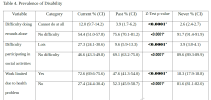
I'm surprised that nearly half of those reporting current ME/CFS report no difficulty participating in social activities. I had difficulty there even when mild.

See excerpt from table 4:

1778495717075.png
 
Last edited:
Back
Top Bottom