New Zealand: ANZMES

However, for ME/CFS,
a highly individualised condition, the precision medicine model
takes a “deep dive” approach, essential for revealing subgroups,
and understanding individual patient differences. This nuanced
approach is often lost in large, one-dimensional datasets, often
seen in fields like cancer studies."

This makes it clear that whoever wrote this is naïve and has no clue of the real issues.
Precision medicine is largely a cult. Individualisation comes after a general finding has been shown to be reliable. It is even more open to abuse.
 
This makes it clear that whoever wrote this is naïve and has no clue of the real issues.
Precision medicine is largely a cult. Individualisation comes after a general finding has been shown to be reliable. It is even more open to abuse.
My life would be so much easier if everyone around me understood this. Apparently, I’m supposed to try everything because everyone are unique so it might just work for me even though it hasn’t worked for othere.
 
Just wondering if there is a thread to discuss ANZMES upcoming SGM and AGM and related documents (including a Constitution refresh) here, as there are major issues. I wonder if other people are considering voting No, and providing feedback to ANZMES or will be at the SGM to speak (if allowed).
 
Just wondering if there is a thread to discuss ANZMES upcoming SGM and AGM and related documents (including a Constitution refresh) here, as there are major issues. I wonder if other people are considering voting No, and providing feedback to ANZMES or will be at the SGM to speak (if allowed).
This thread is probably a good place to start a discussion on that. What is being proposed?
 
This thread is probably a good place to start a discussion on that. What is being proposed?
I apologise for raising the question and not coming back to clarify. I ran out of capacity.

The AGM for ANZMES on the 1st Nov did not have a quorum (10 people) so it has been rescheduled to Monday 24th Nov, and they have announced a change of approach to be voted on - which is evidence that they have reflected on some of the concerns raised by individuals in October. For consideration and voting there were some new purpose statements and constitution, a new National Advisory Council, new logo, and other matters that many people felt needed consultation and there had been none - along with technical issues with amount of notice and sending 49 pages out to chronically ill people to review in 23 days.

NZ incorporated societies are being forced to re-register by April 2026 to comply with new law. A constitution re-write or move to a new Charitable Trust model is a great opportunity to reflect on purpose and scope, and who ANZMES members should be i.e. should it follow models used by other national advisory charities for health conditions and have the regional ME/CFS groups as core members and partners, rather than focusing on individual members? etc

ANZMES new plan:
We will re-register as an Incorporated Society — to meet the April 2026 deadline under the new Act — using our existing Constitution. A minor amendment will be added to clarify that, in the event of any conflict between the Constitution and the Incorporated Societies Act 2022, the Act will take precedence. This ensures compliance without requiring broader constitutional changes at this stage.

Following re-registration, our focus will shift to developing the Trust Deed, which will be presented to members alongside a refreshed logo.

...
We will also keep you apprised of progress, and you’ll have the opportunity to review and contribute to the proposed Trust Deed.
 
For Kiwis

ANZMES is seeking feedback from members and non-members on past/current performance and future direction
ANZMES is changing. As we transition to a Charitable Trust and look toward the future, we want to ensure our goals align with the reality of what you expect.

We are asking for your help to rank our priorities. We would greatly appreciate if you could please take 5–10 minutes to fill out this survey. Your input is important in shaping the future of ANZMES.

Responses are due Monday 2nd February 2026.
Link to survey

Members have also been sent a paper form as an alternative to the online survey. I haven’t asked but I’m sure ANZMES would be happy to send one to non-member Kiwis, too (info@anzmes.org.nz)

[Posting this in both the NZ and the ANZMES threads]
 
From Facebook:

Today, in honour of World ME Day, ANZMES have launched a vital new clinical resource: Key Red Flags Guide to help GPs recognise ME/CFS earlier and prevent avoidable harm.

Many with ME/CFS remain undiagnosed or misdiagnosed for years. Our new evidence-based guide is designed to help primary care clinicians spot the "dashboard lights" of ME/CFS early.

Let’s ensure every New Zealander receives care that reflects the science.

Access our free guide here and share with your GP:

#EducateME #TakeMESeriously #WorldMEDay2026 #ANZMES
 
Press release: https://anzmes.org.nz/anzmes-launch...s-guide-to-help-gps-recognise-me-cfs-earlier/

I'm sorry to be critical but this is not good.

Includes some ill-judged AI slop graphics, with a patient in a wheelchair waving a large red flag above his head and another with a patient waving her flag in the doctor's face and another that appears to be a doctor giving a red flag to a patient.

These don't really comport with the hashtag #TakeMEseriously and URL: anzmes.org.nz/world-me-day/take-me-seriously-2026

The following quote would be a real turn-off for any GP reading.
ANZMES President Fiona Charlton says the new clinical tool is designed to meet GPs where they are

The actual document (linked directly by Dolphin, above) is hidden a long way down the page that the PR doesn't itself link to. It's hard to imagine a GP proceeding with this journey of discovery.

The document itself has some good points, though frames around "boom-bust" instead of the preferred term "push-crash". Very light on references, with no research literature references at all.

Does include a reference link to https://www.cambspborochildrensheal...cfs-team/chronic-fatigue-activity-management/

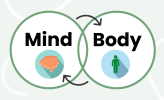
Which talks about baselines and recovery and has this prominent graphic:

mind-body-graphic.png
 
Last edited:
Screenshot 2026-05-17 at 3.13.28 PM.png
World ME Day is a global initiative held annually on 12 May to raise awareness of ME/CFS and promote evidence‑based understanding of the disease. This year’s theme, Take ME Seriously, calls on clinicians, policymakers, and the public to recognise ME/CFS as the serious biomedical condition it is.
Yes, this is just embarrassing. And particularly ironic that they are claiming to be contributing to the promotion of 'evidence-based understanding' and yet have been such a prolific source of nonsense.
 
Snippets from the Red Flags document (note, it is clear that it is focussed on mild + moderate patients)

Exertion intolerance in ME/CFS can be gradual or sudden onset, resulting from mitochondrial dysfunction, reducing the capacity for sustained and efficient energy production.
We don't have good evidence that PEM is caused by mitochondrial dysfunction.

Functional Instability
That's not a great title, given the multiple meanings of those words

PEM drives the boom–bust cycle and long‐term decline.
We don't have good evidence that PEM is what causes long-term decline.


These are the GP actions in response to 'Boom-bust cycling'.
GP Action:
● Validate the pattern
● Encourage consistent, sub‐symptom activity (less is more) to prevent cycling
● Document functional capacity (ADLs, IADLs, work hours, recovery time)
'Validate the pattern' is an odd way to phrase things. There is nothing there about assisting the patient to get help, so that they do not have to have days of higher activity to survive. The boom day is characterised as a day of 'increased activity' but there is nothing to make clear that that might just be going to work, or doing a grocery shop.


ME/CFS is a serious biomedical condition that affects the immune, neurological, endocrine, and autonomic systems.
We don't know that.

The multiple structural brain changes evident in ME/CFS means it is not Functional Neurological Disorder (FND), which is classified as an ‘information-processing’ brain disorder that does not produce structural changes.
So wrong in multiple ways. We don't have good evidence of a 'structural brain change', let alone multiples of them. This sort of thing, along with the talk about 'permanent deterioration' causes people to lose hope and give up. And there are probably as many studies finding dubious 'brain changes' in FND as there are in ME/CFS.
 

Press Release – ANZMES Launches National “Take ME Seriously” Campaign to Transform ME/CFS Clinical Care in Aotearoa​

May 5, 2026 by anzmes01
Release Date: 5th May 2026

The Associated New Zealand Myalgic Encephalomyelitis Society (ANZMES) is officially marking World ME Day on 12 May 2026 with a national call to action under the global theme “Take ME Seriously”. This year’s campaign is focused on bridging the significant gap between scientific discovery and clinical practice by providing New Zealand’s healthcare professionals with the evidence-based tools they need to recognise and manage Myalgic Encephalomyelitis/Chronic Fatigue Syndrome (ME/CFS) safely. With the recent release of breakthrough findings from the world’s largest DNA study, DecodeME, the biomedical reality of this condition is undeniable, yet many New Zealanders continue to face outdated treatment narratives that can lead to permanent clinical harm.


Leading up to World ME Day, ANZMES will launch new clinical resources and have conversations designed to help General Practitioners identify early warning signs such as Post-Exertional Malaise (PEM) and orthostatic intolerance. These resources are part of a wider push to promote the World ME Alliance’s Medical Education Hub, a global library of peer-reviewed materials that align local primary care with international best practices. ANZMES President Fiona Charlton emphasises that for too long, ME/CFS has been misidentified as a psychological or deconditioning issue, whereas the current science confirms it as a multisystem hardware failure involving immune dysregulation and mitochondrial dysfunction.

The campaign also highlights the “Know M.E. Clinical Education Programme,” a CME/CPD-accredited training series for hospital teams, nurses, and allied health professionals across Aotearoa. By providing these accredited modules, ANZMES is helping clinicians understand the “Energy Envelope” and the fundamental necessity of pacing as a primary management strategy. Distinguished experts, including Dr. Ros Vallings and Professor Warren Tate, have contributed to this educational push, underscoring that when clinicians are trained to understand the biological markers of the disease, the healthcare system moves from a state of uncertainty to preventing avoidable functional decline.

For the thousands of New Zealanders still waiting for a legitimate diagnosis, the 2026 campaign offers a message of hope and a formalised pathway to support. ANZMES is encouraging the public and the medical community to share these “decoded” facts to spread the science and challenge long-standing misconceptions that have historically hindered patient care.

We ask that you please support and follow our 2026 campaign on ANZMES Facebook. over the next week. Sharing our content helps spread our message further and reach our health practitioners across Aotearoa.

Detailed clinical resources, diagnostic criteria, and localised referral pathways are now available on the ANZMES website to ensure that every healthcare provider in Aotearoa is equipped to take ME seriously: World ME Day 2026 – ANZMES
 
Back
Top Bottom