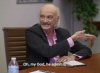
New Zealand: Dr Matthew Phillips, neurologist

SNT Gatchaman

Senior Member (Voting Rights)
Staff member
Posts copied or moved from the FND discussion thread


NZ's Goodfellow Unit podcast: Functional neurological disorder with neurologist Matthew Phillips

At 6:38 he said:
In terms of what to look for, well I would say as a GP —well the consult times are so darned short — if you spend five minutes talking to a patient and they're giving out symptoms and they're still going and you're very confused then chances are creeping up that it's one of these. If they have a list of symptoms — that's known as the 'list sign' — that's actually an extremely reliable indicator that you're probably dealing with a functional neurological disorder. Or one of its cousins: there's other brain processing disorders from my perspective as well, so like chronic fatigue syndrome I think falls into this category, sort of a cousin of FND. As does fibromyalgia and irritable bowel syndrome.

https://www.goodfellowunit.org/podcast/functional-neurological-disorder
 
Last edited by a moderator:
NZ's Goodfellow Unit podcast: Functional neurological disorder with neurologist Matthew Phillips

https://www.goodfellowunit.org/podcast/functional-neurological-disorder

Just incredible, really.

But for anyone from the outside who is sceptical about how astonishingly sloppy and unscientific diagnostic practices (and how casually doctors fall into them ) frequently are, this would serve as a great clear example.

If anyone harbours doubts that FND diagnoses are being handed out willy-nilly, this quote should dispel those doubts. Of course there is much, much evidence besides but none so succinct as this.

Just astonishing. But that’s the reality.

Let’s just rephrase this deeply depressing quote, let’s translate it.

“If you’re a doctor - someone who treats sick people - and you have a sick person who…complains about being sick, then lists more than one symptom and you get confused* then you can safely skip the whole search for evidence, testing of hypotheses, differential diagnosis and just go straight to slapping FND on them.”

Imagine saying this. Imagine letting it be known that this is how you practice medicine. Even worse, imagine presenting this complete failure as the best practice, the best way to approach such a situation.

What is the point of all the years of medical school and residency etc if this is how you end up approaching a diagnosis?

How can you present this as an evidence based, rigorous process of diagnosis?


*= you can’t IMMEDIATELY work out what the symptoms could be caused by, nor are you capable of understanding that these multiple symptoms may be caused by the presence of more than one illness, which could present a confusing picture
 
If they have a list of symptoms — that's known as the 'list sign'

If…sick people…tell you the ways in which they are sick….you should immediately conclude that it’s all in their head.

Ah, yes. Yes of course. Perfect. No notes. This is the very height of the medical application of the scientific process.

I can’t see how this approach could ever lead to misdiagnosis.

( I was misdiagnosed with FND multiple times, and I would list many symptoms because I had many. Later, I was diagnosed with a physical disease, a degeneration of my small nerve fibres. Both inherently and additionally because it can extend into the autonomic areas, it can produce a dizzying array of complex symptoms. I had a type of neuropathy, not an illness that “exists at the boundary of the neurological and the psychiatric”. I just needed the right test to confirm this, instead of relying on the previous fanciful theories that had no evidence for them.)

they're giving out symptoms and they're still going and you're very confused

If you can’t instantaneously work out a probable diagnosis and feel confused by multiple disparate symptoms then you must blame the patient for your sense of inadequacy and conclude they’re a bit, you know, *taps head*.
 
Last edited:
NZ's Goodfellow Unit podcast: Functional neurological disorder with neurologist Matthew Phillips

https://www.goodfellowunit.org/podcast/functional-neurological-disorder

I just wanted to point out a few things that go beyond me reacting to your quote, and to look at the podcast itself.

Firstly, the podcast is available n from all the usual podcast libraries like Apple Podcasts or Pocket Casts etc if you want to download it and listen to it properly.

https://pca.st/episode/3bdcd91f-f771-4249-8ba6-628454006ffd

This is interesting, take-home points for practitioners, from the official Goodfellow link you provided:


Point 5: are they really? Are you sure about that?

The podcast is a goldmine of telling quotes. Hard to know where to start but here are just a few:

11:50 - “and to be honest the history is, I would say 90% of the diagnosis. The examination is rarely super helpful”

11:57 - “I think the best thing about doing the examination is that, uh, the patient knows that you’re looking hard and you’re taking them seriously and you’re really trying to tease out if there’s any other structural issues going on”

Very suggestive to me that he feels it’s very important to reassure the patient that you’re taking them seriously. We see this a lot in in FND literature - don’t let on.

13:05 - “…are we doing investigations to exclude organic pathology?

“Not so much to exclude it, but to see if there’s additional organic pathology.”

As we see again and again, it seemingly doesn’t matter that the real world practice around FND is self-contradictory.

FND is meant to be something that involves no organic pathology, but we see that in practice they will diagnose FND even if organic pathology is found - that is if you ever even do testing that can actually reveal that.

14:44 - “tests are there to confirm what your brain thinks. They’re not there to give you the answer. We fall into this trap of ordering an MRI or something to give you an answer”

There we have it. The only utility of tests is to confirm your assumptions. If the tests don’t contradict your assumptions, then they must be correct. Of course the problem here is that you assuming you’ve done the right test and that the test result is accurate.

I had tests that could be taken (and were) to ‘confirm’ the consultants assumption of FND, because they didn’t reveal any organic disease. The problem was that the tests I was given were physically incapable of revealing the organic disease I had.
 
Last edited:


A lecture on FND by the guest on the above podcast, the neurologist Dr Matthew CL Philips.

This is also another absolute goldmine. I cannot urge strongly enough that anyone interested in this subject both listen to the entirety of the podcast and also watch this lecture.

So many fascinating comments and I’m only one-third of the way through it.

“FND constitutes one third of out-patient neurology referrals”

Chinny reckon?

“Most doctors, once you get to three or four symptoms, our brain starts to turn off and go arrrghh I can’t localise it. There’s just too much stuff going on here, why does this person have, you know, the list”

You’re really showing yourself up, man. You’re confessing publicly that you and your colleagues are easily bamboozled. More than 3/4 symptoms and you can’t handle it and your diagnostic approach just totally collapses.

When pushed, even slightly, you become lazy and reflexively fall back on a broad diagnosis that conveniently covers all and any symptoms. Then that assumption informs your entire approach to the patient, future tests and how you interpret them.

The patients fate is sealed because your diagnostic approach is shockingly frail and because you don’t want to deal with ‘complex’ cases. Why deal with complexity and hard work, when there’s a diagnosis that has faux simplicity and minimal work right there?

You’re biased towards wanting to have the success of making a diagnosis, because that validates your sense of professionalism and knowledge. But you don’t want to do the hard work of making sure that your diagnosis has been arrived at rigorously and with a firm evidence base - if it sounds plausible enough it will do, and you don’t need to wrack your brains to exclude all possible known conditions that could explain the symptoms.

You can just show that you’ve excluded a couple of things and then, well, that covers everything. They don’t have , say, MS, so they can’t have, say, something like a neuropathy that only affects their small nerve fibres. You certainly don’t need to test for it! Why do further tests when your instinctual diagnosis is obviously correct?


How remarkable that you are never wrong, have a very high success rate with making firm diagnoses and strangely have few patients leave without a diagnosis. It must just be how incredibly good you at your job, there are no other factors that could explain this pattern.

This is astonishing. Imagine a physicist saying of themselves and their colleagues that their common practise is “ooh we get more than 3/4 data points and we get confused so we just tend to say it’s X”.

Imagine a physicist openly talking about this and expecting to be showered with plaudits for their professionalism and methods.

 
Last edited:
I just wanted to point out a few things that go beyond me reacting to your quote, and to look at the podcast itself.

Firstly, the podcast is available n from all the usual podcast libraries like Apple Podcasts or Pocket Casts etc if you want to download it and listen to it properly.

https://pca.st/episode/3bdcd91f-f771-4249-8ba6-628454006ffd

This is interesting, take-home points for practitioners, from the official Goodfellow link you provided:


Point 5: are they really? Are you sure about that?

The podcast is a goldmine of telling quotes. Hard to know where to start but here are just a few:

11:50 - “and to be honest the history is, I would say 90% of the diagnosis. The examination is rarely super helpful”

11:57 - “I think the best thing about doing the examination is that, uh, the patient knows that you’re looking hard and you’re taking them seriously and you’re really trying to tease out if there’s any other structural issues going on”

Very suggestive to me that he feels it’s very important to reassure the patient that you’re taking them seriously. We see this a lot in in FND literature - don’t let on.

13:05 - “…are we doing investigations to exclude organic pathology?

“Not so much to exclude it, but to see if there’s additional organic pathology.”

As we see again and again, it seemingly doesn’t matter that the real world practice around FND is self-contradictory.

FND is meant to be something that involves no organic pathology, but we see that in practice they will diagnose FND even if organic pathology is found - that is if you ever even do testing that can actually reveal that.

14:44 - “tests are there to confirm what your brain thinks. They’re not there to give you the answer. We fall into this trap of ordering an MRI or something to give you an answer”

There we have it. The only utility of tests is to confirm your assumptions. If the tests don’t contradict your assumptions, then they must be correct. Of course the problem here is that you assuming you’ve done the right test and that the test result is accurate.

I had tests that could be taken (and were) to ‘confirm’ the consultants assumption of FND, because they didn’t reveal any organic disease. The problem was that the tests I was given were physically incapable of revealing the organic disease I had.
This is so bizarre. I'm trying to extend this rationalization to other professions and nothing computes. It's so far outside of all norms to be so dismissive of not only the tools of the trade, but to insist that those same tools they here scoff at have all the answers, therefore when they come back negative it means that it must be "magical traditional explanation built around lack of evidence and logical fallacies". Both rationalizations are something that is trained out very quickly in all technical professions.

It's a system built on contradictions: you must have a verified test or it's invalid, but for this entire category of things, which is expanding to take over essentially 1/3 of all health problems, you must scoff at the very notion that you need to perform tests at all. You can simply wing it. And never look back. Never record anything. Never follow-up. No diagnosis is valid without strong evidence and valid tests. Except those ones, where tests are stupid and the only evidence is absence of evidence, a major logical fallacy.

In most technical fields, as a junior professional applying this way of doing things will often get you fired, or marked off for any promotion or involvement on critical tasks. Permanent entry-level status. As a senior professional, it will likely get you fired, possibly disciplined or even sued. But medicine being its own sovereign domain with a huge power imbalance, there it's standard operating procedure. You normally simply can't stay in business or employed behaving like this, delivering such awful outcomes and neglecting so much of the job. It only works with natural monopolies.

Medicine has really set itself in a class of its own, and in the wrong direction. Since I was a child, medical science and technology have made enormous progress, but general practice and health care systems have degraded so badly that they are obviously worse than they were, in the late 80's early 90's. And this isn't just about me being a child at the time, the basics are clearly getting worse over time. I wouldn't know it if I didn't have to follow this stuff, but it's beyond obvious, it's screaming loud.

No wonder the basics are degrading so hard. Even worse, it's happening to thunderous applause and loud "ENCORE, ENCORE!".
 
I just wanted to point out a few things that go beyond me reacting to your quote, and to look at the podcast itself.

Firstly, the podcast is available n from all the usual podcast libraries like Apple Podcasts or Pocket Casts etc if you want to download it and listen to it properly.

https://pca.st/episode/3bdcd91f-f771-4249-8ba6-628454006ffd

This is interesting, take-home points for practitioners, from the official Goodfellow link you provided:


Point 5: are they really? Are you sure about that?

The podcast is a goldmine of telling quotes. Hard to know where to start but here are just a few:

11:50 - “and to be honest the history is, I would say 90% of the diagnosis. The examination is rarely super helpful”

11:57 - “I think the best thing about doing the examination is that, uh, the patient knows that you’re looking hard and you’re taking them seriously and you’re really trying to tease out if there’s any other structural issues going on”

Very suggestive to me that he feels it’s very important to reassure the patient that you’re taking them seriously. We see this a lot in in FND literature - don’t let on.

13:05 - “…are we doing investigations to exclude organic pathology?

“Not so much to exclude it, but to see if there’s additional organic pathology.”

As we see again and again, it seemingly doesn’t matter that the real world practice around FND is self-contradictory.

FND is meant to be something that involves no organic pathology, but we see that in practice they will diagnose FND even if organic pathology is found - that is if you ever even do testing that can actually reveal that.

14:44 - “tests are there to confirm what your brain thinks. They’re not there to give you the answer. We fall into this trap of ordering an MRI or something to give you an answer”

There we have it. The only utility of tests is to confirm your assumptions. If the tests don’t contradict your assumptions, then they must be correct. Of course the problem here is that you assuming you’ve done the right test and that the test result is accurate.

I had tests that could be taken (and were) to ‘confirm’ the consultants assumption of FND, because they didn’t reveal any organic disease. The problem was that the tests I was given were physically incapable of revealing the organic disease I had.

Has anybody else listened to this yet? There’s a lot in there that is revealing.
“So if we have a patient and we're wanting to elicit a history, are there tips or tricks that you have to get what you need in a short period of time?”

“Yeah, this is a hard one for 15 minutes. The best trick is to just listen. Ask them the usual questions.

How are you? Tell me about yourself. But then just listen. And it takes time, unfortunately.

They're going to list symptoms and signs, and you have to actually get through all of them.

So there’s this old technique called draining the symptoms dry
, which isn't so much in vogue anymore.

But you really do have to just ask them if they stop at symptom number eight or nine. You say, please keep going. Is there anything else?

And then I specifically ask about fatigue and sleep because often people don't mention fatigue and sleep, although fatigue dominates your wake, illness experience, and insomnia dominates your sleep experience.

So you have to ask about those two in particular. And one of them will pretty much always be there, usually both.”

I think we all can see what’s going on here and the problems with this approach.

BTW side note and PSA: I got these transcripts from the Apple Podcasts app.

You may not be aware that they recently updated the app to include automatic transcription of podcasts. It is done by the software, based on machine learning (speech-to-text) and not from a transcript uploaded by the podcast makers.

This means that any podcast uploaded to Apple Podcasts has an available transcript. As you move through the podcast the spoken words can be displayed in real time, in the same way real time lyrics work for music in Apple Music and Spotify.

The transcript is also searchable. Highlighting passages in the transcript offers the option of playing the audio from the highlighted text.

If you find transcripts useful and have an iPhone or iPad, check it out.
 
Last edited:
Just incredible, really.

But for anyone from the outside who is sceptical about how astonishingly sloppy and unscientific diagnostic practices (and how casually doctors fall into them ) frequently are, this would serve as a great clear example.

If anyone harbours doubts that FND diagnoses are being handed out willy-nilly, this quote should dispel those doubts. Of course there is much, much evidence besides but none so succinct as this.

Just astonishing. But that’s the reality.

Let’s just rephrase this deeply depressing quote, let’s translate it.

“If you’re a doctor - someone who treats sick people - and you have a sick person who…complains about being sick, then lists more than one symptom and you get confused* then you can safely skip the whole search for evidence, testing of hypotheses, differential diagnosis and just go straight to slapping FND on them.”

Imagine saying this. Imagine letting it be known that this is how you practice medicine. Even worse, imagine presenting this complete failure as the best practice, the best way to approach such a situation.

What is the point of all the years of medical school and residency etc if this is how you end up approaching a diagnosis?

How can you present this as an evidence based, rigorous process of diagnosis?


*= you can’t IMMEDIATELY work out what the symptoms could be caused by, nor are you capable of understanding that these multiple symptoms may be caused by the presence of more than one illness, which could present a confusing picture

Truly astonishing. Inept and disquieting.

As someone misdiagnosed with ME/CFS this really gets my goat. I could quite easily have been labelled FND. Just a label after all.......
 
The podcast is just a primer on how to con the patients.

I was diagnosed with FND back in the 90s and got the software/hardware BS. Luckily for me, I had surgery in the early 2000s which was looking for something else and found the cause of my "FND" and it was fixed. But I wouldn't be at all surprised if the diagnosis is still in a prominent position on my records so that anyone reading my records can't miss it.
 
I just wanted to point out a few things that go beyond me reacting to your quote, and to look at the podcast itself.

Firstly, the podcast is available n from all the usual podcast libraries like Apple Podcasts or Pocket Casts etc if you want to download it and listen to it properly.

https://pca.st/episode/3bdcd91f-f771-4249-8ba6-628454006ffd

This is interesting, take-home points for practitioners, from the official Goodfellow link you provided:


Point 5: are they really? Are you sure about that?

The podcast is a goldmine of telling quotes. Hard to know where to start but here are just a few:

11:50 - “and to be honest the history is, I would say 90% of the diagnosis. The examination is rarely super helpful”

11:57 - “I think the best thing about doing the examination is that, uh, the patient knows that you’re looking hard and you’re taking them seriously and you’re really trying to tease out if there’s any other structural issues going on”

Very suggestive to me that he feels it’s very important to reassure the patient that you’re taking them seriously. We see this a lot in in FND literature - don’t let on.

13:05 - “…are we doing investigations to exclude organic pathology?

“Not so much to exclude it, but to see if there’s additional organic pathology.”

As we see again and again, it seemingly doesn’t matter that the real world practice around FND is self-contradictory.

FND is meant to be something that involves no organic pathology, but we see that in practice they will diagnose FND even if organic pathology is found - that is if you ever even do testing that can actually reveal that.

14:44 - “tests are there to confirm what your brain thinks. They’re not there to give you the answer. We fall into this trap of ordering an MRI or something to give you an answer”

There we have it. The only utility of tests is to confirm your assumptions. If the tests don’t contradict your assumptions, then they must be correct. Of course the problem here is that you assuming you’ve done the right test and that the test result is accurate.

I had tests that could be taken (and were) to ‘confirm’ the consultants assumption of FND, because they didn’t reveal any organic disease. The problem was that the tests I was given were physically incapable of revealing the organic disease I had.
Reminds me of a quote from Frances Allen from twitter about FND where he says it's to easy for Neurologist to dish out a quick FND diagnosis and blame psych issues rather than to find the real diagnosis.
He also is implying that many Neurologists have a lackluster diagnostic ability and biases towards a psych diagnosis rather than a true biological diagnosis.
 
Reminds me of a quote from Frances Allen from twitter about FND where he says it's to easy for Neurologist to dish out a quick FND diagnosis and blame psych issues rather than to find the real diagnosis.
He also is implying that many Neurologists have a lackluster diagnostic ability and biases towards a psych diagnosis rather than a true biological diagnosis.
Not sure who Francis Allen is?
 
Not sure who Francis Allen is?

This guy?

Allen J. Frances[/B said:
(born 2 October 1942) is an American psychiatrist. He is currently Professor and Chairman Emeritus of the Department of Psychiatry and Behavioral Sciences at Duke University School of Medicine. He is best known for serving as chair of the American Psychiatric Association task force overseeing the development and revision of the fourth edition of the Diagnostic and Statistical Manual of Mental Disorders (DSM-IV). Frances is the founding editor of two well-known psychiatric journals: the Journal of Personality Disorders and the Journal of Psychiatric Practice.
 
Last edited by a moderator:
Matthew Phillips is Director of Neurology as Waikato Hospital.

He's published on predictive processing (brain function).

He also has a strong interest in ketogenic diets as treatments for neurodegenerative diseases. There's a 2021 paper here with Philllips as first author on a trial of a ketogenic diet in people with Alzheimers Disease.
a single-phase, assessor-blinded, two-period crossover trial
Note that it is claimed that the study is assessor-blinded. Participants were required to have a
a cohabiting trial partner willing to (at least partly) partake in a ketogenic diet.


Primary outcomes were mean within-individual changes in the Addenbrookes Cognitive Examination - III (ACE-III) scale, AD Cooperative Study - Activities of Daily Living (ADCS-ADL) inventory, and Quality of Life in AD (QOL-AD) questionnaire over 12 weeks. Secondary outcomes considered changes in cardiovascular risk factors and adverse effects.
Compared with usual diet, patients on the ketogenic diet increased their mean within-individual ADCS-ADL (+ 3.13 ± 5.01 points, P = 0.0067) and QOL-AD (+ 3.37 ± 6.86 points, P = 0.023) scores; the ACE-III also increased, but not significantly (+ 2.12 ± 8.70 points, P = 0.24). Changes in cardiovascular risk factors were mostly favourable, and adverse effects were mild.

So, there primary outcomes.


1. Addenbrookes Cognitive Examination
This was probably was given to the patient by a blinded assessor. No significant differences between the ketogenic diet and the normal diet


2. ADCS- Activities of Daily Living (ADCS-ADL)
This was administered to the trial partner. That is, the person living with then AD patient, the person who was required to '(at least partly) partake in a ketogenic diet' and therefore almost certainly was involved in the preparation of the food and giving it to the AD patient, was the one reporting on changes. It is almost irrelevant whether the nurse or whoever was writing down the partner's responses was blinded to the diet when the partner clearly was not. This was not an assessor-banded study, despite the claims that it was.

Even with that bias, the report benefit was minimal.
whereas they increased their ADCS-ADL (+ 3.13 ± 5.01 points, P=0.0067)
Actually, Table 2 shows us that the participants were assessed as increasing their ADCS-ADL by 0.13 of a point while on the ketogenic diet, it's just that the participants were assessed as decreasing their ADCS-ADL by 3 points on their usual diet. The scale is from 0 to 78. Even a change of 3.13 points on a 78 point scale is deeply within the realms of a placebo effect. Honestly, I'm surprised it was not substantially more of a benefit reported given the obvious motivation of the patients and their partners who completed the trial and the hope they would have had that they could do something to improve things.


3. Quality of Life in Alzheimers Disease
The Quality of Life in AD (QOL-AD) questionnaire was also administered to the trial partner. The QOL-AD assesses 13 items (scores
range from 13 to 52, with higher numbers indicating better quality of life)
QOL-AD (+ 3.37 ± 6.86 points, P= 0.023
So, this was also assessed by the partner of the patient and so was also the opposite of a blinded assessment. A difference in the change between the two treatments of 3 points on a scale of 52 is also barely noticeable and well within the change we would expect with an unblinded treatment and hopeful participants.


It's pretty clear that the study found no benefit likely to be real. And these are results from the 81% of the participants who started the trial. One participant stopped due to diarrhoea (this being blamed on the patient eating too much coconut oil) and four participants were withdrawn because they refused to alter their diet, causing conflict with their partner.
This is what was said about the participant who ate too much coconut oil:
Importantly, only one withdrawal was attributed to ill effects of the ketogenic diet, even though the trial partner was enthusiastic.
The 'enthusiastic' trial partner does not sound to have been in a state of equipoise.


This is what Phillips et al reported in the abstract:
High rates of retention, adherence, and safety appear to be achievable in applying a 12-week modified ketogenic diet to AD patients. Compared with a usual diet supplemented with low-fat healthy-eating guidelines, patients on the ketogenic diet improved in daily function and quality of life, two factors of great importance to people living with dementia.
And this is what was reported in the Discussion:
Compared with a usual diet supplemented with low-fat healthy-eating guidelines, patients on the ketogenic diet improved in daily
function and quality of life.


Matthew Phillips Researchgate entry says
My foremost passion is to explore the feasibility, safety, and efficacy of metabolic therapies, particularly fasting and ketogenic diet protocols, in creating alternative metabolic states that may lead to improvements in symptoms, function, and quality of life for people with neurological disorders.

If we think about the people with Alzheimers disease and their carers, dealing with a difficult new diet is not an easy thing. It can be expensive and time consuming at a time when the carer often has to give up work and when things most need to be easy. The text of Phillips' trial notes that the diet caused conflict between some patient and their carers, and diarrhoea in a person with Alzheimers disease probably was very hard for both the patient and the carer.

This is the advice that Phillips is giving medical professionals via the Goodfellow Unit, claiming as he does so that he is a metabolic neurologist:

Take home messages​

  1. People with Alzheimers display a brain-specific form of insulin resistance, resulting in deficient glucose metabolism.
  2. Alzheimers neurons also show significant mitochondria dysfunction, which precedes the appearance of plaques or tangles.
  3. Metabolic strategies, such as fasting and ketogenic diets, create ketones that can bypass the insulin resistance, and they stimulate multiple mechanisms focused on mitochondria renewal.
  4. In the first-ever randomized crossover trial of a ketogenic diet in Alzheimer’s, people showed statistically (and clinically) meaningful improvements in daily function and quality of life.
  5. Given the efficacy and safety data to date, it is reasonable to offer a modified ketogenic diet to people with Alzheimer’s disease.

I think this messaging is a failure of Phillips and the Goodfellow Unit. Phillips' trial is not strong enough to warrant recommendations that will make life harder for AD patients and their carers.

Given the essentially null results from the trial, the positive spin put on them in the report, the misleading characterisation of the trials as involving blinded assessors and Phillips' ongoing commitment to the idea and willingness to promote it, it looks to me as though Phillips is a man who sees what he wants to see when it comes to ketogenic diets. He also seems extremely sure of his opinion about their utility, even when the data does not support them.

Those two qualities may be relevant to his promotion of the concept of functional neurological disorders and his ability to carefully diagnose the people who come to him for help.
 
Last edited:
Matthew Phillips has a website 'Metabolic Neurologist'
Upon completing my training, I realized that I had no interest in going the usual route of specializing in a particular neurological disorder. I wanted to specialize in a therapy, and yet no such fellowship existed. Thus, I bought a one-way ticket to the other side of the world and departed the medical system, travelling and worked in different places for 3 years, creating my own sort of self-taught fellowship during which I learned about a variety of therapeutic possibilities that I had never considered (if interested, see wanderingsolace.com which describes many of these travels).

Upon completing my 3-year “fellowship” it dawned on me that metabolic strategies, particularly fasting and ketogenic diets, were promising therapeutic options for a range of disorders. I re-entered the medical system by commencing work as a neurologist in New Zealand, where my excellent colleagues have helped me to apply these strategies to a number of humanity’s most difficult neurological disorders so as to determine whether they are feasible, safe, and can make an impact in terms of helping patients.

Ultimately, I wish to help create a new field of Metabolic Neurology that emphasizes applying metabolic strategies in healthcare so as to potentially heal many difficult disorders at their core, with the overarching goal being the improved health and enhanced wisdom of humanity.

I despair. I repeat, he is the Director of Neurology at Waikato Hospital.
 
Last edited:
Matthew Phillips has a website 'Metabolic Neurologist'


I despair. I repeat, he is the Director of Neurology at Waikato Hospital.
Can you call it a “fellowship” and actually get away with it from a mid-selling and medical board point of view?

I mean I know these people feel they have the right to their own ‘beliefs’ but I’m not sure those who also do but actually slogged a non-gap 3yrs real fellowship mightn’t be so happy to see the communication technique turned on them

And even if it was anything real that would make him at best a ‘therapist’ not a diagnosed and would need someone else to check it worked by seeing if said patients x that they diagnosed and thought might benefit from it was better or worse?
 
Last edited:
Matthew Phillips has a website 'Metabolic Neurologist'


I despair. I repeat, he is the Director of Neurology at Waikato Hospital.
Have you looked at the website?

He has a long section about his personal internal journey where he references a book “why greatness cannot be planned” for many paragraphs.

I wonder if others on reading that website are thinking what I’m thinking but can’t find a way to say here…
 
I think this messaging is a failure of Phillips and the Goodfellow Unit. Phillips' trial is not strong enough to warrant recommendations that will make life harder for AD patients and their carers.
Thanks for the detailed analysis.

Sometimes I think scientists can't be trusted to write their own papers. Should we have a system where some scientists run a study and create data, then they hand it off to people they have no connection to, who analyze it and publish it, somehow with no incentive to embellish results? Though I think the "no incentive" is the tricky part that I'm not sure this really solves.
 
It also looks as though Matthew Phillips runs the Waikato Hospital FND Clinic.

He's listed as a resource on the Functional Neurological Disorder Aotearoa website
Dr Matthew Phillips, Neurologist, Head of the Waikato Hospital FND Clinic

The FNDA website appropriates Māori culture:
We choose the Kaku Kiwi, our nation's ceremonial kiwi feather cloak, to represent our mission. The beautiful garment shown here is held at Te Papa and may be as old as our young nation.

Our Functional Neurological Disorder (FND) community has been isolated, excluded and unsupported for too long. Our mission is to wrap our FND whanau in a cloak of warmth and protection, and in doing so restore ora/health and mana/dignity in our people. Every one of us is a golden kiwi worthy of love, care and respect.
Ugh, nausea-inducing.

And their metaphor of a kiwi-feather cloak falls down upon close inspection - things didn't end well for the kiwi (birds) that the feathers for the cloak came from, they didn't donate them, shall we say. If each of us is a golden kiwi, then we don't need a kiwi feather cloak, just leave us the pluck alone.

Perhaps a more apt metaphor is that they mean to fleece us (patients, the government paying for the health system), so that the FND practitioners can wrap themselves in a mana-enhancing cloak of comfort.
 
Last edited:
Back
Top Bottom