
You are using an out of date browser. It may not display this or other websites correctly.
You should upgrade or use an alternative browser.
You should upgrade or use an alternative browser.
Dr Ziyad Al-Aly
- Thread starter SNT Gatchaman
- Start date
-
- Tags
- al-aly lecture long covid

Art Vandelay
Senior Member (Voting Rights)
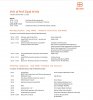
A copy of the program was posted online. Apparently ME/CFS was barely mentioned and the Burnet Institute thought it was a good idea to invite Nathan Butler (of PACE Trial fame) along as an 'expert' on Long Covid treatments.
Last edited:

Apparently ME/CFS was barely mentioned
I had a look through his publications and I only spotted one mention of ME/CFS. In Long COVID: long-term health outcomes and implications for policy and research (2022, Nature Reviews Nephrology) —
Finally, comparative studies that can examine differences and similarities in the biology and clinical features of long COVID and other infection associated illnesses (for example, ‘long flu’ following influenza infection, and myalgic encephalomyelitis or chronic fatigue syndrome) are also urgently needed.
It sounds as if he thinks of LC as a different (and new) disease, with a scope wider than the ME/CFS phenotype, eg stroke, diabetes. While encouraging prevention of LC via avoiding Covid, he does emphasise that Long Covid didn't exist before 2020. Though he does talk about the problems with terminology and definitions: LC, PASC, PCC etc.
Ziyad Al-Aly is a strong and outspoken advocate for LC with many well-cited papers on LC that have been discussed on this forum.
With all the different talks about LC and phenotypes it can be quite frustrating when not even researchers seem to understand how important the choice of cohorts and phenotypes is. Even more frustrating when 4 years in the leading researchers still have to discuss the basic problems in nomenclature that are still ever present. Coming up with solid definitions is not that hard...
I agree with your interpretation. I think that probably has a lot do with the patients he is looking at and the type of research he is doing. His research is methodologically very strong, but he seems only focused on using the US Department of Veterans Affairs database (quite naturally since that is where he is employed) so it’s very much 60+ year olds and predominantly males (sometimes as much as 90% males). As such his research centers around older folks with many comorbidities with often severe acute infections, so essentially the cohort that is very similar to the hospitalised/organ damage/acute damage/stroke/PICS cohort. This probably tells us nothing about other cohorts like the predominantly younger and female cohort that suffers from a ME-like LC or the neurocognitive phenotype.It sounds as if he thinks of LC as a different (and new) disease, with a scope wider than the ME/CFS phenotype, eg stroke, diabetes. While encouraging prevention of LC via avoiding Covid, he does emphasise that Long Covid didn't exist before 2020. Though he does talk about the problems with terminology and definitions: LC, PASC, PCC etc.
With all the different talks about LC and phenotypes it can be quite frustrating when not even researchers seem to understand how important the choice of cohorts and phenotypes is. Even more frustrating when 4 years in the leading researchers still have to discuss the basic problems in nomenclature that are still ever present. Coming up with solid definitions is not that hard...
Last edited:

shak8
Senior Member (Voting Rights)
Ziyad Al-Aly is a strong and outspoken advocate for LC with many well-cited papers on LC that have been discussed on this forum.
I agree with your interpretation. I think that probably has a lot do with the patients he is looking at and the type of research he is doing. His research is methodologically very strong, but he seems only focused on using the US Department of Veterans Affairs database (quite naturally since that is where he is employed) so it’s very much 60+ year olds and predominantly males (sometimes as much as 90% males). As such his research centers around older folks with many comorbidities with often severe acute infections, so essentially the cohort that is very similar to the hospitalised/organ damage/acute damage/stroke/PICS cohort. This probably tells us nothing about other cohorts like the predominantly younger and female cohort that suffers from a ME-like LC or the neurocognitive phenotype.
With all the different talks about LC and phenotypes it can be quite frustrating when not even researchers seem to understand how important the choice of cohorts and phenotypes is. Even more frustrating when 4 years in the leading researchers still have to discuss the basic problems in nomenclature that are still ever present. Coming up with solid definitions is not that hard...
In the US, there is no patient database because our health care system is fragmented, no single payer, except for the Veteran's Affairs database, and perhaps the large health insurer Kaiser Permanente, or Medicare (people age 65 and older). So that is a major problem for doing large population studies.

LarsSG
Senior Member (Voting Rights)
I think what Al-Aly's papers are measuring is largely not ME-type LC. If you really look at their analysis, I think there are some pretty big selection bias problems, leading to overestimation of the outcomes they report. But even then, the outcomes they do report are mostly diagnoses of new conditions that seem quite different from ME or ME-type LC. I think that's an important avenue of study, but lumping it all together doesn't really help because these are clearly pretty different outcomes than the type of LC that is more prevalent in younger age groups.
Personally, I think lumping together everything that happens after Covid doesn't make a lot of sense, but that seems to be largely where we are. You can see the same sort of outcomes that Al-Aly is looking at after an influenza infection in older age groups and people seem to get ME after the flu, but that doesn't mean those are the same thing.
Personally, I think lumping together everything that happens after Covid doesn't make a lot of sense, but that seems to be largely where we are. You can see the same sort of outcomes that Al-Aly is looking at after an influenza infection in older age groups and people seem to get ME after the flu, but that doesn't mean those are the same thing.

Mij
Senior Member (Voting Rights)
"We have a big paper dropping at 23:30 GMT/6:30 PM ET. It's not about Long Covid, but I think it is one of the most important studies our team has done.
For my Long Covid community: we are working very hard, we have a pipeline of projects, and new work is coming. My team and I are committed to this and will always show up for you."
More at 6:30 ET.
For my Long Covid community: we are working very hard, we have a pipeline of projects, and new work is coming. My team and I are committed to this and will always show up for you."
More at 6:30 ET.

bicentennial
Senior Member (Voting Rights)
"We have a big paper dropping at 23:30 GMT/6:30 PM ET. It's not about Long Covid, but I think it is one of the most important studies our team has done. For my Long Covid community: we are working very hard, we have a pipeline of projects, and new work is coming. My team and I are committed to this and will always show up for you." Ziyad Al-Aly
The BMJ published his research paper that day (linking it to his own commissioned opinion, and an editorial)
Glucagon-like peptide-1 receptor agonists and risk of substance use disorders among US veterans with type 2 diabetes: cohort study.
- with 2 more bio-statisticians on board
Miao Cai, bio-statistician 12
Taeyoung Choi, bio-statistician 123
Yan Xie, director of pharmaco-epidemiology 1234
Ziyad Al-Aly, director 12567
The BMJ commissioned him to write this linked opinion on harm reduction
GLP-1 drugs hold promise for treating substance addiction.
And the BMJ commissioned an editorial from Fares Qeadan, associate professor of bio-statistics:
Metabolic medicines and addiction: what GLP-1 receptor agonists might add to substance use care
- detail included because apt statisticians can and do publicly debunk prejudicial pseudo-scienceFares Qeadan, associate professor of bio-statistics
- Parkinson School of Health Sciences and Public Health, Loyola University Chicago, Chicago, IL, USA
- fqeadan@luc.edu
I did wonder whats to do with Long Covid or ME/CFS, but these receptor agonists and antagonists are a hot topic, sometimes. So all this to do with ZIyad AL-Aly's USA research could link to/from S4ME discussion on:
Ozempic, tirzepatide and other GLP-1RAs - impact on ME/CFS
Utility of Glucagon-Like-Peptide-1-Receptor Agonists in Mast Cell Activation Syndrome, 2025, Lawrence B. Afrin M.D, Blitsheyn et al
Central glucagon-like peptide 1 receptor activation inhibits Toll-like receptor agonist-induced inflammation 2024 Wong et al
Targeting the DPP-4-GLP-1 pathway improves exercise tolerance in heart failure patients: a systematic review and meta-analysis, 2019, Chen et al
And if he gets a thread for his bio, input and output, then here's how the USA found him, outstanding:
Wikipedia on Ziyad Al-Aly said:Ziyad Al-Aly is an American physician and clinical epidemiologist who is currently:
- clinical epidemiologist at Washington University in St. Louis
- Director of the Clinical Epidemiology Center
- Chief of the Research and Development
at the Veterans Affairs St. Louis Health Care System.
He has led multiple studies on Long COVID and its sequelae.
Early life:
Al-Aly was born in Tripoli, Lebanon to teachers. He grew up during the Lebanese civil war which dominated Lebanon from 1975 to 1990, emigrating to the United States in 2000.
Career:
- over 140,000 research citations (in top 1%), significant influence and broad community recognition.
Long COVID research:
- he led the work to provide the first systematic characterization of the post-acute sequelae of SARS-CoV-2 infection.
- then he led the work to characterise the increased risks of cardiovascular disease, neurologic disorders, mental health disorders, gastrointestinal disorders, diabetes, dyslipidemia, and kidney disease following SARS-CoV-2 infection.
- his lab also produced evidence characterizing the effects of COVID-19 vaccines on long COVID and the health consequences of repeated infections with SARS-CoV-2.
- in 2024, he testified before the U.S. Senate Health, Education, Labor and Pensions Committee as an expert witness on Long Covid.
- he called for the establishment of an NIH institute with a funding of at least $1 billion per year, to address Long Covid and Infection-Associated Chronic Conditions and Illnesses (IACCIs also called post-acute infection syndromes)
Pharmaco-epidemiology including:
- work characterizing the adverse health effect of proton pump inhibitors and comparative effectiveness of anti-hyperglycemic medications.
- examining the effectiveness of COVID-19 antivirals including paxlovid (nirmatrelvir / ritonavir) and molnupiravir on acute COVID-19 outcomes and long COVID.
Environmental epidemiology research including:
- evaluated effects of air pollution on kidney health, diabetes, obesity, and early mortality.
Honors and awards:
- outstanding contributions to research
- one of the 100 most influential people in health in 2024
- research and advocacy that led to the recognition of Long Covid as a chronic disease
- driving major advancements in medicine and shaping the future of healthcare.

Jonathan Edwards
Senior Member (Voting Rights)
And if he gets a thread for his bio, input and output, then here's how the USA found him, outstanding:
That looks like a typical plastic recyclable CV to me. What has he actually achieved - in plain English?
Do we need re-posting of Twitterati here?
My enthusiasm is further dampened by reference to Afrin and Blitshteyn I am afraid.
Where is the actual science?
bicentennial
Senior Member (Voting Rights)
I dont know where is the actual science.. if there is any.
This collation post could be moved. It is hard work knocking down nonsense as fast as it arises. It might help to have consensus on a symbolic scale to slap on stuff already known to be bad, poor, middling, good, or superb science, and clear markers for incomplete research stages.
I'd like a fact-sheet for GPs and patients, collecting all the snippets I cant retain, explaining these distinctions.
I almost left out the discredited Afrin reference, but then I added the Afrin thread in by an after-thought, as it is likely to give some critique showing Afrin made a disreputable nonsense. And that critique might be needed to balance some interest on the Ozempic / Tirzepatide... thread, which thread I only scanned.
Tirzepatide is GLP-1 drug attracting reckless patients in the USA as advertised by Scripps Reseach. People need a lot of informing now that re-purposed drugs occupy a lot of the research budgets, and the rollercoaster hopes and fears continue, intensely, with a LOT of new-comers acclimatising to deniable pandemic aftermaths.
LoCITT: Remote Long COVID Trial to Evaluate Repurposed Drug Across US
Personally I have no hope of pharmaceutical drugs and am lucky that I need not rely on them, for now. I always found them too problematical. So this type of drug action is still double-dutch to me. The tirzepatide trial is arousing keen interest. And the Ozempic thread gaves another link, to a semaglutide case report:
This is a 2026 paper out of the University of Buffalo, New York and the University of Victoria, BC, Canada, led by the Department of Neurology, University at Buffalo Jacobs School of Medicine and Biomedical Sciences.
Hazard warning - its a POTS trial too, and I don't have recourse to a potted version of the distinctions to be made about POTS, in this sweltering hotch-potch of international speculation run rife. The factsheet is urgently needed, as Australia found out when including POTS as "associated" in its ME/CFS Guideline draft - only to find the scope stage may need repeating because so few doctors and so few POTS patients responded
Also its a paywalled paper
This collation post could be moved. It is hard work knocking down nonsense as fast as it arises. It might help to have consensus on a symbolic scale to slap on stuff already known to be bad, poor, middling, good, or superb science, and clear markers for incomplete research stages.
I'd like a fact-sheet for GPs and patients, collecting all the snippets I cant retain, explaining these distinctions.
I almost left out the discredited Afrin reference, but then I added the Afrin thread in by an after-thought, as it is likely to give some critique showing Afrin made a disreputable nonsense. And that critique might be needed to balance some interest on the Ozempic / Tirzepatide... thread, which thread I only scanned.
Tirzepatide is GLP-1 drug attracting reckless patients in the USA as advertised by Scripps Reseach. People need a lot of informing now that re-purposed drugs occupy a lot of the research budgets, and the rollercoaster hopes and fears continue, intensely, with a LOT of new-comers acclimatising to deniable pandemic aftermaths.
LoCITT: Remote Long COVID Trial to Evaluate Repurposed Drug Across US
Personally I have no hope of pharmaceutical drugs and am lucky that I need not rely on them, for now. I always found them too problematical. So this type of drug action is still double-dutch to me. The tirzepatide trial is arousing keen interest. And the Ozempic thread gaves another link, to a semaglutide case report:


This is a 2026 paper out of the University of Buffalo, New York and the University of Victoria, BC, Canada, led by the Department of Neurology, University at Buffalo Jacobs School of Medicine and Biomedical Sciences.
Hazard warning - its a POTS trial too, and I don't have recourse to a potted version of the distinctions to be made about POTS, in this sweltering hotch-potch of international speculation run rife. The factsheet is urgently needed, as Australia found out when including POTS as "associated" in its ME/CFS Guideline draft - only to find the scope stage may need repeating because so few doctors and so few POTS patients responded
Also its a paywalled paper

Just a note that I think @bicentennial was just linking to other papers about GLP-1s. As far as I can tell, that's the only connection to Afrin and Blitshteyn.My enthusiasm is further dampened by reference to Afrin and Blitshteyn I am afraid.