Chandelier
Senior Member (Voting Rights)
Pharmacologic reversal of advanced Alzheimer’s disease in mice and identification of potential therapeutic nodes in human brain
• Preserving brain NAD+ homeostasis prevents AD in mice
• Restoring brain NAD+ homeostasis reverses advanced AD in mice
• Multiomics across human and mouse AD brain identifies nodes for human AD reversal
Here, however, we provide proof of principle for therapeutic reversibility of advanced AD.
In advanced disease amyloid-driven 5xFAD mice, treatment with P7C3-A20, which restores nicotinamide adenine dinucleotide (NAD+) homeostasis, reverses tau phosphorylation, blood-brain barrier deterioration, oxidative stress, DNA damage, and neuroinflammation and enhances hippocampal neurogenesis and synaptic plasticity, resulting in full cognitive recovery and reduction of plasma levels of the clinical AD biomarker p-tau217.
P7C3-A20 also reverses advanced disease in tau-driven PS19 mice and protects human brain microvascular endothelial cells from oxidative stress. In humans and mice, pathology severity correlates with disruption of brain NAD+homeostasis, and the brains of nondemented people with Alzheimer’s neuropathology exhibit gene expression patterns suggestive of preserved NAD+ homeostasis.
Forty-six proteins aberrantly expressed in advanced 5xFAD mouse brain and normalized by P7C3-A20 show similar alterations in human AD brain, revealing targets with potential for optimizing translation to patient care.
Web | DOI | Cell Reports Medicine
Chaubey, Kalyani; Vázquez-Rosa, Edwin; Tripathi, Sunil Jamuna; Shin, Min-Kyoo; Yu, Youngmin; Dhar, Matasha; Chakraborty, Suwarna; Yamakawa, Mai; Wang, Xinming; Sridharan, Preethy S.; Miller, Emiko; Bud, Zea; Corella, Sofia G.; Barker, Sarah; Caradonna, Salvatore G.; Koh, Yeojung; Franke, Kathryn; Cintrón-Pérez, Coral J.; Rose, Sophia; Fang, Hua; Cintrón-Pérez, Adrian A.; Tomco, Taylor; Zhu, Xiongwei; Fujioka, Hisashi; Gefen, Tamar; Flanagan, Margaret E.; Williams, Noelle S.; Wilson, Brigid M.; Chen, Lawrence; Dou, Lijun; Cheng, Feixiong; Rexach, Jessica E.; Woo, Jung-A; Kang, David E.; Paul, Bindu D.; Pieper, Andrew A.
Highlights
• Severity of Alzheimer’s disease (AD) correlates with NAD+ homeostasis dysregulation• Preserving brain NAD+ homeostasis prevents AD in mice
• Restoring brain NAD+ homeostasis reverses advanced AD in mice
• Multiomics across human and mouse AD brain identifies nodes for human AD reversal
Summary
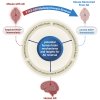
Alzheimer’s disease (AD) is traditionally considered irreversible.Here, however, we provide proof of principle for therapeutic reversibility of advanced AD.
In advanced disease amyloid-driven 5xFAD mice, treatment with P7C3-A20, which restores nicotinamide adenine dinucleotide (NAD+) homeostasis, reverses tau phosphorylation, blood-brain barrier deterioration, oxidative stress, DNA damage, and neuroinflammation and enhances hippocampal neurogenesis and synaptic plasticity, resulting in full cognitive recovery and reduction of plasma levels of the clinical AD biomarker p-tau217.
P7C3-A20 also reverses advanced disease in tau-driven PS19 mice and protects human brain microvascular endothelial cells from oxidative stress. In humans and mice, pathology severity correlates with disruption of brain NAD+homeostasis, and the brains of nondemented people with Alzheimer’s neuropathology exhibit gene expression patterns suggestive of preserved NAD+ homeostasis.
Forty-six proteins aberrantly expressed in advanced 5xFAD mouse brain and normalized by P7C3-A20 show similar alterations in human AD brain, revealing targets with potential for optimizing translation to patient care.
Graphical abstract
Web | DOI | Cell Reports Medicine