I can paste into translate
1st page
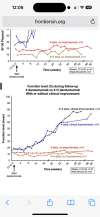
REPORTING FUNCTION LEVEL
Study ID number:……..
This form should be completed every two weeks from the start of the study until week 28 of the study, and
every four weeks for the remaining time, from weeks 32 to 52.
For each time point, we ask that you state your total function level in percentage, as you have experienced it on average during the last period (i.e. the last two or four weeks).
You compare with a completely healthy state of 100%, which corresponds to your function level
before you developed ME/CFS.
See page 2 for examples.
Time (every 2 weeks) 0 2 4 6 8 10 12 1
14
Date filled in
TOTAL FUNCTIONING LEVEL IN
PERCENT (1-100)
Time (every 2 weeks) 16 18 20 22 24 26 28
Date filled in
TOTAL FUNCTIONING LEVEL IN
PERCENT (1-100)
Time (every 4 weeks) 32 36 40 44 48 52
Date filled in
TOTAL FUNCTIONING LEVEL IN
PERCENT (1-100)
Self-reported
—2nd page
Total functional level” (0-100%). Examples of percentages.
-A patient who is almost completely at rest in bed or on the couch all day, and who needs help with most simple tasks (dressing, grooming, eating), will have a functional level that is < 5% of a completely healthy state.
Here, a functional level of 1-2% would describe a patient who cannot eat by himself and is completely in need of care. Communication with helpers is difficult.
A functional level of 4-5% suggests that the patient can eat by himself, but needs help with preparation/serving. The patient can easily carry out simple tasks in personal care, such as dental care and toilet visits.
-A patient who is almost completely at rest in bed or on the couch most of the day, and only barely walks a little inside, and perhaps just outside the house, will probably have a functional level before treatment that is between 5 and 10% of a completely healthy state.
A patient with a 6% functional level can move between the bedroom and bathroom self.
A patient with an 8% functional level can shower once or twice a week, possibly with assistance/assistive devices.
A patient with a 10% functional level can prepare a simple meal and is self-reliant in personal care and dressing.
-A patient who is mostly at rest, but can be somewhat active during parts of the day, and perhaps a couple of times a week can barely go shopping or do simple short tasks, usually has a functional level that is 10-15% of a completely healthy state.
-A patient who is somewhat active, or can go for a few walks and be socially somewhat active may have a functional level that is between 20 and 25% of a completely healthy state.
-A patient who can be somewhat active with, for example, studies, hobbies, or work tasks one or two days per week, and goes for light to moderate walks without major problems may have a functional level that is approximately 40% of a completely healthy state.
-A patient who is socially active with family most days, who can go on vacation, go for walks, perhaps study, read or work with computers part of the day, may have a functional level that is 60-70% of completely healthy.
-A patient who has slight limitations in physical and social functional level, but otherwise in principle can perform activity almost as in a healthy state (but at a lower amount/duration/pace), can be perceived as having a total functional level of 80-90% of a healthy state.
-Someone who does not notice any ME symptoms and feels completely healthy will thus register 90-100%.
You must try to find what you think is approximately the correct percentage for the "total functional level", compared to a completely healthy state (100%), both before starting, and when registering during the study.
You only compare with yourself further in the study.
1st page
REPORTING FUNCTION LEVEL
Study ID number:……..
This form should be completed every two weeks from the start of the study until week 28 of the study, and
every four weeks for the remaining time, from weeks 32 to 52.
For each time point, we ask that you state your total function level in percentage, as you have experienced it on average during the last period (i.e. the last two or four weeks).
You compare with a completely healthy state of 100%, which corresponds to your function level
before you developed ME/CFS.
See page 2 for examples.
Time (every 2 weeks) 0 2 4 6 8 10 12 1
14
Date filled in
TOTAL FUNCTIONING LEVEL IN
PERCENT (1-100)
Time (every 2 weeks) 16 18 20 22 24 26 28
Date filled in
TOTAL FUNCTIONING LEVEL IN
PERCENT (1-100)
Time (every 4 weeks) 32 36 40 44 48 52
Date filled in
TOTAL FUNCTIONING LEVEL IN
PERCENT (1-100)
Self-reported
—2nd page
Total functional level” (0-100%). Examples of percentages.
-A patient who is almost completely at rest in bed or on the couch all day, and who needs help with most simple tasks (dressing, grooming, eating), will have a functional level that is < 5% of a completely healthy state.
Here, a functional level of 1-2% would describe a patient who cannot eat by himself and is completely in need of care. Communication with helpers is difficult.
A functional level of 4-5% suggests that the patient can eat by himself, but needs help with preparation/serving. The patient can easily carry out simple tasks in personal care, such as dental care and toilet visits.
-A patient who is almost completely at rest in bed or on the couch most of the day, and only barely walks a little inside, and perhaps just outside the house, will probably have a functional level before treatment that is between 5 and 10% of a completely healthy state.
A patient with a 6% functional level can move between the bedroom and bathroom self.
A patient with an 8% functional level can shower once or twice a week, possibly with assistance/assistive devices.
A patient with a 10% functional level can prepare a simple meal and is self-reliant in personal care and dressing.
-A patient who is mostly at rest, but can be somewhat active during parts of the day, and perhaps a couple of times a week can barely go shopping or do simple short tasks, usually has a functional level that is 10-15% of a completely healthy state.
-A patient who is somewhat active, or can go for a few walks and be socially somewhat active may have a functional level that is between 20 and 25% of a completely healthy state.
-A patient who can be somewhat active with, for example, studies, hobbies, or work tasks one or two days per week, and goes for light to moderate walks without major problems may have a functional level that is approximately 40% of a completely healthy state.
-A patient who is socially active with family most days, who can go on vacation, go for walks, perhaps study, read or work with computers part of the day, may have a functional level that is 60-70% of completely healthy.
-A patient who has slight limitations in physical and social functional level, but otherwise in principle can perform activity almost as in a healthy state (but at a lower amount/duration/pace), can be perceived as having a total functional level of 80-90% of a healthy state.
-Someone who does not notice any ME symptoms and feels completely healthy will thus register 90-100%.
You must try to find what you think is approximately the correct percentage for the "total functional level", compared to a completely healthy state (100%), both before starting, and when registering during the study.
You only compare with yourself further in the study.