Prevalence and Patterns of [GWI] in Kansas Veterans: Association of Symptoms with Characteristics [...] of Military Service, 2000, Steele

forestglip

Moderator
Staff member
Prevalence and Patterns of Gulf War Illness in Kansas Veterans: Association of Symptoms with Characteristics of Person, Place, and Time of Military Service

Steele, L.

Abstract
Gulf War veterans have reported health problems that they attribute to their military service, but little is understood about the nature or extent of these conditions. To determine whether Kansas Gulf War veterans are affected by excess health problems, a population-based survey of 1,548 veterans who served in the Persian Gulf War (PGW) and 482 veterans who served elsewhere (non-PGW) was conducted in 1998.

Gulf War illness, defined as having chronic symptoms in three of six domains, occurred in 34% of PGW veterans, 12% of non-PGW veterans who reported receiving vaccines during the war, and 4% of non-PGW veterans who did not receive vaccines.

The prevalence of Gulf War illness was lowest among PGW veterans who served on board ship (21%) and highest among those who were in Iraq and/or Kuwait (42%). Among PGW veterans who served away from battlefield areas, Gulf War illness was least prevalent among those who departed the region prior to the war (9%) and most prevalent among those who departed in June or July of 1991 (41%).

Observed patterns suggest that excess morbidity among Gulf War veterans is associated with characteristics of their wartime service, and that vaccines used during the war may be a contributing factor.

Web | DOI | American Journal of Epidemiology | Paywall
 
This is a survey study on veterans who had been on active duty in 1990 or 1991. They were split into those who had served in the Persian Gulf War (PGW) and those who had served elsewhere (non-PGW).
Veterans were eligible for the study if they 1) were Kansas residents at the time of the study, 2) had served on active military duty for any period between August 1990 and July 1991, and 3) were separated or retired from the military or currently served in the reserve component.

An impressive >90% of the randomly selected sample who were eligible and could be located participated in the study:
Of 3,138 veterans randomly selected for contact and screening, 2,396 (76 percent) were located using in-state contact information. Twenty-four of those located were unable to participate because family members reported them as being deceased, hospitalized, or unreachable by telephone. Of the remaining veterans, 7 percent were ineligible for the study because they did not fulfill residency or mili- tary service requirements. The remaining 2,211 veterans were invited to be interviewed for the study; 2,030 (92 percent) agreed and 181 declined.
 
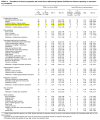
Table 3 shows the proportion of Gulf War (PGW) and non-Gulf War (non-PGW) veterans reporting having been diagnosed or treated for a condition by a physician, with new onset after the Gulf War:

The highest odds ratio (highlighted by me) is for chronic fatigue syndrome (OR=8.70, 95% CI: 3.53-21.46) reported by 9% of PGW and 1% of non-PGW. This study was done in 2000, so it's possible that many of these diagnoses did not require PEM.

Specific symptoms:
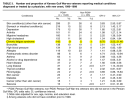
Table 4 shows the proportion of veterans who reported each of 37 symptoms as persistent problems in the year prior to interview, in the absence of exclusionary conditions.

While there isn't a "post-exertional malaise" option, the closest seems to be "Feeling unwell after exercise or exertion", with a prevalence of 17% in PGW and 4% in non-PGW.

Table 5 has prevalence of chronic fatigue syndrome as calculated from the reported symptoms, based on Fukuda criteria (only first row of table shown):
The prevalence of CFS was 7.1% in PGW and 0.7% in non-PGW. This is about 1/5 or 1/7 the prevalences of "Gulf war illness" or "Multisymptom illness" respectively, which are broader categories of symptoms.

So while we can't be certain of PEM prevalence from this, as it is defined in the context of modern criteria like CCC or IOM, this study does show that veterans of the Gulf War had substantially increased rates of experiencing negative effects after exercise and Fukuda-defined CFS.
 
Last edited:
This thesis (Boruch 2025) has been open in a tab of mine for two months now since you posted it. I've only managed to skim it so far but they seem to cite a few studies arguing some form of PEM exists in ME/CFS GWI (edited).

(This was the study with the strange name 'Psychobiological' in the title. From what I can see, they aren't really using that word the way I was worried they were. It seems they basically mean that, in addition to blood tests, they are interested in using "psychometric instruments" to measure how "acute bouts of exercise negatively affect performance and brain responses to complex cognitive tasks".)
 
Last edited:
I find the way this paper is written confusing. As in I wondered if “Non-Persian Gulf War” was referring to some other gulf war or not being near Iran or something during the gulf war. But looking at the paper it seems to just mean active US military personell during the gulf war who were stationed outside the warzone (like germany, south korea or whatever).

Anyways this paper is on SciHub if others want to read.
 
While there isn't a "post-exertional malaise" option, the closest seems to be "Feeling unwell after exercise or exertion", with a prevalence of 17% in PGW and 4% in non-PGW.
Just a note that these figures for specific symptom prevalences may be slightly off, as Table 4 shows prevalences after excluding individuals with certain conditions:
Exclusionary conditions. Diagnosed medical and psychiatric conditions were not included under the general rubric of Gulf War illness if they: 1) were not elevated among Kansas PGW veterans but might produce symptoms similar to those previously associated with Gulf War service, or 2) might interfere with respondents’ perception or reports of their symptoms (i.e., serious psychiatric conditions). Therefore, veterans who reported being diagnosed or treated by a physician for any of the following conditions were excluded from consideration as Gulf War illness cases: cancer, diabetes, heart disease, chronic infectious disease, problems resulting from postwar injuries, liver disease, lupus, multiple sclerosis, stroke, or any serious psychiatric condition (those associated with psychosis and/or for which the respondent had been hospitalized since 1991).

It shouldn't change it too much. The full sample of GWV is 1545 individuals. 17% of cases with the symptom of "feeling unwell after exercise or exertion" is based on 1435 total GWV after the exclusions.

Most conservatively, if none of the excluded cases had this symptom, the prevalence in GWV would drop to 244/1535=~15.9%.

And most conservatively in the other direction for non-PGW controls, if all 26 excluded controls had this symptom, the prevalence for non-PGW would increase from 4% to ~9.7%.

But these are very conservative estimates, and I think most likely the prevalences and odds ratio wouldn't be very different from what was reported for this symptom, if including everyone.
 
Last edited:
The abstract highlights vaccinations as a possible cause. There is evidence that local soldiers (Iraqis?), also suffered from a collection of symptoms that sound like ME/CFS, thought to be the result of exposure to the Sarin gas plumes. I doubt that they had the same vaccinations.

There was a paper, discussed on our Gulf War Illness thread, that presented the evidence for the high incidence of persistent illness among the local soldiers. I have just found another paper that we haven't looked at that mentions that some of the Iraqi civilians, for examples the Kurd population, that were subjected to attacks by their government and who have suffered from ongoing, wide-ranging symptoms. I'll make a thread for it.
 
Back
Top Bottom