Nightsong
Senior Member (Voting Rights)
Abstract:
This study evaluated the cerebrospinal fluid (CSF) proteomes from 31 patients diagnosed with myalgic encephalomyelitis/chronic fatigue syndrome (ME/CFS). We quantified 902 proteins, each expressed in at least eleven samples, and systematically categorized clinical factors relevant to ME/CFS symptoms—including autonomic dysfunction, neuroinflammation and metabolic disturbances.
Differentially expressed protein and pathway analyses evaluated protein features associated with both postural orthostatic tachycardia syndrome (POTS) status and disease severity among the patients, while ratio-based analysis further explored associations with severity ratings. Data are available via ProteomeXchange with identifier PXD076216. Neutrophil degranulation and platelet activation were enriched in patients with POTS, and several pathways, such as the complement cascade, coagulation-related pathways and IGFBP‑mediated insulin-like growth factor transport, were enriched in severe cases.
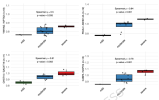
Ratio-based analysis identified four biologically interpretable severity-associated protein ratios related to cellular stress, extracellular remodelling and immune–neuronal interaction. Together, these findings provide insight into the biological processes associated with clinical heterogeneity in ME/CFS and generate hypotheses for future validation in larger independent cohorts.
Link | PDF (Nature Scientific Reports, April 2026, open access)
This study evaluated the cerebrospinal fluid (CSF) proteomes from 31 patients diagnosed with myalgic encephalomyelitis/chronic fatigue syndrome (ME/CFS). We quantified 902 proteins, each expressed in at least eleven samples, and systematically categorized clinical factors relevant to ME/CFS symptoms—including autonomic dysfunction, neuroinflammation and metabolic disturbances.
Differentially expressed protein and pathway analyses evaluated protein features associated with both postural orthostatic tachycardia syndrome (POTS) status and disease severity among the patients, while ratio-based analysis further explored associations with severity ratings. Data are available via ProteomeXchange with identifier PXD076216. Neutrophil degranulation and platelet activation were enriched in patients with POTS, and several pathways, such as the complement cascade, coagulation-related pathways and IGFBP‑mediated insulin-like growth factor transport, were enriched in severe cases.
Ratio-based analysis identified four biologically interpretable severity-associated protein ratios related to cellular stress, extracellular remodelling and immune–neuronal interaction. Together, these findings provide insight into the biological processes associated with clinical heterogeneity in ME/CFS and generate hypotheses for future validation in larger independent cohorts.
Link | PDF (Nature Scientific Reports, April 2026, open access)