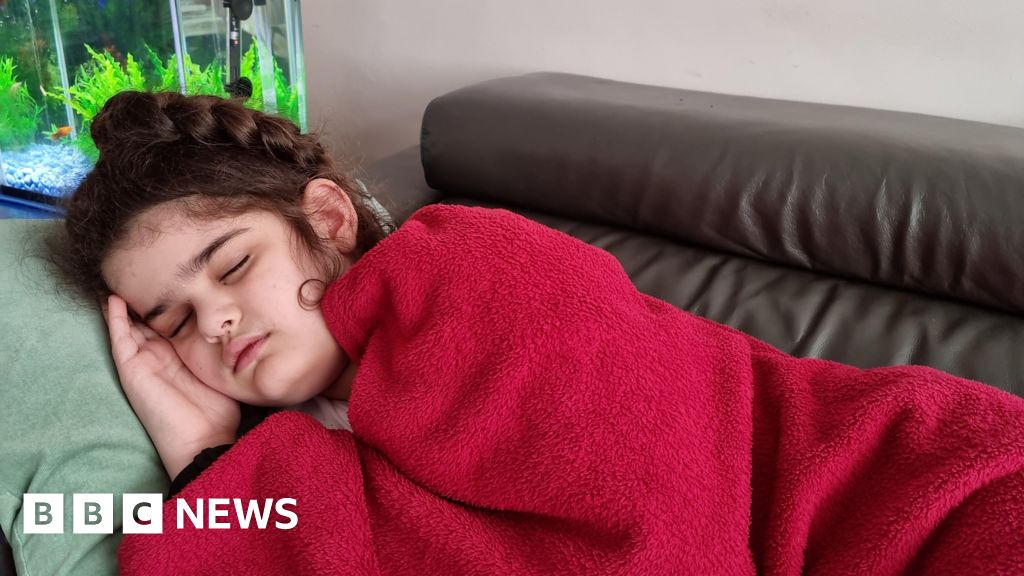
Rosetta Stone Study: £1.1m awarded to investigate links between ME/CFS and Long Covid

It’s up to the people doing that work to prove it to me, but unlike you I don’t see cause to dismiss the idea out of hand

And quite rightly so because you don't have another fifty years of experience of all the negative data and arguments - entirely right and proper!!
I think the point is that it’s not infection-specific at all,

As indicated in the last post it is the complete lack of any evidence of autoimmunity following the most devastating non-specific perfect storm of being rescued by a whisker from death in ICU whether due to a road traffic accident or staph septicaemia that is maybe the biggest hole in the argument. Millions of cases have been followed. I have looked after maybe a hundred, my cousin many thousands. Nobody gets myasthenia or lupus.

The time when people do get myasthenia is when you monkey around with their bone marrow populations with immunotherapy.
 
Every person has a number of autoreactive lymphocytes that bypass central tolerance. A lymphocyte that recognizes any antigen has to pass through certain checkpoints in order to start causing a fuss, and that gets helped along by signaling molecules from other immune cells. In most people, there are sufficient mechanisms of peripheral tolerance that essentially counteract that transition for self-recognizing lymphocytes.

The idea of bystander activation is that during an infection, you have a perfect storm of many of those immune signals that help that transition along, so already existing autoreactive lymphocytes (which get called into sites of infection regardless of their antigen specificity) might be more likely to turn into activated problem-causing lymphocytes in the specific environment of an infection. I am probably oversimplifying several parts of people’s ideas but that’s the basic gist
Thanks for explaining.

Why would this problem persist then? I’m assuming autoimmune diseases are due to ongoing autoimmunity, and not just one-off damage from when you had an active infection?
 
And life-threatening sepsis requiring extended life support has never been considered to be followed by autoimmunity
Right, and sepsis involves cytokines at different proportions and concentrations than you would see in a run of the mill influenza infection, some of which actually work to modulate lymphocyte activation and development and might make autoimmunity less likely. Like I said, I don't think bystander activation has been definitively proven but I don't think existing evidence is enough to discount it as a potential contributing factor
 
Last edited:
Why would this problem persist then? I’m assuming autoimmune diseases are due to ongoing autoimmunity, and not just one-off damage from when you had an active infection?
You're right, full-blown autoimmunity will involve additional steps like further expansion of autoreactive clones, plasma cell differentiation, and even production of different clones that recognize the same antigen with higher affinity. Bystander activation, if its real, probably happens to some extent even in healthy people that don't go own to develop autoimmune disease. You might have a temporary activation of autoreactive clones during infection, but different regulating mechanisms throughout and after infection can still keep it in check. Same general concept as in cancer--a cancerous cell can start growing and even start causing problems but it's possible for the immune system to still neutralize it early on. This idea is just being proposed as a permissive factor for some of the stochastic steps that ultimately lead to autoimmune disease
 
Last edited:
This idea is just being proposed as a permissive factor for some of the stochastic steps that ultimately lead to autoimmune disease
I don’t understand how bystander autoimmunity would be a permissive factor, unless the bystander autoimmunity is self-perpetuating beyond the perfect storm moment, or it caused some kind of permanent regulatory change, but how would that happen from a bystander event?
 
I don’t understand how bystander autoimmunity would be a permissive factor, unless the bystander autoimmunity is self-perpetuating beyond the perfect storm moment, or it caused some kind of permanent regulatory change, but how would that happen from a bystander event?
It would increase likelihood of autoreactive clones getting activated in spite of peripheral tolerance mechanisms. That event can either get counteracted further downstream, or eventually spiral out of control into autoimmunity through the additional steps I mentioned before. But its a necessary step for autoimmunity to happen, so anything that makes that initial "activation" of an autoreactive clone more likely tends to make autoimmunity more likely. Just like smoking doesn't cause cancer in everyone who does it but increases the chances of some lung cell acquiring specific mutations that facilitate cancer growth.

[Edit: maybe it would help to remind that autoimmune disease is already self perpetuating once the antibody-producing cells are established, you just need some steps involving "activation" to get to that point]
 
Last edited:
I don’t understand how bystander autoimmunity would be a permissive factor
I don't think bystander autoimmunity is being suggested, just a bystander immune response to something like flu.

The most obvious stochastic event is immunoglobulin gene re-arrangement. Every B cell spins a fruit machine and somes up with a unique antibody. Autoimmunity is when the system fails to delete a clone with an antibody that reacts to self. The easiest way to explain the clone's survival is that the antibody feeds back a subversive signal that overcomes the deletion mechanism and becomes part of a collaborative polyclonal response that feeds off the same cycle.

It would be very plausible if this inappropriate survival was made easier by other survival signals from the environment. In RA it is quite likely that smoking induces damage to lumg proteins that get citrullinated and that an enhanced T cell response to citrullinated peptides helps the survival of autoreactive B cells.

In a way it is quite surprising that infections don't seem to do that, but then the whole system is designed to operate well under conditions of infection so maybe it isn't so surprising.
 
In a way it is quite surprising that infections don't seem to do that, but then the whole system is designed to operate well under conditions of infection so maybe it isn't so surprising.
Infection response is definitely quite fine tuned. But that fine tuning could get counteracted if, for example, someone has mutations that result in a higher ratio of TNF to IFN-g during infection, potentially even exacerbated by a double dose of TLR7. If B cell expansion is dependent on some balance of transcription factor activity downstream of signaling cascades (which it seems to be), every infection in a person with those mutations becomes a roll of the dice rather than a neatly self-regulating chain of events. That's why I think the bystander idea is compelling and wouldn't necessarily be disproven by existing data--[edit: the sepsis example because of inherently different cytokine profiles compared to regular viral infection, and the epidemiology example because what we're looking for is an interaction between autoimmunity, genetic predisposition and any various kind of run-of-the-mill infection]
 
Last edited:
[Edit: maybe it would help to remind that autoimmune disease is already self perpetuating once the antibody-producing cells are established, you just need some steps involving "activation" to get to that point]
Thank you, that’s useful!
I don't think bystander autoimmunity is being suggested, just a bystander immune response to something like flu.
Then I’m confused by why it’s called bystander, but that might be a language barrier thing. I guess the autoimmunity isn’t an intended effect of the immune activation due to the infection, but deviation from normality is just the definition of disease. Although I supposed everything happens in close proximity.
 
Then I’m confused by why it’s called bystander, but that might be a language barrier thing. I guess the autoimmunity isn’t an intended effect of the immune activation due to the infection, but deviation from normality is just the definition of disease. Although I supposed everything happens in close proximity.
The theory is bystander activation not bystander autoimmunity—just referring to the fact that those autoreactive lymphocytes may get activated by proximity to the local infection response
 
that might be a language barrier thing

Bystander is pretty much a technical term in immunology for innate signalling events that come along when there is an immune response and may affect outcome but not because they mediate a specific adaptive response through antibody or T cell receptors. So bystander T cells can produce cytokines that will help B cells survive without them needing to recognise any specific antigens, just be hyped up by the danger signals from macrophages or other tissue cells.
 
Back
Top Bottom