Scientific research journals and publishers

forestglip

Moderator
Staff member
I couldn't find a good existing thread for this so I thought I'd start one just for general discussion about any journals or publishers. If there's a better place, let me know.


May be of interest since we sometimes get papers from Cureus posted here:

Retraction Watch: 'Embattled journal Cureus delisted from Web of Science, loses impact factor'
October 27, 2025

---

'Clarivate has removed the mega-journal Cureus from its Master Journal List, according to the October update, released today.

The move means Cureus will no longer be indexed in Web of Science or receive an impact factor. As we have reported, it can also mean researchers are less likely to submit to the journal, given universities rely on such metrics to judge researchers’ work for tenure and promotion decisions.'

---

'Rebecca Krahenbuhl, a communications manager at Clarivate, told us a journal is removed from the Master Journals List when it “no longer meets” 24 quality criteria. These criteria include appropriate citations, adequate and effective peer review, and primarily original scholarly content, according to the company’s website.'

Link
 
Last edited:
More about the above. This blog post says Clarivate does not release the reasons for delisting journals (and it criticizes the lack of transparency), so it's anyone's guess what specifically caused this. But it's likely to lead to a significant drop in articles from the journal.

It was interesting to learn that Cureus was the second largest journal in the world in 2024, with Scientific Reports being first.

---

Journalology: 'Cureus loses its impact factor'

---

'It seems possible, perhaps even likely, that research integrity challenges are the primary reason for Cureus’ removal from Web of Science; Cureus has its own page on Retraction Watch, after all. However, we don’t know the precise reasons why Web of Science made this decision.'

---

'Clarivate’s Web of Science team wields immense power; it can make or break a journal with its editorial decisions and adversely affect revenue lines to the tune of tens of millions of dollars. To some degree that’s a good thing. We need publishers and editors to be held accountable for what they publish; the indexers are the closest thing we have to an enforcement agency.

However, the lack of transparency troubles me, as does the fact that the enforcers are not themselves accountable to anyone.

When a research article is retracted, the journal is expected to publish a notice explaining why the decision to retract was made. Surely the same rules should apply to indexers for journal delistings.

We’re now in a situation where the second largest academic journal in the world by article volume has lost its impact factor, and we can only speculate as to why.'
 
From my bsky feed - two consecutive posts. Nature Sci Rep publishes incoherent AI slop. eLife publishes a paper which the reviewers didn't agree with, making all the comments and responses public with thoughtful commentary. One of these journals got delisted by Web of Science for quality concerns from not doing peer review. Guess which one?

Post includes horrendous AI slop image from the first publication referred to.
 
Currently discussed on Hacker News.

The entities enabling scientific fraud at scale are large, resilient, and growing rapidly

Richardson, Reese A. K.; Hong, Spencer S.; Byrne, Jennifer A.; Stoeger, Thomas; Amaral, Luís A. Nunes

Significance​

Numerous recent scientific and journalistic investigations demonstrate that systematic scientific fraud is a growing threat to the scientific enterprise.
In large measure this has been attributed to organizations known as research paper mills.
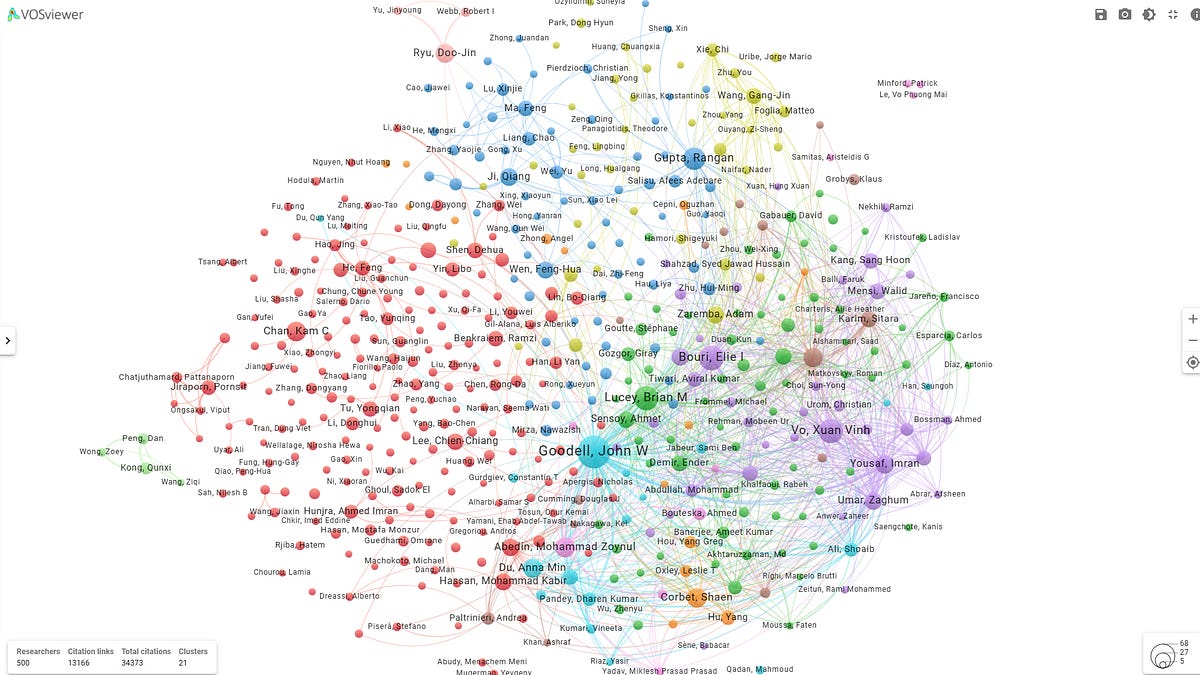
We uncover footprints of activities connected to scientific fraud that extend beyond the production of fake papers to brokerage roles in a widespread network of editors and authors who cooperate to achieve the publication of scientific papers that escape traditional peer-review standards.
Our analysis reveals insights into how such organizations are structured and how they operate.

Abstract​

Science is characterized by collaboration and cooperation, but also by uncertainty, competition, and inequality.
While there has always been some concern that these pressures may compel some to defect from the scientific research ethos—i.e., fail to make genuine contributions to the production of knowledge or to the training of an expert workforce—the focus has largely been on the actions of lone individuals.

Recently, however, reports of coordinated scientific fraud activities have increased.
Some suggest that the ease of communication provided by the internet and open-access publishing have created the conditions for the emergence of entities—paper mills (i.e., sellers of mass-produced low quality and fabricated research), brokers (i.e., conduits between producers and publishers of fraudulent research), predatory journals, who do not conduct any quality controls on submissions—that facilitate systematic scientific fraud.

Here, we demonstrate through case studies that i) individuals have cooperated to publish papers that were eventually retracted in a number of journals, ii) brokers have enabled publication in targeted journals at scale, and iii), within a field of science, not all subfields are equally targeted for scientific fraud.
Our results reveal some of the strategies that enable the entities promoting scientific fraud to evade interventions.
Our final analysis suggests that this ability to evade interventions is enabling the number of fraudulent publications to grow at a rate far outpacing that of legitimate science.

Web | DOI | PMC | PDF | Proceedings of the National Academy of Sciences
 
Back
Top Bottom