Sweat as a diagnostic biofluid

Sasha

Senior Member (Voting Rights)
I've just been reading an article in the December 7 2024 issue of New Scientist, called 'Dripping With Promise' (yuck), which says that 'more than 30,000 biomolecules have been detected in sweat, ranging from metabolites such as glucose and lactic acid to peptides, proteins, vitamins, inflammatory molecules, hormones and neurotransmitters.'

It says that sweat is derived from blood plasma and the interstitial fluid between cells, but also that the concentrations of the compounds in sweat don't always correlate closely with those in the blood.

I see that a study in Massachusetts is already recruiting PwME to see if sweat and saliva can be used to produce a diagnostic test. But I wonder if there might be more than the obvious applications.

On another thread, we were discussing how to get bone marrow samples, and discovering that it was incredibly difficult. If what we wanted from bone marrow doesn't show up in blood, does that mean it won't show up in sweat either? I'm not sure what cells the article is talking about when it talks about interstitial fluid.

But I'm also thinking that this could be fantastically useful for continuous monitoring, especially in severely ill PwME.

Not sure the tech is ready for prime-time at this level yet but it's already been commercialised for athletes and some of the stuff that they would want to know.

A good sign that ME/CFS is among the first on the bandwagon in Massachusetts?

Thoughts generally?
 
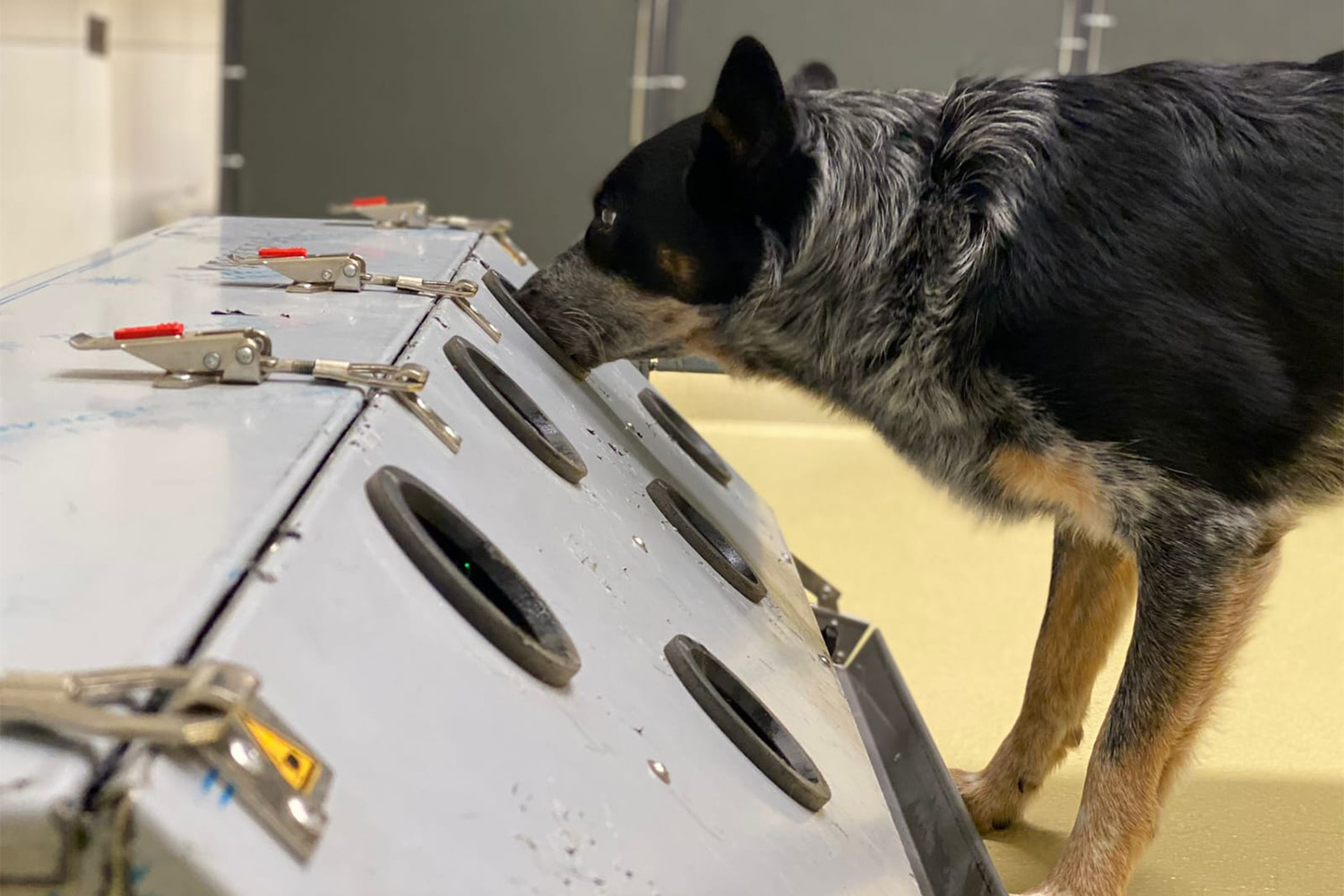
I think metabolic aspects could be investigated. We've had at least two canine-based "sweat-omics" studies —

Detection of Post-COVID-19 Patients Using Medical Scent Detection Dogs—A Pilot Study (2022, Frontiers in Medicine)

Screening for SARS-CoV-2 Persistence in Long COVID Patients using Sniffer Dogs and Scents from Axillary Sweats Samples (2022, Journal of Clinical Trials)


Machine Translation​

Excerpt:
The results

The results were remarkable: the dogs were able to reliably distinguish Long COVID samples from healthy control samples and even from similar disease profiles. This suggests that Long COVID may be associated with a characteristic odor signature. But what biological changes lie behind this smell?
…
The results therefore provide new evidence that post‑COVID syndrome is associated with measurable changes in metabolism. At the same time, they demonstrate the potential of combining biological sensor systems with modern data analysis.

Full page:
Dog noses and AI provide new clues to Long COVID

What dogs sniff out can be made visible by mass spectrometry: researchers at the Technical University of Braunschweig, Hannover Medical School and the University of Veterinary Medicine Hannover have shown that post‑COVID syndrome can be detected by odor signatures. The results also show a concordance between the assessments of specially trained scent dogs and modern mass‑spectrometric analyses combined with machine‑learning methods. In this way, the researchers provide new evidence of disease‑specific metabolic patterns and open up prospects for innovative diagnostic approaches.

Why can specially trained dogs recognize people with Long COVID? And can the odor signatures perceived by the animals also be detected with modern analytics and artificial intelligence? These are the questions addressed by the research project “COVID Dogolomics,” in which researchers from the Technical University of Braunschweig, Hannover Medical School (MHH) and the University of Veterinary Medicine Hannover (TiHo) are working together. The research was honored at the closing symposium of the COVID‑19 Research Network Lower Saxony (COFONI). The results will also be presented at the international conference “Metabolomics 2026” in Buenos Aires.

Searching for objective markers for Long COVID

Although millions of people worldwide are affected by Long COVID, objective diagnostic procedures are still lacking. Symptoms such as chronic fatigue, concentration problems, breathing difficulties or exercise intolerance also occur in other diseases and make a clear diagnosis difficult.

“For many affected people the situation remains difficult to this day because we still do not fully understand which biological processes underlie Long COVID,” says Professor Karsten Hiller, head of the Department of Bioinformatics and Biochemistry at TU Braunschweig. “That is why we are looking for measurable metabolic changes that can help us better characterize the disease and, in the long term, develop more objective diagnostic procedures.”

The analytical basis of the project was developed at TU Braunschweig. In her doctoral thesis, Lea Woyciechowski developed a new method for studying volatile metabolic products in very small urine samples. The methodology, published in the journal Metabolites, forms the basis for the investigations now presented. Using the method, so‑called volatile organic compounds (VOCs) can be captured at high resolution and used for further analysis with machine‑learning techniques.

The project brings together the clinical expertise of Hannover Medical School under Prof. Dr. Georg Behrens, the work on medical scent dogs at the University of Veterinary Medicine Hannover led by Prof. Dr. Holger Volk, and the analytical and bioinformatic investigations of the Department of Bioinformatics and Biochemistry at TU Braunschweig under Prof. Dr. Karsten Hiller. Together, the partners aim to better understand the biological signatures of post‑COVID syndrome and to develop new diagnostic approaches in the long term.

As part of the project, Hannover Medical School provided patient cohorts and biobanked samples. The University of Veterinary Medicine Hannover investigated with specially trained scent dogs whether Long COVID samples can be recognized by their odor. The researchers at TU Braunschweig analyzed the same samples with state‑of‑the‑art mass spectrometry and developed machine‑learning methods to decipher the underlying metabolic patterns.

The results

The results were remarkable: the dogs were able to reliably distinguish Long COVID samples from healthy control samples and even from similar disease profiles. This suggests that Long COVID may be associated with a characteristic odor signature. But what biological changes lie behind this smell?

From dog nose to mass spectrometry

This is where Lea Woyciechowski’s work comes in. The doctoral candidate in the Department of Bioinformatics and Biochemistry developed a new analytical method that can capture volatile organic compounds (VOCs) from very small urine samples at high resolution. These molecules are produced as metabolic products and can provide clues to physiological or disease‑related processes.

“Volatile metabolic products are, in a sense, chemical fingerprints of biological processes,” explains Lea Woyciechowski. “We wanted to find out whether the signature perceived by the dogs can also be analytically detected and described with data‑driven methods.”

Characteristic patterns were identified that distinguish Long COVID samples from control groups.

Two completely different systems recognize the same signature

Particularly interesting is that the results from the dogs and the analytical evaluations matched surprisingly well: samples that the dogs identified as conspicuous also showed characteristic metabolic patterns in the statistical models. Thus, two fundamentally different systems point to the same disease‑associated changes.

“That two completely different detection systems independently recognize the same signature is scientifically especially exciting,” says Professor Hiller. “It gives us additional confidence that we are indeed observing relevant biological changes and not just statistical flukes.”

The results therefore provide new evidence that post‑COVID syndrome is associated with measurable changes in metabolism. At the same time, they demonstrate the potential of combining biological sensor systems with modern data analysis.

What comes next: the molecules behind Long COVID

The researchers are now facing the next important step. Although several candidate molecules that contribute significantly to distinguishing the samples have already been identified, their exact chemical structures are not yet fully clarified. In the coming years, these molecules are to be definitively identified and then experimentally validated. The central question is: are these the compounds that the dogs are actually perceiving?

Partners

Involved are the Department of Bioinformatics and Biochemistry at the Technical University of Braunschweig at the Braunschweig Integrated Centre of Systems Biology (BRICS), Hannover Medical School, and the University of Veterinary Medicine Hannover. The work was carried out within the framework of the COVID‑19 Research Network Lower Saxony (COFONI) and is also embedded in the scientific environment of MetaBoSpace, a metabolism‑oriented research network at TU Braunschweig.

Link to COFONI project (German w/ list of published research papers | English)
 

Machine Translation​

Excerpt:


Full page:


Link to COFONI project (German w/ list of published research papers | English)
So cool to see studies like this have already been done. I almost made a similar thread a week or two ago to ask if anyone had done something like this, either on ME itself or on PEM, after seeing a post on Reddit of people talking about how their pets seem to recognize when PEM is coming on before symptoms begin.


It reminded me of the woman who seems to be able to smell Parkinson’s before symptoms onset, and researchers are trying to see if they can find a biomarker in sweat that can be used to identify Parkinson’s patients early…is there a thread about this?

 
I've just been reading an article in the December 7 2024 issue of New Scientist, called 'Dripping With Promise' (yuck), which says that 'more than 30,000 biomolecules have been detected in sweat, ranging from metabolites such as glucose and lactic acid to peptides, proteins, vitamins, inflammatory molecules, hormones and neurotransmitters.'

It says that sweat is derived from blood plasma and the interstitial fluid between cells, but also that the concentrations of the compounds in sweat don't always correlate closely with those in the blood.

I see that a study in Massachusetts is already recruiting PwME to see if sweat and saliva can be used to produce a diagnostic test. But I wonder if there might be more than the obvious applications.

On another thread, we were discussing how to get bone marrow samples, and discovering that it was incredibly difficult. If what we wanted from bone marrow doesn't show up in blood, does that mean it won't show up in sweat either? I'm not sure what cells the article is talking about when it talks about interstitial fluid.

But I'm also thinking that this could be fantastically useful for continuous monitoring, especially in severely ill PwME.

Not sure the tech is ready for prime-time at this level yet but it's already been commercialised for athletes and some of the stuff that they would want to know.

A good sign that ME/CFS is among the first on the bandwagon in Massachusetts?

Thoughts generally?
Agree. I’ve been thinking there’s a specific smell for a while now. I think that the most specific time is when I actually crash out and finally get the deep ‘catch up’ sleep that ‘recovers’ (not back to health or maybe even where I was but when it has cumulated then I might have gone thru symptoms of open where I can’t sleep due to pain then finally have pass out sleep).

After those I can really smell it from my bed sheets and it feels like me but then I put my nose to my arm and somehow it’s not the strong smell there I expect. I often feel it’s round my upper back most maybe.

I remember one big one of those making a huge difference to a shoulder injury too that has been waiting to make progress and wasn’t me-specifically (ie well people get it). But it felt like that big recovery sleep for me/cfs also suddenly knitted things fast on that and I had more movement , like it’s not ‘just’ a big sleep going on.
 

Machine Translation​

Excerpt:


Full page:


Link to COFONI project (German w/ list of published research papers | English)
So interesting! I don’t have the energy to look into this right now, but I wonder how they defined their Long Covid cohort. It would be so cool if they could do the same study but with ME/CFS patients.
 
So interesting! I don’t have the energy to look into this right now, but I wonder how they defined their Long Covid cohort. It would be so cool if they could do the same study but with ME/CFS patients.
We have a thread which mentions two different studies about dogs sniffing for LC here:
 
Back
Top Bottom