John Mac
Senior Member (Voting Rights)
Abstract
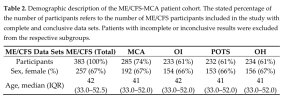
Background/Objectives: Growing evidence suggests that mast cell activation (MCA) may contribute to Myalgic Encephalomyelitis/Chronic Fatigue Syndrome (ME/CFS), a debilitating disorder characterized by persistent fatigue and post-exertional malaise (PEM). Particularly in relation to orthostatic intolerance (OI), including postural orthostatic tachycardia syndrome (POTS), this study aimed to investigate the prevalence and clinical relevance of MCA in an Austrian ME/CFS patient cohort.Methods: Two data sets were analyzed. The CCCFS data set, a comprehensive, patient-centered online questionnaire consisting of 687 filled surveys, focuses on patient stratification. Self-reported clinical features, disease progression, and treatment responses were analyzed. Preliminary findings were validated in a second, retrospective study, analyzing data of 383 Austrian ME/CFS patients with regard to MCA involvement and OI.
Results: Among followed-up ME/CFS patients, MCA prevalence increased over the disease course, with up to 25.3% meeting the criteria for clinically relevant MCA. ME/CFS patients with Mast Cell Activation Syndrome (MCAS) and OI reported symptom alleviation significantly more often following mast cell-targeted treatment than those without MCAS (p < 0.0001). With regard to IF-channel inhibitors, ME/CFS patients diagnosed with MCAS responded more frequently than those without MCAS (p = 0.076), while no significant differences were observed in response to beta blockers (p = 0.637). In both cohorts, OI, particularly POTS, was significantly more common in patients with MCA involvement.
Conclusions: MCA appears to be a frequent and clinically relevant comorbidity in ME/CFS and is associated with a higher prevalence of OI, particularly POTS. Stratifying patients based on MCA involvement may support personalized treatment approaches and improve clinical outcomes.