Trial Report The effect of nasal continuous positive airway pressure on the symptoms of Gulf War illness, 2011, Amin et al

nataliezzz

Senior Member (Voting Rights)
The effect of nasal continuous positive airway pressure on the symptoms of Gulf War illness
Mohammad M. Amin, Morris S. Gold, Joan E. Broderick, Avram R. Gold
https://www.researchgate.net/publication/45695854_The_effect_of_nasal_continuous_positive_airway_pressure_on_the_symptoms_of_Gulf_War_illness (PDF available)

Purpose: We performed a pilot study to determine whether nasal continuous positive airway pressure (CPAP) alleviates the symptoms of veterans with Gulf War illness (GWI) and sleep disordered breathing (SDB).

Methods: Eighteen male veterans with GWI and SDB recruited by advertisement, participated in a randomized, single-masked, sham-controlled treatment trial. Participants received 3 weeks of treatment during sleep with either therapeutic nasal CPAP or sham nasal CPAP. Using validated questionnaires, pain, fatigue, cognitive function, sleep disturbance, and general health were assessed by self-report before and after treatment. One of the participants assigned to therapeutic CPAP was excluded from the trial before starting treatment, leaving 17 participants.

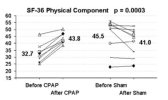
Results: Compared to the nine sham nasal CPAP recipients, the eight participants receiving therapeutic nasal CPAP experienced improvements in pain (34%; p = 0.0008), fatigue (38%; p = 0.0002), cognitive function (33%; p = 0.004), sleep quality (41%; p = 0.0003), physical health (34%; p = 0.0003), and mental health (16%; p = 0.03).

Conclusions: Our findings in this pilot study suggest that nasal CPAP may greatly improve symptoms in veterans with GWI and SDB.
 
Last edited by a moderator:
randomized, single-masked, sham-controlled treatment trial.
I'm curious how good the blinding is.

It refers to another paper for a description of the sham treatment:
The sham CPAP system has been described previously (10). Briefly, the nasal pressure is eliminated and the reinhalation avoided by increasing the area of the exhalation port from 4 mm to 10 mm. An orifice resistor identical to the original resistor of the mask is placed between the CPAP device and the tubing to load the blower with the same resistance as the true CPAP. The ventilator operating noise and the airflow through the exhalation port remained unchanged, thus ensuring true masking. A Breas PV100 medical device (Breas, Sweden) was used in the optimal CPAP treatment. The same model was modified to operate as a CPAP placebo (10).
The main criticism of these studies is the absence of a suitable placebo. The design and the validation of a true sham CPAP, which mimics all the characteristics of true CPAP (noise, flow, humidity, mask) with the obvious exception of nasal pressure (10), have enabled us to overcome this limitation encountered in published clinical trials. Thus, no differences were found in the respiratory or in the neurological variables when a full PSG was performed in a random order during sham CPAP or a diagnostic setting in the same patients (10). Therefore, we think that the placebo CPAP used meets all the requirements of a true placebo. Moreover, the patients were subjected to the use of CPAP for the first time, being only aware that they were participating in a study in which two different CPAP systems were used.

That paper cites ref 10: Sham continuous positive airway pressure for placebo-controlled studies in sleep apnoea
When comparing sham CPAP and no-treatment, no significant differences (paired t-test, p>0·05) were found in sleep efficiency (79 [10]% vs 83 [11]%), arousals (57 [17] vs 55 [19] events/h), and AHI (66 [21] vs 62 [25] events/h), nor in the other sleep variables studied

I may be misunderstanding, but it seems they are saying they validated that it is a true placebo by showing that it has no effect on sleep parameters compared to no treatment.

I think what's more important is validating the blinding, by showing that patients can't tell the difference between sham and real CPAP. I'm not sure if true blinding is really possible when there's no pressure. At least they did the study on patients who had never used CPAP before.

But I think placebo effect should be kept in mind as potentially explaining the differences, especially as these are all subjective outcomes.
 
Surely a pilot study with results this strong would warrant a larger trial. I find it hard to believe that if a study was well run and showed an effect this significant it wouldn't be followed up on.

Any idea why that doesn't seem to have been done?
 
Surely a pilot study with results this strong would warrant a larger trial. I find it hard to believe that if a study was well run and showed an effect this significant it wouldn't be followed up on.

Any idea why that doesn't seem to have been done?
See my reply to @forestglip here:
I think you are underestimating the resistance to Dr. Gold's ideas within establishment sleep medicine. The party line is "sleep fragmentation by apnea/hypopnea-related arousals (perhaps with some contribution from RERAs) and hypoxemia is the cause of symptoms in sleep-disordered breathing (SDB) patients." Re: symptoms, the focus is largely on sleepiness and cognitive dysfunction (as well as cardiometabolic effects), and there is little/no awareness that it could be causing these other symptoms/disorders (and the concept of SDB driving disorders like GWI doesn't make sense under a traditional sleep fragmentation/hypoxemia paradigm - you need some sort of sensitization piece involved to explain it). There was one reply to his hypothesis piece Functional somatic syndromes, anxiety disorders and the upper airway: A matter of paradigms published in Sleep Medicine Reviews in 2011 from a couple sleep doctors (he said it has gone largely ignored though) - excerpts from the reply and Dr. Gold's reply to the reply below:

Is there a link between mild sleep disordered breathing and psychiatric and psychosomatic disorders?
Dr. Gold's reply (Sci-Hub link): There Is! (FSS = functional somatic syndromes)

Only within the last couple years have some papers come out with large sample sizes showing that increased flow limitation predicts symptoms (psychomotor vigilance task lapses and self-reported sleepiness) in sleep-disordered breathing patients (S4ME links): 1, 2

#1 cites only one paper by Dr. Gold Con: Sleep fragmentation causes hypersomnolence in OSA, #2 does not cite Dr. Gold's work at all. So even though there is starting to be some recognition of the importance of flow limitation, mainstream sleep medicine is still not connecting it to Dr. Gold's theory.

Doctors studying disorders like fibromyalgia and GWI are simply not aware of his small studies/his theory, and if you show them his small studies of fibromyalgia and GWI patients, they might find it interesting, but they're not necessarily in a position to make similar larger studies happen (unless they have some strong connections to researchers in sleep medicine), and perhaps some just aren't interested/are personally invested in other hypotheses.

So if there is largely ignoring/active resistance to his paradigm from within sleep medicine, and perhaps some lukewarm interest from some doctors studying disorders like fibromyalgia/GWI (who are unlikely to come across his work in the first place), you can see why nothing has really come of it...
 
So if there is largely ignoring/active resistance to his paradigm from within sleep medicine, and perhaps some lukewarm interest from some doctors studying disorders like fibromyalgia/GWI (who are unlikely to come across his work in the first place), you can see why nothing has really come of it...
I can't see why nothing has come of it. If he really believed in the results of this trial why not find a few doctors that work with GWI patients and make it happen. There is funding out there for GWI and presumably even CPAP manufactures might have been willing to sponsor such a study if they thought it had a chance of success. Complaining that no one takes the theory seriously, and not taking steps to run a large trial that could provide good evidence after of its efficacy doesn't make sense to me. Finding an effective treatment for GWI would be a big deal and presumably worth overcoming some of the hurdles for him to set up a properly controlled trial.
 
I'm curious how good the blinding is.

I may be misunderstanding, but it seems they are saying they validated that it is a true placebo by showing that it has no effect on sleep parameters compared to no treatment.

I think what's more important is validating the blinding, by showing that patients can't tell the difference between sham and real CPAP. I'm not sure if true blinding is really possible when there's no pressure. At least they did the study on patients who had never used CPAP before.
Yes, it's a good point. I'm not sure there's anything out there on what % of patients who are naïve to CPAP (as the patients in this study were) can correctly infer whether they are on sham CPAP or therapeutic CPAP (if you've actually used CPAP, it would probably be pretty easy to tell). I don't believe the patients in this study were actually told they would be receiving either therapeutic or sham CPAP, though. From the paper: "Participants were asked to sleep with their breathing machines (the terms CPAP or pressure were never used) for at least 5 h per night for 3 weeks."

Also, here is the description for how the in-lab CPAP titration was performed. The pressure was lowered to the minimum pressure before they woke up:
Once the participant was asleep and the presence of IFL was confirmed (a plateau of inspiratory airflow despite the continued decrease of Psg), CPAP was increased in 1 cmH2O increments until the resolution of IFL (airflow increased and Psg decreased in parallel; therapeutic CPAP; Ptherapeutic). After approximately 3 h on Ptherapeutic (which usually included REM sleep), CPAP was then lowered to the minimum level (4 cmH2O) and left for the duration of the study to facilitate masking of the participants during the treatment trial.

But I think placebo effect should be kept in mind as potentially explaining the differences, especially as these are all subjective outcomes.
Yes, although there was the correlation between changes in sleep stage shifts with symptom improvement:
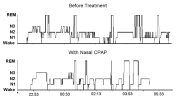
The effect of treatment upon the participants' sleep parameters is demonstrated in Table 4. There were significantly greater decreases in AHI, sleep stage shifts, and sleep stage shift index on nasal CPAP vs. sham, reflecting decreased SDB and increased sleep consolidation
(Fig. 2). The change in sleep stage shifts among all participants from pre-treatment to post-treatment polysomnogram was highly and significantly correlated with the change in most measures of symptom levels (Table 3). In fact, after adjusting for differences between participants in change in sleep stage shifts, only one partial correlation remained statistically significant, change in stage 2 as a percent of
total sleep time vs. change in fatigue (p=0.001). In contrast, after adjusting for differences between participants in changes of any other sleep parameter, the partial correlation between change in sleep stage shifts and changes in most symptoms remained statistically significant.
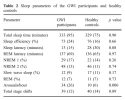
Interestingly, there was no difference in number of sleep stage shifts between the GWI patients and controls at the initial sleep study (see below from the Inspiratory airflow dynamics during sleep in veterans with Gulf War illness: A controlled study), but this may be (partly) explained by a "first night effect" where sleep tends to be more light/fragmented in the new/unfamiliar environment of the sleep lab with all of the equipment on you.
1772695557226.png
An example of a before treatment and on CPAP hypnograms "(plots of sleep stages against time) that demonstrate increasing sleep consolidation (decreasing sleep stage shifts) for a participant receiving therapeutic nasal CPAP...Abbreviations: N1 non-rapid eye movement stage 1 sleep; N2 non-rapid eye movement stage 2 sleep; N3 slow wave sleep; REM rapid eye movement sleep."

1772695832700.png
The decreased sleep stage shifts in the GWI patients on CPAP is actually what led Dr. Gold to develop his theory of the stress response to inspiratory flow limitation (I discussed that on another thread):
the BSQ was adapted from Hans Selye's work on chronic stress/general adaptation syndrome, which Dr. Gold only arrived at from his clinical/research observations. Once again, I'll quote him (re: his observation in his GWI study that changes in sleep stage shifts on CPAP were correlated with changes in severity of symptoms, in both directions, for both improvement in symptoms on therapeutic CPAP and worsening on sham CPAP):
"But my brother who works for the pharmaceutical industry, he says "When the change in the severity of symptoms is associated with a change in a physiological parameter, now you're talking cause and effect. So you gotta tell me why these sleep stage shifts have this relationship to symptom severity." And I had no idea. But ultimately, after reading a review paper by Ursula Voss...Functions of sleep architecture and the concept of protective fields...Basically, she's explaining how sleep stage shifts are essentially an adaptive mechanism for conditions of stress; it's a survival mechanism. By shifting from deeper to lighter sleep frequently, a person in danger will not die while they're unconscious...and she takes you through not only humans, but predators and prey, and the sleep of whales who are at risk of drowning, she takes you through everything, and shows you that increased sleep stage shifts is an increased manifestation of stress. Now I read this, and said "OK, I'm a pulmonologist. What's stress?" and I had no idea, so I Googled stress, and I found a book The Stress of Life written by Dr. Hans Selye; he's an endocrinologist from the first half of the 20th century who discovered the HPA axis and its role in preparing humans for life-threatening conditions. And the book The Stress of Life opened my eyes to sleep-disordered breathing."
 
Last edited:
The pressure was lowered to the minimum pressure before they woke up:
Are they saying that for the entire trial, the CPAP would only turn on after the individual fell asleep, and then turn off after 3 hours? The following sentence is in the section about the in-lab pre-trial tuning of the settings. And I'm not sure if the CPAP device is able to only turn [edit: on] automatically after falling asleep. Even if so, it's possible participants may have briefly woken up mid-active CPAP sometime in the three weeks of the trial.
After approximately 3 h on Ptherapeutic (which usually included REM sleep), CPAP was then lowered to the minimum level (4 cmH 2 O) and left for the duration of the study to facilitate masking of the participants during the treatment trial.
I guess if the participants have no experience of CPAP and weren't told that this was placebo-controlled, it would help with blinding.

Yes, although there was the correlation between changes in sleep stage shifts with symptom improvement:
Hmm, yes, that is kind of interesting.

I see that they excluded participants with prior diagnosis of sleep apnea:
Exclusion criteria included alcohol abuse, active clinical depression, active post-traumatic stress disorder, current use of opiates, and a prior diagnosis of sleep apnea.
But what if they recruited individuals who have typical sleep apnea which would be expected to respond to CPAP but who were just undiagnosed?

Here's what they say:
While SDB [sleep-disordered breathing] may play a role in the symptoms of GWI, how can one know that the combination of SDB, fatigue, and cognitive dysfunction in this middle-aged, overweight, veteran population is not simply OSA/H [obstructive sleep apnea/hypopnea]?

Our participants, many of them patients at the DVA Medical Center- Northport, have been diagnosed with GWI since their service in the Persian Gulf. At the time their symptoms began, they were approximately 15 years younger and closer to their active duty weight (presently, 14 of the 18 GWI participants have values of BMI≥30 kg/m 2 which is uncharacteristic of active duty personnel).

Furthermore, 8 of 17 participants who completed the PSQI did not report snoring (Table 1), a finding that is not typical of OSA/H patients. Finally, while fatigue and cognitive dysfunction are symptoms of OSA/H [22] and may be expected to improve with nasal CPAP, pain is not a recognized symptom of OSA/H, and the improvement of pain by nasal CPAP is a characteristic of fibromyalgia [10] and not OSA/H.

While the characteristics of our participants are not typical of OSA/H patients, how pharyngeal collapse during sleep relates to the symptoms of GWI remains a question.
Basically: at the time they developed GWI, they weighed less and were younger; around half don't report snoring; and pain isn't a typical symptom of obstructive sleep apnea (OSA).

Even if the GWI and sleep apnea didn't start at the same time, they could have developed OSA later, with that being treated here. Half do report snoring, and I think it's possible others don't know they snore. It seems plausible that they could have OSA as the average BMI in this study is in the obese range, and as far as I know, obesity is one of the biggest risk factors for OSA.

I don't understand why they didn't use OSA criteria to diagnose them during this study. None of the points in the paragraph above seem to strongly demonstrate that they don't have OSA, but making a diagnosis based on a sleep study would.
 
Last edited:
Are they saying that for the entire trial, the CPAP would only turn on after the individual fell asleep, and then turn off after 3 hours? The following sentence is in the section about the in-lab pre-trial tuning of the settings. And I'm not sure if the CPAP device is able to only turn [edit: on] automatically after falling asleep. Even if so, it's possible participants may have briefly woken up mid-active CPAP sometime in the three weeks of the trial.
No, that was just during the in-lab CPAP titration, so they wouldn't wake up with the therapeutic pressure and know what it felt like before the 3-week trial. It's possible some woke up during the 3 hours when the therapeutic pressure was on during the night though. I think most CPAP machines do have ramp features these days (where you can set it to a low pressure while you are falling asleep, and it will automatically ramp the pressure up when it detects from your breathing patterns that you have fallen asleep), but I don't believe a ramp feature was used in this study.

I see that they excluded participants with prior diagnosis of sleep apnea:

But what if they recruited individuals who have typical sleep apnea which would be expected to respond to CPAP but who were just undiagnosed?

Here's what they say:

Basically: at the time they developed GWI, they weighed less and were younger; around half don't report snoring; and pain isn't a typical symptom of obstructive sleep apnea (OSA).

Even if the GWI and sleep apnea didn't start at the same time, they could have developed OSA later, with that being treated here. Half do report snoring, and I think it's possible others don't know they snore. It seems plausible that they could have OSA as the average BMI in this study is in the obese range, and as far as I know, obesity is one of the biggest risk factors for OSA.

I don't understand why they didn't use OSA criteria to diagnose them during this study. None of the points in the paragraph above seem to strongly demonstrate that they don't have OSA, but making a diagnosis based on a sleep study would.
Well, they do state the AHI for each patient (only 3/18 GWI patients did not meet criteria for OSA), and like I said in the other thread, even some of the asymptomatic controls (3/11) met criteria for OSA (AHI ≥ 5).

So, re: "What if they recruited individuals who have typical sleep apnea?" or as it's phrased in the paper: "How can one know that the combination of SDB, fatigue, and cognitive dysfunction in this middle-aged, overweight, veteran population is not simply OSA/H?," I don't think Dr. Gold would have posed the same question today. Back then, he believed that UARS and OSAS were separate disorders, with UARS being driven by sensitization/stress response to pharyngeal collapse (he hadn't fully fleshed out his theory of the stress response being specifically to inspiratory flow limitation back then), and OSAS - or OSA/H(S) - being driven by sleep fragmentation and hypoxemia (though I think he did allow for the possibility that the two disorders could overlap/co-occur in some people).

Then he changed his mind after his 2016 paper Somatic arousal and sleepiness/fatigue among patients with sleep-disordered breathing (S4ME link) which found no correlation between AHI or % sleep time <90 SpO2 and self-reported sleepiness/fatigue. He discusses his change in thinking in this YouTube talk:
“I believed at the time we set up this study that patients with UARS are sleepy because they are stressed, and I believed patients with sleep apnea are sleepy because of sleep fragmentation by apneas and hypopneas. That's what I thought the truth was. I believed it just like all of you did before this lecture.
...
Is there a specific UARS phenotype? This is what I concluded: UARS is a fiction, invented to accommodate the sleep fragmentation paradigm of OSAS. If symptoms of OSAS are brought about by sleep fragmentation by apneas and hypopneas, with some contribution perhaps from intermittent hypoxia, then UARS must be a different disorder. Why? Because it doesn’t have apneas, hypopneas and intermittent hypoxia. But in truth, UARS and OSAS are one disorder: the result of a stress response generated by some individuals to inspiratory airflow limitation during sleep. What is UARS? It’s no-frills sleep-disordered breathing without the OSA bells and whistles attached like apneas, hypopneas and intermittent hypoxia. As far as I was concerned, apneas, hypopneas and intermittent hypoxia in sleep apnea are haute ornaments. They don’t contribute anything to the pathophysiology of sleep-disordered breathing…OSAS and UARS are one disorder: they are both UARS!"
But he goes on to say:
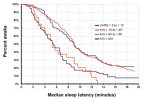
"There was a problem. The problem was, I knew better, I knew that AHI is correlated with sleepiness in sleep apnea from my own data...I just had my rant against AHI having a role in the severity of sleepiness in SDB, but our very own research from 2008 shows that AHI is a factor...The increase in sleepiness is not continuous across AHI. Below a certain AHI people aren't going to be sleepy. But then suddenly there's an AHI above which everyone becomes sleepier...At 45 there is a sudden stepwise increase in sleepiness among sleep apnea patients."

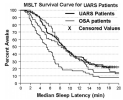
Graph 1 is from the YouTube talk (this was a later analysis that was done on data from Hypersomnolence, insomnia and the pathophysiology of UARS, Gold et al. 2008), Graph 2 is what was in the published paper (it's a bit hard to tell what's going on there because the different lines for mild, moderate and severe are not labeled. Mild OSA was AHI <30, moderate 30-59, severe ≥60). But basically the point is, once they split up the moderate group at AHI 45, the AHI 45-59 curve was the same as the AHI ≥60, and the AHI 10-39 was the same as the UARS.

1772746357090.png 1772746622410.png

So at that point, he probably would have said: the stress response to inspiratory flow limitation is the primary driver of symptoms in in both UARS and OSAS patients, with some (modest) contribution to sleepiness in OSAS patients with an AHI >45. But today, with his new paper that just came out (Objective versus subjective excessive daytime sleepiness in OSA: Quantifying the impact of fatigue) which found that both objective sleepiness (multiple sleep latency testing - MSLT) and fatigue (fatigue severity scale - FSS) are about equally correlated with subjective sleepiness (Epworth Sleepiness Scale - ESS ) - but that MSLT and FSS are not correlated with each other - in OSA patients, his thinking has probably evolved further: there seems to be different phenotypes of OSAS (and perhaps for patients who are more objectively sleepy, it's something about the sleep apnea in conjunction with some other factor leading to an inflammatory/cardiometabolic symptom profile driving more severe objective sleepiness?). Excerpts from that paper:
In recent years, a series of studies in patients with OSA have considered whether the presence of objective EDS (MSLT) and subjective EDS (ESS) correlated with the following parameters:

•inflammation – levels of IL-6 and cortisol [6].
•sympathetic activation – urinary norepinephrine and blood pressure measurements [7].
•glucose metabolism - blood glucose, insulin, HOMA-IR, serum metabolomics, fecal microbiota [8].
•all cause and cardiovascular mortality [9].
•hypertension [10].
•psychomotor vigilance testing (PVT) [11].

Pathological elevations in the first five of these parameters were significantly associated with objective EDS and not with subjective EDS. In contrast, a decrease in psychomotor vigilance [11] and, correspondingly, a decrease in sympathetic activation [7], were associated with subjective EDS and not with objective EDS.
The etiology of fatigue in patients with OSA remains poorly understood. Fatigue is sometimes attributed to sleep fragmentation, supported by evidence that CPAP therapy can partially relieve it. Objective EDS is also widely ascribed to the same mechanism. Yet, despite sharing this proposed pathology, our data demonstrate that the two symptoms are completely uncorrelated. This paradox highlights a critical gap: if both fatigue and EDS stem from sleep fragmentation, how do they remain independent of one another? To date, no convincing etiology of fatigue in OSA has emerged within the sleep fragmentation framework. If sleep fragmentation cannot account for the lack of correlation, then an alternative mechanism underlying fatigue must be identified.

One proposed explanation for CPAP therapy decreasing both fatigue and EDS among patients with OSA without decreasing sleep fragmentation being the sole mechanism is that sleep-disordered breathing generates a form of biologic stress in the brain, producing fatigue independently of sleepiness. In previous work, we have suggested that fatigue in OSA results from this biologically generated neural stress triggered by apneas, hypopneas, and even milder inspiratory airflow limitation. In contrast, sleep fragmentation arising from arousals associated with apneas and hypopneas produces sleepiness through a separate mechanism. This model allows for sleepiness, fatigue, or both in patients with OSA, while also allowing them to be uncorrelated. Both pathologies, however, would be expected to improve with CPAP therapy, thereby accommodating published studies in which CPAP provided at least partial relief of fatigue. To date, no published data directly confirm this explanation. Nonetheless, those who reject it must offer an alternative model capable of accounting for two uncorrelated symptoms arising from a disorder traditionally understood to have a single underlying pathophysiologic process.
 
Last edited:
Well, they do state the AHI for each patient (only 3/18 GWI patients did not meet criteria for OSA), and like I said in the other thread, even some of the asymptomatic controls (3/11) met criteria for OSA (AHI ≥ 5).

So, re: "What if they recruited individuals who have typical sleep apnea?" or as it's phrased in the paper: "How can one know that the combination of SDB, fatigue, and cognitive dysfunction in this middle-aged, overweight, veteran population is not simply OSA/H?," I don't think Dr. Gold would have posed the same question today. Back then, he believed that UARS and OSAS were separate disorders,
Thanks for the quotes, but they don't really answer the question for me.

I didn't know the criteria, but you're saying 15/18 participants had diagnosable OSA?

If the goal is to show that CPAP works for non-apnea related flow limitation or for GWI, the trial should exclude those with OSA. Otherwise, it's just further confirming that CPAP works for OSA.
 
Thanks for the quotes, but they don't really answer the question for me.

I didn't know the criteria, but you're saying 15/18 participants had diagnosable OSA?
Yes, based on the AHI ≥5 criteria, but so did 3/11 asymptomatic controls.
If the goal is to show that CPAP works for non-apnea related flow limitation or for GWI, the trial should exclude those with OSA. Otherwise, it's just further confirming that CPAP works for OSA.
I don't think that was the goal of the trial. If you had a large enough sample size, you could exclude patients who actually meet criteria for OSA (AHI ≥5), but there was never any basis for choosing this arbitrary cutoff for OSA as sleep medicine's earliest epidemiolocal data showed that there is no difference in self-reported sleepiness between mild OSA (AHI 5-14) and snorers with an AHI <5 (snoring is a decent proxy for inspiratory flow limitation [IFL], though many people have IFL without audible snoring) - the vast majority of people with OSA snore by the way. Also, hypopnea criteria have changed over time and still differ between some research groups/sleep clinics. There is no fundamental difference between a hypopnea and a RERA (IFL terminating in an arousal) other than the degree of airflow reduction (unless you are going on strict oxygen desaturation criteria, which is no longer recommended); whether a respiratory event terminating in an arousal is scored as a hypopnea or a RERA (which can ultimately determine whether or not someone is diagnosed with OSA) can vary by sleep clinic/scorer - most scoring of respiratory events is still done visually by the way. IFL is present during hypopnea, but not apnea (complete cessation of airflow).

So all that to say, there is no reason to believe that (at least in milder sleep-disordered breathing patients), criteria for meeting OSA actually means anything, so there is no reason to exclude people who meet this arbitrary criteria for OSA. That was kind of the point of all the quotes, to show that the whole establishment paradigm of sleep-disordered breathing is flawed.
 
Last edited:
So all that to say, there is no reason to believe that (at least in milder sleep-disordered breathing patients), criteria for meeting OSA actually means anything, so there is no reason to exclude people who meet this arbitrary criteria for OSA.

Almost all of these individuals could have gone to a sleep doctor and been prescribed the same treatment. There are surely already many other trials showing that CPAP improves symptoms in individuals with OSA. So I'm not seeing what new information this study provides.
 
Something weird seems to have happened with the randomization—the CPAP group had way lower functionality than the sham at baseline. Similar baseline differences for pain and sleep quality, though the latter were not statistically significant. I’m guessing they went for complete randomization not stratified.

IMG_0048.jpeg
You can make some sort of argument that the uniform directionality of changes after CPAP means something. But for basically every endpoint, the post-CPAP values are well within the range of the sham values. Which tells me it doesn’t do much for GWI, it may just help people who have an additional sleep problem on top of GWI.
 
Well, they do state the AHI for each patient (only 3/18 GWI patients did not meet criteria for OSA)
I'll also note that while 15/18 had AHI >= 5 in the observational portion, in this trial one more participant reached that threshold, making it 16/18 with AHI >= 5. After accounting for one participant who dropped out before the trial, 7/8 participants receiving active CPAP had obstructive sleep apnea.
 
Back
Top Bottom