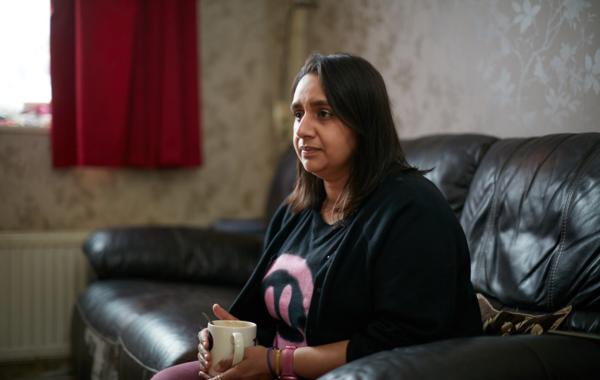
The gap in fatigue research – and what we’re doing about it, 31 July 2023, The Kennedy Trust & Arthritis UK

What comprises 'the blurb' here? And what's wrong with it?

The article is the blurb. I don't see any insight into biological processes. It just seems to be an exercise in putting ducks in a row without knowing what you are going to do with them when they are in a row.

I find it hard to see the point of studying fatigue in condition slike rheumatoid because if you treat the disease effectively with something like a TNF inhibitor or rituximab the fatigue vanishes. It might be interesting to dissect out various signal pathways to fatigue but I don't see much evidence of that being addressed here.
 
From the article

How can we tackle fatigue?
To address these problems, Arthritis UK (then Versus Arthritis) and The Kennedy Trust held a workshop in 2020 to identify priorities for future research into fatigue.

The workshop brought together a range of healthcare professionals and researchers from diverse backgrounds, alongside people with lived experience. They identified areas of research where Arthritis UK (then Versus Arthritis) and The Kennedy Trust could work together to make an impact on the lives of people living with musculoskeletal fatigue.

“For many, fatigue is overlooked, under-prioritised, and not understood. Together we will address this most significant of unmet healthcare needs for people living with musculoskeletal, and other long-term, conditions.
Arthritis UK and The Kennedy Trust fatigue steering group


As a result of the workshop, we decided we wanted to better understand existing evidence and inform future research.

Together, we decided the first step would be to fund a piece of work to look closely at current fatigue research.

This project will explore what is already known on the ways of measuring, assessing and treating severe fatigue associated with rheumatic and related musculoskeletal conditions. The project will take a life course approach and consider fatigue in children, young people and adults.

Now, we’re excited to announce that Professor Emma Dures has been awarded funding to carry out this important review with her team at the University of the West of England (UWE) starting August 2023. The UWE team will work with collaborators at University College London (UCL) and the University of Aberdeen.

This seems to be that review,

Dures is also an author on these studies

 
The Kennedy Trust funded this study
 
From this work, they aim to:
  • recommend ways of measuring fatigue for healthcare professionals and researchers.
Oh joy, more PROMS!
  • understand the current evidence behind existing treatments and what is needed for them to be delivered effectively.
There are none, except for the ones that treat the root cause: the disease.
  • define fatigue from the perspective of people living with musculoskeletal fatigue.
Even more PROMS and psychosocial babble.
  • identify gaps in the support available for fatigue along with the groups of people whose healthcare needs are currently not being met.
Are they aiming to create some kind of support for anyone with untreated fatigue, as if it’s all the same?
 
I find it hard to see the point of studying fatigue in condition slike rheumatoid because if you treat the disease effectively with something like a TNF inhibitor or rituximab the fatigue vanishes. It might be interesting to dissect out various signal pathways to fatigue but I don't see much evidence of that being addressed here.
That's an odd perspective. It seems to be common in medicine, and explains so much, especially the lack of incremental progress. In most engineering fields, this is the stuff that drives us. We want to figure things out, especially odd puzzles like this. Sometimes just knowing, seeing where it takes us, drives everything we do, and damn is it massively successful.

Turning medicine into an information engineering problem will absolutely change everything, and it's not just something nice, but an existential need. Everything is so slow in there.
 
Back
Top Bottom