Transcutaneous Auricular Vagal Nerve Stimulation Against Fatigue Syndrome in Patients with Long COVID: Results of the Randomized, Placebo-Controlled Clinical Pilot Trial COVIVA
INTRODUCTION
Fatigue is the most prevalent symptom in “long COVID”, affecting 6–7% of patients after COVID-19 infection. Its pathophysiology remains unclear, with viral persistence, immune dysregulation, and mitochondrial dysfunction among proposed mechanisms. Transcutaneous auricular vagus nerve stimulation (taVNS), a non-invasive neuromodulatory approach, has been suggested as a potential treatment.
METHODS
We conducted a randomized, sham-controlled, single-blinded pilot study to evaluate adherence and clinical effects of taVNS in long COVID-related fatigue. Forty-five patients were randomized 1:1:1 to sham stimulation, sub-threshold taVNS, or above-threshold taVNS for 4 weeks using the Conformite Europeenne (CE)-certified tVNS-L device (25 Hz, 250 µs, 4 h/day). The primary co-endpoints were fatigue severity (MFI-20) and adherence, defined as mean daily stimulation duration. Secondary endpoints included depressive symptoms (BDI-II), health-related quality of life (SF-36), and post-COVID symptom burden (PCS).
RESULTS
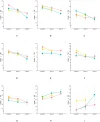
Of 45 enrolled patients (mean age 42.4 years; 73% female), 4 (8.9%) dropped out early. Mean stimulation time was 236 min/day, fulfilling the adherence criterion in > 80% of participants. Adverse events were mild, including skin irritation (6.7%) and vertigo (6.7%). Across all groups, questionnaire scores improved over time; however, no statistically significant differences were observed between the sham and active stimulation groups. Baseline fatigue and quality-of-life scores were markedly impaired compared with normative data.
CONCLUSION
taVNS was safe, feasible, and associated with high adherence in long COVID-related fatigue, but showed no superiority over sham stimulation. Larger multicenter trials with more homogeneous populations and objective biomarkers are required to determine whether taVNS confers therapeutic benefit in this condition.
TRIAL REGISTRATION
The trial was approved by the ethics committee (23/7798) and registered at the German Clinical Trials Register, identifier DRKS00031974.
Web | DOI | PDF | Neurology and Therapy | Open Access
Gierthmuehlen, Mortimer; Schmieder, Kirsten; Thon, Niklas; Gierthmuehlen, Petra Christine
INTRODUCTION
Fatigue is the most prevalent symptom in “long COVID”, affecting 6–7% of patients after COVID-19 infection. Its pathophysiology remains unclear, with viral persistence, immune dysregulation, and mitochondrial dysfunction among proposed mechanisms. Transcutaneous auricular vagus nerve stimulation (taVNS), a non-invasive neuromodulatory approach, has been suggested as a potential treatment.
METHODS
We conducted a randomized, sham-controlled, single-blinded pilot study to evaluate adherence and clinical effects of taVNS in long COVID-related fatigue. Forty-five patients were randomized 1:1:1 to sham stimulation, sub-threshold taVNS, or above-threshold taVNS for 4 weeks using the Conformite Europeenne (CE)-certified tVNS-L device (25 Hz, 250 µs, 4 h/day). The primary co-endpoints were fatigue severity (MFI-20) and adherence, defined as mean daily stimulation duration. Secondary endpoints included depressive symptoms (BDI-II), health-related quality of life (SF-36), and post-COVID symptom burden (PCS).
RESULTS
Of 45 enrolled patients (mean age 42.4 years; 73% female), 4 (8.9%) dropped out early. Mean stimulation time was 236 min/day, fulfilling the adherence criterion in > 80% of participants. Adverse events were mild, including skin irritation (6.7%) and vertigo (6.7%). Across all groups, questionnaire scores improved over time; however, no statistically significant differences were observed between the sham and active stimulation groups. Baseline fatigue and quality-of-life scores were markedly impaired compared with normative data.
CONCLUSION
taVNS was safe, feasible, and associated with high adherence in long COVID-related fatigue, but showed no superiority over sham stimulation. Larger multicenter trials with more homogeneous populations and objective biomarkers are required to determine whether taVNS confers therapeutic benefit in this condition.
TRIAL REGISTRATION
The trial was approved by the ethics committee (23/7798) and registered at the German Clinical Trials Register, identifier DRKS00031974.
Web | DOI | PDF | Neurology and Therapy | Open Access