A Network Medicine Approach to Investigating ME/CFS Pathogenesis in Severely Ill Patients: A Pilot Study, 2024, Hung, Davis, Xiao

Dolphin

Senior Member (Voting Rights)
Now published - link
*****************


Preprint
https://www.medrxiv.org/content/10.1101/2024.09.26.24314417v1

A Network Medicine Approach to Investigating ME/CFS Pathogenesis in Severely Ill Patients: A Pilot Study

Li-Yuan Hung, Chan-Shuo Wu, Chia-Jung Chang, Peng Li, Kimberly Hicks, Becky Taurog, Joshua J Dibble, Braxton Morrison, Chimere L Smith, Ronald W Davis, Wenzhong Xiao
doi: https://doi.org/10.1101/2024.09.26.24314417


Abstract

This pilot study harnessed the power of network medicine to unravel the complex pathogenesis of Myalgic Encephalomyelitis/Chronic Fatigue Syndrome (ME/CFS).

By utilizing a network analysis on whole genome sequencing (WGS) data from the Severely Ill Patient Study (SIPS), we identified ME/CFS-associated proteins and delineated the corresponding network-level module, termed the SIPS disease module, together with its relevant pathways.

This module demonstrated significant overlap with genes implicated in fatigue, cognitive disorders, and neurodegenerative diseases.

Our pathway analysis revealed potential associations between ME/CFS and conditions such as COVID-19, Epstein-Barr virus (EBV) infection, neurodegenerative diseases, and pathways involved in cortisol synthesis and secretion, supporting the hypothesis that ME/CFS is a neuroimmune disorder.

Additionally, our findings underscore a potential link between ME/CFS and estrogen signaling pathways, which may elucidate the higher prevalence of ME/CFS in females.

These findings provide insights into the pathogenesis of ME/CFS from a network medicine perspective and highlight potential therapeutic targets.

Further research is needed to validate these findings and explore their implications for improving diagnosis and treatment.

 
Last edited by a moderator:
Ron Davis' lab, funding from OMF and the Patient-Led Collaborative

Our research centers on the Severely Ill Patient Study (SIPS) cohort, which includes patients enduring the most severe symptoms of ME/CFS (Chang et al., 2021). These individuals suffer from profound fatigue, cognitive impairment, and a significantly reduced quality of life. Previous analyses of this cohort revealed unique sleep profiles, cognitive deficits, and markedly low morning cortisol levels.

In the Severely Ill Patient Study (SIPS) (Chang et al., 2021), we investigated the medical conditions of 20 ME/CFS patients exhibiting severe symptoms, as previously documented. These individuals met the International Consensus Criteria for ME/CFS (ME-ICC) (Carruthers et al., 2011) and were confined to their homes, remaining sedentary and reclined for over 14 hours daily. Their SF-36 physical functioning scores and Karnofsky Performance Status Index (Karnofsky and Burchenal,1949) scores were both below 70.

We know that the body adapts to a lack of physical challenge - there is no need to produce high levels of cortisol if someone is sedentary at home. There is particularly no need to have a marked morning peak cortisol level if a person is not getting up and rushing about to get on with their day. So, give the strong likelihood that any differences from mean levels of healthy controls are just an environmental adaptation, I'll be interested to see if there is any genetic difference tied to low cortisol levels.

WGS was performed on the blood samples from the 20 SIPS patients, and high-confidence variants were filtered based on several criteria (see Methods), resulting in 2,798,019 variants for further analysis. Using the American College of Medical Genetics and Genomics (ACMG) criteria, we identified 103 pathogenic or likely pathogenic variants (Qiagen IVA). These were then compared to
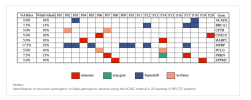
background population data, leading to the removal of 7 common SNVs. The remaining 96 variants were aggregated at the gene level (Table S1). Among them, 9 genes were found to affect at least 2 (10%) of the 20 patients (Figure 1, Table S1).
These are small numbers. I mean, fair enough to look to see if there is some genetic story and a finding even in one person could be helpful in identifying a subset or misdiagnosis, but 'at least 2 patients' is a low bar. The abstract should have included the details of the sample size and how common the identified genes were in the sample.
 
We examined the nine genes with recurrent variants in the SIPS patients (Figure 1), specifically ACADL, BRCA1, CFTR, COX10, HABP2, MFRP, PCLO, PRKN, and ZFPM2. Given the defining characteristic of cognitive abnormalities in SIPS patients, it was crucial to assess the relevance of these genes to their symptoms. Seven of the nine genes (77.8%) have previously been linked to cognitive impairment or neurological functions.

For instance, BRCA1 is involved in maintaining genomic stability and has implications in neurodegeneration and stress-induced senescence (Leung and Hazrati, 2021; Suberbielle et al., 2015). The PRKN gene is associated with Parkinson's disease, characterized by both motor and non-motor symptoms (Lücking et al., 2000). CFTR's expression in the nervous system may influence mood, memory, energy balance, olfaction, motor function, respiration, and autonomic control of visceral organs (Reznikov, 2017). Mutations in the COX10 gene, crucial for cellular respiration, have been linked to various peripheral neuropathy disorders (Fünfschilling et al., 2012; Kuroha et al., 2022). MFRP is tied to eye development, with mutations affecting retinal microglia (Kumari et al., 2022). PCLO, encoding the Piccolo protein essential for synaptic transmission, has mutations linked to pontocerebellar hypoplasia, a rare neurodegenerative disorder (Ackermann et al., 2019; Ahmed et al., 2015). ZFPM2 is involved in the development of GABAergic neurons in specific brain regions (Morello et al., 2020).
 
Ron Davis' lab, funding from OMF and the Patient-Led Collaborative


We know that the body adapts to a lack of physical challenge - there is no need to produce high levels of cortisol if someone is sedentary at home. There is particularly no need to have a marked morning peak cortisol level if a person is not getting up and rushing about to get on with their day. So, give the strong likelihood that any differences from mean levels of healthy controls are just an environmental adaptation, I'll be interested to see if there is any genetic difference tied to low cortisol levels.


These are small numbers. I mean, fair enough to look to see if there is some genetic story and a finding even in one person could be helpful in identifying a subset or misdiagnosis, but 'at least 2 patients' is a low bar. The abstract should have included the details of the sample size and how common the identified genes were in the sample.
Yeah... hopefully the DECODE ME gene study should be more helpful given the large sample size.
 
Small sample but they do also blend two other cohorts in and look for commonalities.

This is not game-changing research or cure-finding research but it probably help tip the funding paradigm slightly in the direction of EBV and neuro issues.

And when DecodeME comes out (suppposedly in August 2025) it will be useful to cross-reference this.
 
Of those MFRP looks to be turning up often enough to be suspicious. It encodes two obscure retinal proteins as far as i can see. It is onl Chromosome 11. Is it anywhere near a peak on the DecodeME plot? I can't figure out the math but my guess is that turning up this number o times ought to imply a likely disequilibrium with some common SNP variants?
 
GeneCodes says: "The MFRP protein is encoded by a bicistronic transcript which also encodes C1q and tumor necrosis factor related protein 5 (C1QTNF5)". I think this is aka myonectin.

Google says "Bicistronic refers to an mRNA transcript that contains the genetic code to translate two distinct proteins. In molecular biology, this allows a single promoter and a single messenger RNA molecule to independently produce two different proteins within a cell".
 
On MFRP:
Multi-omic analysis of photoreceptor alterations during early-onset retinal degeneration in mice, 2025
Photoreceptors are highly specialized neurons responsible for initiating vision by converting light into neural signals. The structure and function of photoreceptors are critically supported by the adjacent retinal pigment epithelium (RPE), which maintains photoreceptor health through the phagocytosis of outer segments, nutrient transport, and visual cycle activity. Disruption of the photoreceptor-RPE interface underlies inherited retinal diseases, often resulting in progressive vision loss.
Mutations in membrane frizzled-related protein (MFRP) have been implicated in a diverse spectrum of autosomal recessive ocular disorders such as nanophthalmos, posterior microphthalmia, foveoschisis, and retinitis pigmentosa. MFRPencodes a type II transmembrane protein expressed predominantly in the RPE and ciliary body, where it is thought to contribute to ocular axial length regulation and photoreceptor maintenance

I'm wondering about light sensitivity, whether a mutation in MFRP could cause light sensitivity, via an impact on the RPE which supports the photoreceptor cells. Do we know, once a person with ME/CFS becomes sensitive to light, is it permanent? Does the sensitivity vary over time, and are there cases of people returning to being able to tolerate light normally? (That seems like something we should know, unfortunately, I don't.)

I'm wondering if the seven people with this mutation in the study experienced light sensitivity, and if that symptom was different for them, compared to the people who did not have the mutation.
 
I'm wondering about light sensitivity,

I am pretty sure that light sensitivity is a red herring.

I suspect that either:
1. For statistical reasons this 'hit' is not as relevant as it might seem.
2. More interestingly, it is linked, maybe for totally obscure reasons, to some more relevant gene. There are one or two peaks on Chr 11 on DecodeME but I don't know if they are remotely close.
 
On MFRP:
Multi-omic analysis of photoreceptor alterations during early-onset retinal degeneration in mice, 2025

I'm wondering about light sensitivity Do we know, once a person with ME/CFS becomes sensitive to light, is it permanent? Does the sensitivity vary over time, and are there cases of people returning to being able to tolerate light
My case of severe light sensitivity with bed bound me/cfs went away. The reasonably severe me/cfs stayed but I can tolerate 80% light now and don’t have my windows boarded up anymore.
 
My case of severe light sensitivity with bed bound me/cfs went away. The reasonably severe me/cfs stayed but I can tolerate 80% light now and don’t have my windows boarded up anymore.
That's wonderful @Holinger, really good to hear. I know of course that people can move between severity levels, but I got concerned for a moment that perhaps some of the ME/CFS symptoms might only have a worsening trajectory.

I am pretty sure that light sensitivity is a red herring.
Yes, in relation to this gene finding, I expect it is. Still, it would be good to know if the people with the reported gene mutations experienced ME/CFS differently from the others.
 
From looking at the supplementary table, the seven patients with an MFRP variant share one specific pathogenic variant in this gene: rs730882143 (gnomAD link, GRCh38: 11:119345569:G:GA)

According to the gnomAD page, this is a very rare variant (allele frequency ≈ 0.00006), so it seems interesting to see an allele frequency as high as 0.175 in this study.

I've never really explored ClinVar, but here is the page for this variant, which appears to provide evidence that this variant is likely pathogenic for some eye conditions: https://www.ncbi.nlm.nih.gov/clinvar/variation/183046/?term=((181187[AlleleID]))

Potentially very important if around 35% of severe ME/CFS patients really share one specific ultra-rare variant. But I don't really know how the statistics work with these studies, such as with multiple test correction. Maybe they looked at a large enough number of variants that something like this would be expected to come up by chance?
 
we know, once a person with ME/CFS becomes sensitive to light, is it permanent? Does the sensitivity vary over time, and are there cases of people returning to being able to tolerate light normally?
My light sensitivity is very much tied to my severity level and is better when I'm doing better and worse when I'm doing worse. As I understand that seems to be the norm.
 
Back
Top Bottom