

A28-22 Association of Coronary Vasomotor Disorders and Myalgic Encephalomyelitis/ Chronic Fatigue Syndrome in Patients Undergoing Invasive Cardiopulmonary Exercise Testing
Introduction
Myalgic Encephalomyelitis/Chronic Fatigue Syndrome (MECFS) is characterized by 6 months of reduced ability to engage in prior levels of activity, fatigue, post-exertional malaise, unrefreshing sleep, and either cognitive impairment or orthostatic intolerance. (Singh et al, 2021)
Invasive cardiopulmonary exercise testing (iCPET) has demonstrated a primary peripheral limitation to exercise characterized by impaired systemic oxygen extraction (EO2) in these patients. Chest pain is an increasingly recognized symptom in MECFS but the underlying cardiovascular physiology is not well described.
Methods
Patients underwent iCPET and invasive coronary function testing (CFT) including vasoreactivity testing with acetylcholine (Ach) provocation, guidewire-based assessment of coronary flow reserve (CFR) and index of microcirculatory resistance (IMR). Clinical characteristics and physiologic measures were compared among patients with coronary vasospasm, coronary microvascular dysfunction (CMD), and endothelial dysfunction.
Results
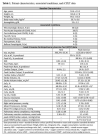
25 patients were included, 80% female with a mean age of 53.44 (SD ± 13.11). All patients exhibited a primary peripheral limit to exercise on iCPET, demonstrated by elevated mixed venous oxygen saturation and decreased arterial-venous oxygen content difference at peak exercise (Table 1).
22 of 25 patients underwent invasive coronary angiography with Ach provocation testing and the remaining 3 underwent PET CT. No patients were found to have obstructive atherosclerotic coronary artery disease and CFT diagnosed a coronary vasomotor disorder in 19 patients (86%) including coronary vasospasm (14 patients, 63.6%), CMD (4 patients, 18.2%), and endothelial dysfunction (4 patients, 18.2%). All 3 patients who underwent PET CT had coronary microvascular disease.
Discussion
In this study we observed a high incidence of coronary vasomotor disorders among MECFS patients with a primary peripheral exercise limitation on iCPET. To our knowledge, this is the first description of coronary vasomotor abnormalities in this patient subset.
While the exact mechanism remains uncertain, autonomic dysregulation, immune dysregulation, viral infections, and metabolic changes have been implicated as mechanisms of underlying endotheliopathy in MECFS. (Singh et al, 2021) A prior study involving PASC-associated MECFS patients demonstrated that impaired peak exercise EO2 was associated with proteomic signature consistent with persistent inflammatory state and endothelial dysfunction. (Singh et al, 2023) Whether a similar patho-mechanism is implicated in the coronary micro-circulation remains to be determined.
In conclusion, this study demonstrates that coronary vasomotor disorders may be common in MECFS and should be considered in patients presenting with chest pain. Further studies are needed to elucidate the pathobiology of concomitant systemic and coronary circulatory dysfunction and inform potential therapies.
Web | DOI | PDF | American Journal of Respiratory and Critical Care Medicine | Abstract
Mackay, Z; Shah, S; Joseph, P; Heerdt, P; Singh, I
Introduction
Myalgic Encephalomyelitis/Chronic Fatigue Syndrome (MECFS) is characterized by 6 months of reduced ability to engage in prior levels of activity, fatigue, post-exertional malaise, unrefreshing sleep, and either cognitive impairment or orthostatic intolerance. (Singh et al, 2021)
Invasive cardiopulmonary exercise testing (iCPET) has demonstrated a primary peripheral limitation to exercise characterized by impaired systemic oxygen extraction (EO2) in these patients. Chest pain is an increasingly recognized symptom in MECFS but the underlying cardiovascular physiology is not well described.
Methods
Patients underwent iCPET and invasive coronary function testing (CFT) including vasoreactivity testing with acetylcholine (Ach) provocation, guidewire-based assessment of coronary flow reserve (CFR) and index of microcirculatory resistance (IMR). Clinical characteristics and physiologic measures were compared among patients with coronary vasospasm, coronary microvascular dysfunction (CMD), and endothelial dysfunction.
Results
25 patients were included, 80% female with a mean age of 53.44 (SD ± 13.11). All patients exhibited a primary peripheral limit to exercise on iCPET, demonstrated by elevated mixed venous oxygen saturation and decreased arterial-venous oxygen content difference at peak exercise (Table 1).
22 of 25 patients underwent invasive coronary angiography with Ach provocation testing and the remaining 3 underwent PET CT. No patients were found to have obstructive atherosclerotic coronary artery disease and CFT diagnosed a coronary vasomotor disorder in 19 patients (86%) including coronary vasospasm (14 patients, 63.6%), CMD (4 patients, 18.2%), and endothelial dysfunction (4 patients, 18.2%). All 3 patients who underwent PET CT had coronary microvascular disease.
Discussion
In this study we observed a high incidence of coronary vasomotor disorders among MECFS patients with a primary peripheral exercise limitation on iCPET. To our knowledge, this is the first description of coronary vasomotor abnormalities in this patient subset.
While the exact mechanism remains uncertain, autonomic dysregulation, immune dysregulation, viral infections, and metabolic changes have been implicated as mechanisms of underlying endotheliopathy in MECFS. (Singh et al, 2021) A prior study involving PASC-associated MECFS patients demonstrated that impaired peak exercise EO2 was associated with proteomic signature consistent with persistent inflammatory state and endothelial dysfunction. (Singh et al, 2023) Whether a similar patho-mechanism is implicated in the coronary micro-circulation remains to be determined.
In conclusion, this study demonstrates that coronary vasomotor disorders may be common in MECFS and should be considered in patients presenting with chest pain. Further studies are needed to elucidate the pathobiology of concomitant systemic and coronary circulatory dysfunction and inform potential therapies.
Web | DOI | PDF | American Journal of Respiratory and Critical Care Medicine | Abstract
Last edited:
