

Developing An Integrative Protocol To Address Post-exertional Malaise In Myalgic Encephalomyelitis/ Chronic Fatigue Syndrome (ME/CFS)
Moneghetti, Kegan J.; Christopoulos, Elena M.; Howden, Erin J.; Talbot, Jack S.; Armstrong, Christopher W.
PURPOSE
The latest ACSM Guidelines for Exercise Testing and Prescription (March 2025) highlight the importance of considering post exertional malaise (PEM) in exercise prescription for myalgic encephalomyelitis/chronic fatigue syndrome (ME/CFS), however the aetiology of PEM remains unknown. Therefore, we aimed to design a protocol to further evaluate the mechanisms underlying PEM to further refine physical activity and pacing recommendations for ME/CFS with and without postural orthostatic tachycardia syndrome (POTS).
METHODS
To further investigate PEM aetiology, participants with ME/CFS with and without POTS (n=10 each), POTS alone (n=10), and 10 healthy controls will complete a cardiopulmonary exercise test (CPET).
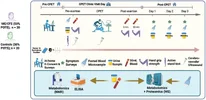
To explore aetiologies of PEM beyond metabolic dysfunction as identified through a CPET, we included A) comprehensive metabolomic and proteomic analysis of blood and urine collected prior to and for up to 3 days following exertion, B) cerebral blood flow measurement via extracranial doppler ultrasound of the carotid arteries during the CPET and an active stand test to assess orthostatic responses, C) maximal handgrip strength tests pre- and post-exertion to measure neuromuscular fatigue, and D) a heart rate and activity monitor worn to monitor orthostatic related fluctuations.
To integrate these techniques to identify aetiologies of PEM, daily symptom questionnaires will be utilized to track PEM and orthostatic intolerance symptoms and match those with biological markers.
RESULTS
We identified a diagnostic technique that integrates metabolic, hemodynamic, molecular, and neuromuscular assessments with symptom tracking in a unified framework to capture the onset and progression of PEM (Figure 1).
CONCLUSIONS
This protocol provides a comprehensive, integrated physiological data set to further define PEM in ME/CFS and clarifies the influence of POTS on PEM severity.
Web | DOI | PDF | Medicine & Science in Sports & Exercise | Abstract
Moneghetti, Kegan J.; Christopoulos, Elena M.; Howden, Erin J.; Talbot, Jack S.; Armstrong, Christopher W.
PURPOSE
The latest ACSM Guidelines for Exercise Testing and Prescription (March 2025) highlight the importance of considering post exertional malaise (PEM) in exercise prescription for myalgic encephalomyelitis/chronic fatigue syndrome (ME/CFS), however the aetiology of PEM remains unknown. Therefore, we aimed to design a protocol to further evaluate the mechanisms underlying PEM to further refine physical activity and pacing recommendations for ME/CFS with and without postural orthostatic tachycardia syndrome (POTS).
METHODS
To further investigate PEM aetiology, participants with ME/CFS with and without POTS (n=10 each), POTS alone (n=10), and 10 healthy controls will complete a cardiopulmonary exercise test (CPET).
To explore aetiologies of PEM beyond metabolic dysfunction as identified through a CPET, we included A) comprehensive metabolomic and proteomic analysis of blood and urine collected prior to and for up to 3 days following exertion, B) cerebral blood flow measurement via extracranial doppler ultrasound of the carotid arteries during the CPET and an active stand test to assess orthostatic responses, C) maximal handgrip strength tests pre- and post-exertion to measure neuromuscular fatigue, and D) a heart rate and activity monitor worn to monitor orthostatic related fluctuations.
To integrate these techniques to identify aetiologies of PEM, daily symptom questionnaires will be utilized to track PEM and orthostatic intolerance symptoms and match those with biological markers.
RESULTS
We identified a diagnostic technique that integrates metabolic, hemodynamic, molecular, and neuromuscular assessments with symptom tracking in a unified framework to capture the onset and progression of PEM (Figure 1).
CONCLUSIONS
This protocol provides a comprehensive, integrated physiological data set to further define PEM in ME/CFS and clarifies the influence of POTS on PEM severity.
Web | DOI | PDF | Medicine & Science in Sports & Exercise | Abstract


