Analysis Of Salivary Herpesviruses Reveals Associations Between HHV-6 And Long COVID Severity
BACKGROUND
Reactivation of human herpesviruses (HHVs), particularly EBV, is associated with more severe acute SARS-CoV-2 infections and the development of Long COVID (LC). Observations of higher anti-EBV antibody levels in individuals with LC support the idea that chronic reactivation of HHVs could contribute to LC pathology. HHV shedding in saliva has also been previously associated with saliva hormone levels. This study aims to examine the relationship between salivary shedding of HHV DNA and LC symptoms, as well as cortisol, testosterone, and estradiol levels.
METHODS
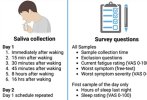
We enrolled 45 participants with LC, and 45 age-sex-matched controls. Surveys and validated health questionnaires were used to collect demographics, medical history, and symptom profiles. Saliva was self-collected at waking, 15, 30, and 45 minutes, and 8 and 16 hours after waking, across two consecutive days. Salivary cortisol, testosterone and estradiol were measured, and extracted nucleic acid was tested for EBV, HSV 1/2, HCMV and HHV-6 A/B using multiplex qPCR, plus SARS-CoV-2 and RNaseP using RT-qPCR.
FINDINGS
Detection of salivary EBV and HHV-6 DNA was highest early in the morning. There were no significant differences in salivary cortisol, testosterone, or estradiol, or in EBV or HHV-6 shedding between the LC and control groups. However, salivary HHV-6 DNA levels were positively associated with a greater aggregated LC propensity score, as well as anxiety and depression scores.
INTERPRETATION
The observed correlation between salivary HHV-6 shedding and symptom severity suggests HHV-6 may contribute to post-acute disease, though mechanisms remain unclear. While our study did not identify a relationship between salivary EBV shedding and LC, EBV may still play a role at earlier time points in the disease course, or in compartments not sampled here. These findings highlight the potential importance of HHV-6 in LC pathophysiology and underscore the need for longitudinal, multi-compartment studies of herpesvirus reactivation in LC.
Web | DOI | PDF | Preprint: MedRxiv | Open Access
Claire S Laxton; Alexandra Tabachnikova; Lily Cooke; Kexin Wang; Simone Blaser; Julio Silva; Jamie Wood; Henna Nam; Zhenni Lu; Christine Miller; Gisele Rodrigues; Victoria Fisher; Christian Guirgis; William B Hooper; Alexandra Lee; Mackenzie Doerstling; Bornali Bhattacharjee; Leying Guan; David Putrino; Akiko Iwasaki
BACKGROUND
Reactivation of human herpesviruses (HHVs), particularly EBV, is associated with more severe acute SARS-CoV-2 infections and the development of Long COVID (LC). Observations of higher anti-EBV antibody levels in individuals with LC support the idea that chronic reactivation of HHVs could contribute to LC pathology. HHV shedding in saliva has also been previously associated with saliva hormone levels. This study aims to examine the relationship between salivary shedding of HHV DNA and LC symptoms, as well as cortisol, testosterone, and estradiol levels.
METHODS
We enrolled 45 participants with LC, and 45 age-sex-matched controls. Surveys and validated health questionnaires were used to collect demographics, medical history, and symptom profiles. Saliva was self-collected at waking, 15, 30, and 45 minutes, and 8 and 16 hours after waking, across two consecutive days. Salivary cortisol, testosterone and estradiol were measured, and extracted nucleic acid was tested for EBV, HSV 1/2, HCMV and HHV-6 A/B using multiplex qPCR, plus SARS-CoV-2 and RNaseP using RT-qPCR.
FINDINGS
Detection of salivary EBV and HHV-6 DNA was highest early in the morning. There were no significant differences in salivary cortisol, testosterone, or estradiol, or in EBV or HHV-6 shedding between the LC and control groups. However, salivary HHV-6 DNA levels were positively associated with a greater aggregated LC propensity score, as well as anxiety and depression scores.
INTERPRETATION
The observed correlation between salivary HHV-6 shedding and symptom severity suggests HHV-6 may contribute to post-acute disease, though mechanisms remain unclear. While our study did not identify a relationship between salivary EBV shedding and LC, EBV may still play a role at earlier time points in the disease course, or in compartments not sampled here. These findings highlight the potential importance of HHV-6 in LC pathophysiology and underscore the need for longitudinal, multi-compartment studies of herpesvirus reactivation in LC.
Web | DOI | PDF | Preprint: MedRxiv | Open Access