

Chandelier
Senior Member (Voting Rights)
Long article in thecut.com from a mother with a child with PANS.
The article is paywalled, here‘s the beginning of it:
AUG. 13, 2026
One Friday morning in September 2025, my 8-year-old daughter, Rose, woke up with a sore throat.
Since her toddler years, we have asked her to hold her hands apart to show us how bad something hurts.
That day, she separated her palms four inches: medium.
I held the thermometer to her forehead (99 degrees) and then got her cozy on the sofa with The Nightmare Before Christmas and a box of tissues.
Over the weekend, she cheerfully stayed there, rotating through old Disney Channel shows, Labyrinth, and her favorite spooky cartoon, The Haunted House.
By Sunday evening, she was asking if we could visit the splash pad in our Toronto neighborhood, and when she returned to school on Tuesday, my husband, David, her 1-year-old brother, Calvin, and I all seemed to have come down with the same illness. It felt like a minor cold.
But over the next few days, Rose started to change.
First, it was her limbs.
As she was falling asleep one night, her arms and legs suddenly and uncontrollably shot out in front of her, like she was imitating a zombie.
If she tried to relax, her abdominal muscles would contract, forcing her to sit upright. This happened dozens of times over the course of an hour, so David took her to the emergency room while I stayed home with our sleeping baby.
After Rose’s preliminary blood work came back normal, the doctors attributed the movements to an unusual viral symptom.
We‘ve had some discussion about PANS and PANDAS before:
 www.bbc.com
The article is paywalled, here‘s the beginning of it:
When a Sore Throat Attacks the Brain
My child caught a cold and lost her ability to function. The fight to treat her illness, PANS, consumes my life.
By Jessica Slice, a journalist, author, and podcasterAUG. 13, 2026
One Friday morning in September 2025, my 8-year-old daughter, Rose, woke up with a sore throat.
Since her toddler years, we have asked her to hold her hands apart to show us how bad something hurts.
That day, she separated her palms four inches: medium.
I held the thermometer to her forehead (99 degrees) and then got her cozy on the sofa with The Nightmare Before Christmas and a box of tissues.
Over the weekend, she cheerfully stayed there, rotating through old Disney Channel shows, Labyrinth, and her favorite spooky cartoon, The Haunted House.
By Sunday evening, she was asking if we could visit the splash pad in our Toronto neighborhood, and when she returned to school on Tuesday, my husband, David, her 1-year-old brother, Calvin, and I all seemed to have come down with the same illness. It felt like a minor cold.
But over the next few days, Rose started to change.
First, it was her limbs.
As she was falling asleep one night, her arms and legs suddenly and uncontrollably shot out in front of her, like she was imitating a zombie.
If she tried to relax, her abdominal muscles would contract, forcing her to sit upright. This happened dozens of times over the course of an hour, so David took her to the emergency room while I stayed home with our sleeping baby.
After Rose’s preliminary blood work came back normal, the doctors attributed the movements to an unusual viral symptom.
We‘ve had some discussion about PANS and PANDAS before:

'Unbelievable pain and suffering': How a common throat infection can rewire children's brains
Strep throat is a common childhood illness, but in a few children this bacteria infection can lead to alarming, lasting changes in behaviour.
www.bbc.com
AI Summary
A seemingly harmless strep throat infection can, in rare cases, trigger a severe and sudden psychiatric disorder in children known as PANDAS (Paediatric Autoimmune Neuropsychiatric Disorders Associated with Streptococcal Infections), or a broader condition called PANS.
Key Points:
- Case Study:
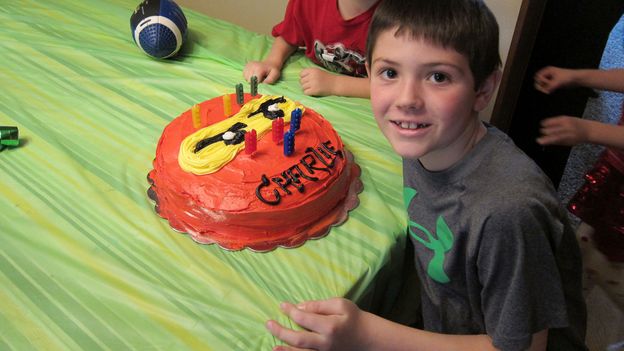
Charlie Drury was a healthy 8-year-old until he suddenly developed strange symptoms—tics, OCD, hallucinations...
- Chandelier
- grin2a pandas pans strep
- Replies: 11
- Forum: Other health news and research
