Dolphin
Senior Member (Voting Rights)
Association of pharmacotherapy with all-cause mortality among patients with irritable bowel syndrome - Communications Medicine
Mehravar et al. use U.S. health record database to evaluate all-cause mortality in adults with irritable bowel syndrome on medications. Antidepressants and μ-opioid antidiarrheals are associated with higher mortality, while rifaximin, eluxadoline, bile acid sequestrants, polyethylene glycol-3350...
 www.nature.com
- Article
- Open access
- Published: 08 April 2026
Association of pharmacotherapy with all-cause mortality among patients with irritable bowel syndrome
Show authorsCommunications Medicine volume 6, Article number: 176 (2026)
Abstract
Background
Irritable bowel syndrome (IBS) is a common disorder associated with high healthcare costs and reduced quality of life. The long-term safety of its pharmacotherapies remains unclear. This study aims to assess the association between long-term pharmacotherapies and all-cause mortality in this population.Method
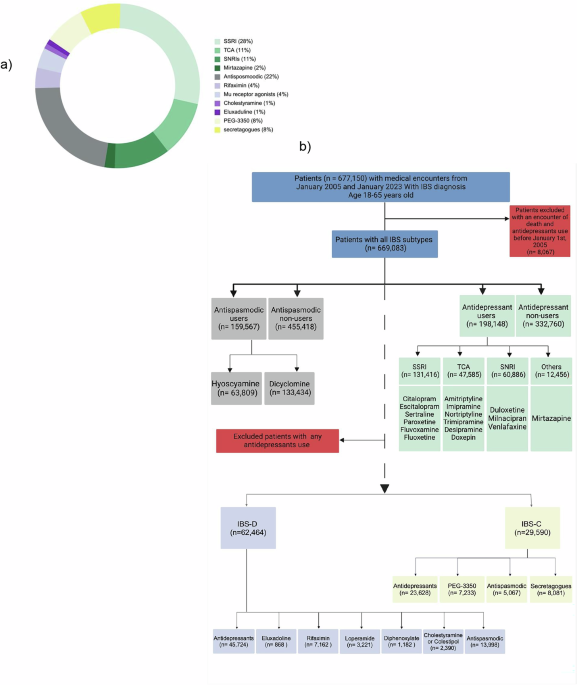
We performed a retrospective cohort study using a nationwide U.S. electronic health record database (January 1, 2005, to January 1, 2023). A 1:1 propensity score-matched cohort included 669,083 adults (aged 18–65) with IBS. Patients were grouped by pharmacotherapy use, with subgroup analyses for IBS with diarrhea (IBS-D) and IBS with constipation (IBS-C). Follow-up started at the time of medication prescription after diagnosis. Exposures included guideline-recommended therapies for IBS, IBS-D, or IBS-C. The primary outcome was all-cause mortality, assessed using Cox proportional hazards models and target trial emulation.Results
Antidepressant use is associated with an increased risk of all-cause mortality (hazard ratio, 1.35; 95% CI, 1.26–1.45; mortality rate, 1.6% vs. 1.0%). This association remains consistent across antidepressant subclasses and demographic subgroups. Antispasmodic use is not linked to increased mortality (HR, 0.95; 95% CI, 0.89–1.00). For IBS-D, cholestyramine/colestipol, eluxadoline, and rifaximin are not associated with mortality. However, diphenoxylate (HR, 1.89; 95% CI, 1.02–3.51) and loperamide (HR, 2.39; 95% CI, 1.48–3.90) show increased mortality risk. For IBS-C, polyethylene glycol-3350 and secretagogues have no significant association with mortality.