Austria: Matthias Wielscher - Medical University of Vienna, Center of Public Health

Hutan

Moderator
Staff member
Copied from the WE&ME Foundation thread
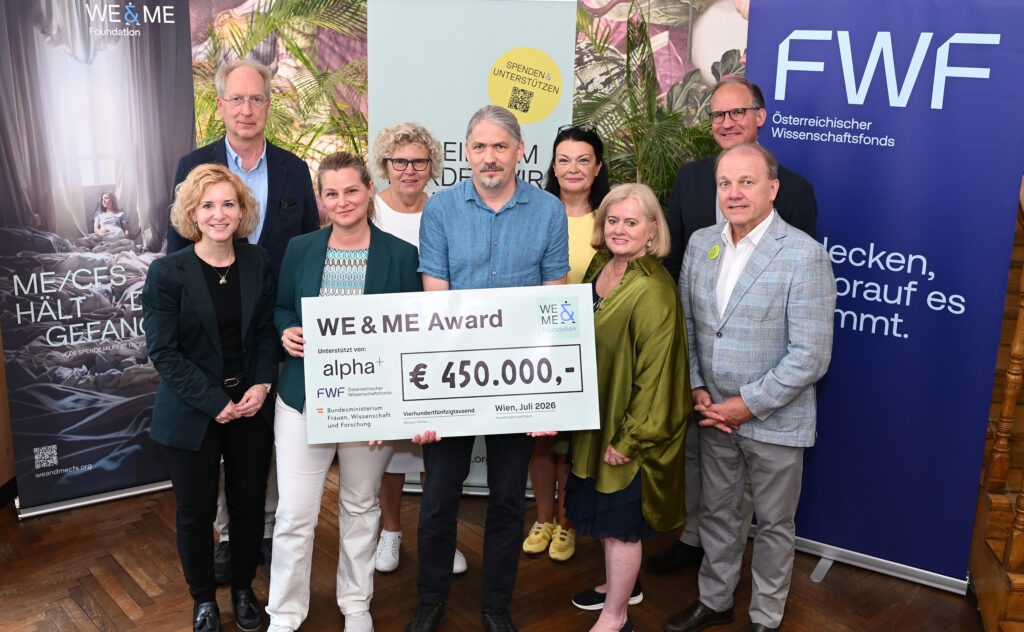

1.3 million euros awarded for ME/CFS research, with 450,000 euros for a project building on the results of DecodeME.

The WE&ME Award , presented for the first time, is one of Austria’s most generously endowed privately funded research prizes, with a prize of 450,000 euros, and supports basic research into the multisystem disease ME/CFS. In a competitive selection process based on reviews by international experts, epidemiologist Matthias Wielscher and three other researchers stood out. Wielscher’s project will receive the WE&ME Award and will be funded by a 450,000-euro donation from the WE&ME Foundation to the alpha+ Foundation. In addition, the Austrian Science Fund (FWF) is funding three other research projectson ME/CFS with a total of 1.3 million euros.

“We chose Matthias Wielscher’s project because, for us, recognizing the heterogeneity of this disease is a central focus of current biomedical research on ME/CFS, and because the lack of patient stratification prevents consistent study results—and thus also targeted therapies. Genetic studies and correlations enable more precise subtyping with the goal of deciphering different disease mechanisms and, as a result, providing starting points for diagnostics and therapies. “The necessary international networking and collaboration with the largest genetic dataset for ME/CFS (DecodeME)—whose sequencing is supported, among others, by WE&ME—is also a key component of this project,” said Gabriele Ströck of the WE&ME Foundation regarding the selection of the WE&ME Award.

This is a quote from the Austrian Science Minister! FWF is the Austrian Science Fund.
“Behind every research question regarding ME/CFS are people whose lives have been fundamentally altered by this serious illness. It severely limits the lives of thousands of people affected by it, while at the same time still raising many scientific questions. This award-winning project lays an important foundation for better understanding the biological causes of the disease and developing new approaches to diagnosis and treatment. “I would like to express my heartfelt thanks to the WE&ME Foundation for its extraordinary commitment. Together with the FWF, we are enabling research that creates concrete prospects for those affected,” said Science Minister Eva-Maria Holzleitner.
 
Last edited:
Detail on the
Genetic architecture of chronic fatigue syndrome grant, funded by WWTF
For the 2025 calendar year USD 112,662, PI role with co-PI Kathryn Hoffman

Currently, there is no consensus on the genetic foundations of ME/CFS, although its heritability estimated at up to 50%. While a large-scale GWAS is ongoing in a dedicated ME/CFS cohort (DECODE-ME), our project will complement this by focusing on rare genetic variants. Thus, the aim of this research project is to provide a list of causal genes for ME/CFS to facilitate further testing and characterization in collaboration with clinical researchers and wet lab biologists.

This opportunity arises from the recent availability of whole genome sequencing data from large-scale biobanks such as UK Biobank and All of Us. We can now categorize all protein-altering variants within a gene or other genomic structures like transcription factor binding sites and evaluate their collective impact on ME/CFS. We will utilize the International Consensus Criteria to define cases, however we will also conduct sensitivity analyses around the phenotype definition, and extend our analyses to include long COVID phenotypes within the cohorts mentioned above.

Our primary analysis will be a meta-analysis of data from the UK Biobank and All of Us, which we will, depending on availability, also attempt to replicate using imputed data from the DECODE-ME cohort. This will not only provide the most extensive analysis of rare variants in ME/CFS to date enhancing our knowledge of the condition's causal genes and pathways, but it will also establish a dataspace and collaborative framework for clustering, factor analysis, and other exploratory and epidemiological studies, which we think are essential to fully understand this complex condition. These analyses could also inform subsequent rounds of genetic association tests. Ultimately, the outcomes of these tests may enable stratification of patients and facilitate the categorization of patients into specific subgroups.
 
Last edited:
Detail on
The impact of mast cell activation on epithelial and endothelial barrier dysregulation in post-infectious ME/CFS grant, funded by WWTF
For the calendar year 2025 USD 112,883, co-PI role with PI Eva Untersmayr-Elsenhuber

Malgic Encephalomyelitis/Chronic Fatigue Syndrome (ME/CFS) is a debilitating disease, with women being 2-3 times more often affected. Viral infections are considered the main triggers for ME/CFS, but the precise pathomechanisms remain unclear. The COVID-19 pandemic has provided new insights into post-infectious ME/CFS and a significant number of Post-COVID Syndrome (PCS) patients develop ME/CFS.

Mast cells, activated by viral triggers, release various inflammatory mediators, which contribute to inflammation and tissue damage by disrupting epithelial and endothelial barriers. Thus, mast cell activation (MCA) may trigger symptoms associated with the disease, such as cognitive impairment, pain and brain fog. Of interest, recent studies have shown that mast cells exhibit a stronger response and release of mediators upon activation in women. Unpublished data of our own research group show that post-infectious ME/CFS patients suffer from symptoms indicating MCA and respond to the treatment of MCA.

We suggest virally triggered mast cells to play a crucial role in the development of post-infectious ME/CFS. We hypothesize that MCA drives ME/CFS pathology via epithelial and endothelial barrier disruption. Our study will evaluate: (1) immune-related mast cell mediators and cell junction protein changes in post-infectious ME/CFS patients, (2) the proximety of viral fragments to activated mast cells in intestinal tissues, and (3) mast cell phenotype alterations in these patients. Utilizing patient-derived samples, we will conduct in vitro co-culture models, examine MCA markers, and perform single-cell RNA sequencing to elucidate mast cell transcriptomic signatures.

The project DegranulateME aims to provide insights into the pathogenesis of post-infectious ME/CFS, emphasizing the role of MCA in barrier integrity and inflammation. These insights are crucial for developing causative treatment approaches to restore barrier function and manage symptoms in post-infectious ME/CFS.

So, Degranulate ME is led by Eva Untersmayr-Elsenhuber. She also leads the newly announced Discover-ME project, with EUR7.5 million in funding and collaborating institutions from around Europe and Canada.
 
Currently, there is no consensus on the genetic foundations of ME/CFS, although its heritability estimated at up to 50%.
What’s this based on?

Is there really a 50 % chance that your child gets ME/CFS only based on your genes? That would be extraordinary.
 
What’s this based on?

Is there really a 50 % chance that your child gets ME/CFS only based on your genes? That would be extraordinary.

If I remember correctly there was a small study with identical twins, maybe this is what the statement is based on.
 
What’s this based on?

Yes, there was a twin study that estimated 50% heritability. I don't think that equates to a 50% chance of offspring having ME/CFS. Sickle cell disease (homozygous HbC) is 100% genetic but a person with sickle cell disease does not have a 50% chance of having offspring with the disease. The chance may be a few percent at most.
 
Back
Top Bottom