Autism and ME/CFS

If you ignore those with no links, sure.

I don’t understand why the outliers are essentially ignored. Wouldn’t they provide very valuable clues about what the mechanisms might be?
If you cannot explain the outliers you do not understand the disease. There are more ways to mimic the human proteome or induce autoimmunity than just Epstein-Barr virus - but those outliers existing does not mean the molecular mimicry hypothesis can be dismissed out of hand.

It is quite interesting to be in a discussion where my opponent is claiming "cross-reactive immunity doesn't happen, and when it does it never matters."
 
The question is still why some people end up with the bad autoantibodies and others don’t.

If I’ve understood it correctly, which is by no means a guarantee, the binding parts of the antibodies are generated randomly, so everyone will generate autoantibodies for everything.

Which events have allowed for the survival of pathogenic autoantibodies? How did they get past all of the checkpoints that are supposed to weed out autoantibodies with a strong enough affinity to self before they get out and about doing damage?
Yes! The question IS very much "why some people end up with the bad autoantibodies and others don’t."

This process is very much non-random. There is randomness to the naive repertoire, but then a half-billion-year-old adaptive intelligence uses evolution to act on and improve immune responses to antigens. There are strong associations with HLA types and many of these diseases. IE its randomness x the right genetics x the right accident and virus to make JUST the exact type of molecular mimic mistake that results in a disease pathology.

And then - after their creation - "Which events have allowed for the survival of pathogenic autoantibodies? How did they get past all of the checkpoints that are supposed to weed out autoantibodies with a strong enough affinity to self before they get out and about doing damage?"

^^^^ This is a very important point. For some reason - they are able to persist. A simple explanation would be that given tens of billions of clones - immunity is bound to be inherently fallible - and that evolution thinks it's better to have an immune system that sometimes creates a chronic immune condition than never pass on your genes from dying of smallpox or TB (as used to occur quite often).

Another would be that chronic restimulation from a viral infection you never clear, constantly re-priming the response hacks these processes - such as to EBV EBNA1 - could be such a mechanism causing MS).

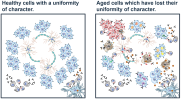
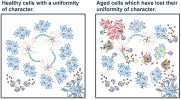
Another could be the autoantigen is NOT truly self per-se - but a damaged form of the self antigen that only occurs in older cells or in certain cell types with certain diets. The above case actually is one. The true autoantigen above in the Robinson paper is a phosphorylated form of human EBNA1.

Many autoimmune and degenerative conditions are closely tied to oxidation performance and mitochondria. It is quite possible that 'transformed self' (ie oxidized self proteins) are more dominant autoantigens than their normal forms - and the prevalence of these varies with diet and time.

Immunity is trained on 'self' - but there is no such thing as a truly molecularly stable self. This gets catastrophically worse with age. Immunity must make mistakes and attack parts of the self that do not remain stable. A rather dull concept immunologists call 'inflammaging' (universal inflammation in aged tissue) I think might just be the 'normal behavior of a healthy immune system' to the inevitably transformed older body (via gene mutations, oxidative damage, etc).

1779293312716.png
 

Attachments

  • 1779293526431.png
    1779293526431.png
    1.4 MB · Views: 1
My comment was about how you can’t ignore the EBV naive lupus cases when trying to explain how lupus works.
That reply was to JE not you - he is dismissing the concept of molecular mimicry by claiming there is no evidence for it - I am in vehement disagreement with his dismissal - although I agree even star cases supporting it have their own deficiencies and caveats.

My reply to you is the much longer post that came last! I believe having EBV-naive cases of lupus does NOT inherently disprove that many cases of lupus might be downstream of EBV.
 
I am surprised to see this being suggested on here. I thought we not only lacked evidence for vaccines causing autism but had good evidence against it.
I too doubt vaccines are the primary cause of autism - I think the case is far stronger for in utero issues (like an autoantibody) transferred from mom to fetus skewing development.

I just don't find that case as entirely closed as many like to claim - especially 'idopathic' cases that seem to not be present at birth, or other conditions like PANDAS which are autism-like.

I spend my career looking at whole-proteome autoantibody discovery assays. To my knowledge, no such technology has ever been used to investigate pre vs post changes in serum autoantibodies after any component of the childhood vaccination schedule. I do know that cancer vaccines induce autoantibodies (inject foreign human protein + adjuvant). I also know that cancer-like immortal human cell lines are used to grow certain parts of the childhood vaccine schedule and that traces of proteins from these cell lines remain in production vaccine lots. I also know that whether that results in anything is unknown - it's a true gap in literature and safety testing.
 
Yes! The question IS very much "why some people end up with the bad autoantibodies and others don’t."

This process is very much non-random. There is randomness to the naive repertoire, but then a half-billion-year-old adaptive intelligence uses evolution to act on and improve immune responses to antigens. There are strong associations with HLA types and many of these diseases. IE its randomness x the right genetics x the right accident and virus to make JUST the exact type of molecular mimic mistake that results in a disease pathology.
Viruses do not cause new types of antibodies to be created, do they? They just amp up the production of those that have already passed multiple checkpoints against autoimmunity.

If an antibody is strongly enough anti-self, it wouldn’t make it out to be able to be reproduced. So this theory still needs to explain how the safeguarding mechanisms would fail.
This is a very important point. For some reason - they are able to persist. A simple explanation would be that given tens of billions of clones - immunity is bound to be inherently fallible - and that evolution thinks it's better to have an immune system that sometimes creates a chronic immune condition than never pass on your genes from dying of smallpox or TB (as used to occur quite often).
You’d still need to explain which parts of «immunity» that’s fallible, and how those flaws allows for the survival of autoantibodies at a scale large enough, with high enough affinity, to cause disease.
Another would be that chronic restimulation from a viral infection you never clear, constantly re-priming the response hacks these processes - such as to EBV EBNA1 - could be such a mechanism causing MS).
Which processes?
Another could be the autoantigen is NOT truly self per-se - but a damaged form of the self antigen that only occurs in older cells or in certain cell types with certain diets. The above case actually is one. The true autoantigen above in the Robinson paper is a phosphorylated form of human EBNA1.
Many autoimmune and degenerative conditions are closely tied to oxidation performance and mitochondria. It is quite possible that 'transformed self' (ie oxidized self proteins) are more dominant autoantigens than their normal forms - and the prevalence of these varies with diet and time.
A change in the form of the cells in the body due to external factors might in theory be a way to get around the issue with checkpoints against autoantibodies. But the change would have to be quite consistent across individuals for it to generate the same kind of disease. And the changes would have to happen at a large enough scale to cause disease.

It also doesn’t really fit the age profiles for many autoimmune diseases. MS usually starts between age 20 and 40. The integrity of myelin peaks around 40, if I’ve understood this right.
 
That reply was to JE not you - he is dismissing the concept of molecular mimicry by claiming there is no evidence for it - I am in vehement disagreement with his dismissal - although I agree even star cases supporting it have their own deficiencies and caveats.
I misunderstood because the reply was in a comment that responded to my comment.
My reply to you is the much longer post that came last! I believe having EBV-naive cases of lupus does NOT inherently disprove that many cases of lupus might be downstream of EBV.
It effectively makes EBV redundant, so you’d have to explain either how there are two different processes that can cause lupus, or how EBV supercharges the lupus process that can still occur without EBV.

Meaning that you need a non-EBV explanation for lupus regardless.
 
Too much here to get into but appreciate the engagement. Immunology is very complicated and we don't truly know 'where' all the autoabs come from. I believe they are more common, and health impacting, than most people currently realize.
 
Too much here to get into but appreciate the engagement. Immunology is very complicated and we don't truly know 'where' all the autoabs come from. I believe they are more common, and health impacting, than most people currently realize.
I appreciate the engagement as well!

Can you elaborate on this?

Are you saying that B cells might be so dramatically changed after maturation/activation, to the point that they start producing significantly differently shaped antibodies than what they were «screened for» during the autoimmunity checkpoints earlier in their life?

And that these changes cause pathogenic autoantibodies to occur?
 
I just don't find that case as entirely closed as many like to claim - especially 'idopathic' cases that seem to not be present at birth, or other conditions like PANDAS which are autism-like.
Is there good evidence such “idiopathic” cases exist? Most parents are not able to detect signs of autism that early. In fact, that is the norm except perhaps in fairly severe presentations. That’s very different from autism actually not being present from birth.

PANDAS is a minefield, so I won’t get into that.
 
On autism I read a "synaptic pruning" theory that suggested everyone builds then prunes synapses during brain development, but in autism the ones that get pruned off are different.

E.g. many more of the social learning neurons get pruned and many fewer of the neurons related to say, numbers etc.

I find this to be an intuitive model for the phenotype. There's not a lot of evidence for it yet though.


"The proposed atypical mechanism involves overly aggressive synaptic pruning in infancy and early childhood, an exaggeration of a normal phase of brain development. We show how the hypothesis generates novel predictions that differ from existing theories of ASD including that (1) the first few months of development in ASD will be indistinguishable from typical, and (2) the earliest atypicalities in ASD will be sensory and motor rather than social."

I don't think we know what controls synaptic pruning but I imagine a virus or autoantibody is not ruled out as a contributor to it going haywire.
 
Last edited:
Is there good evidence such “idiopathic” cases exist? Most parents are not able to detect signs of autism that early. In fact, that is the norm except perhaps in fairly severe presentations. That’s very different from autism actually not being present from birth.

PANDAS is a minefield, so I won’t get into that.
I’m honestly lost in the epidemiology of this field. Diagnostic criteria do change; how much rates are up vs historical. But lots of immune things are up vs historical and if autism has immune link (assume it does) it going up now would fit other global trends. I have a client at NIMH that recently ran PANDAS samples with us on HuProt but cohort was blinded to me so do not know the result or how that went. About to do my own maternal study with women known to give birth to kids diagnosed early by hearing test and look more at viral/bacterial exposures correlating via a new “exposome” VirScan phipseq (which I guess I designed - expecting that data within the week). I’m not just debating out of the air I’m actively trying to test these hypotheses …!
 
On autism I read a "synaptic pruning" theory that suggested everyone builds then prunes synapses during brain development, but in autism the ones that get pruned off are different.

E.g. many more of the social learning neurons get pruned and many fewer of the neurons related to say, numbers etc.

I find this to be an intuitive model for the phenotype. There's not a lot of evidence for it yet though.


"The proposed atypical mechanism involves overly aggressive synaptic pruning in infancy and early childhood, an exaggeration of a normal phase of brain development. We show how the hypothesis generates novel predictions that differ from existing theories of ASD including that (1) the first few months of development in ASD will be indistinguishable from typical, and (2) the earliest atypicalities in ASD will be sensory and motor rather than social."

I don't think we know what controls synaptic pruning but I imagine a virus or autoantibody is not ruled out as a contributor to it going haywire.
It’s not genetics alone. So what would cause this pruning issue ? Part of why I’m so obsessed with autoabs as a direction. Maternal antibody to fetus (remaining in circulation first months of life for baby too) could block neuronal growth factors that do such things.
 
Is there good evidence such “idiopathic” cases exist? Most parents are not able to detect signs of autism that early. In fact, that is the norm except perhaps in fairly severe presentations. That’s very different from autism actually not being present from birth.

PANDAS is a minefield, so I won’t get into that.

1. Autistic regression is a real thing. Not that there weren't maybe some earlier hints of autism but kids can lose their speech, their social and motor skills etc. Around age 2.

2. PANS/PANDAS is complicated and I think extremely worth looking into as a recently recognised but still contested post-infectious condition. Maybe we should have a thread on PANS/PANDAS research, could be insightful.
 
1. Autistic regression is a real thing. Not that there weren't maybe some earlier hints of autism but kids can lose their speech, their social and motor skills etc. Around age 2.
It is, but that’s quite different from the idea that there are kids who are simply not autistic at all before that point, and something (like a vaccine) happens that makes them autistic.

That being said, I think what is important with respect to my response to @Tyler Hulett is that there is nothing particularly unusual about cases where autism isn’t obvious at birth. That scenario was brought up as if it is unusual, but it is the norm. It really can’t be used as a basis for the idea that vaccines cause autism in some cases because the number of those cases would so large that they would be easily detectable—and many people have looked. Having noticeable signs at birth is unusual, not the opposite.
 
I’m not just debating out of the air I’m actively trying to test these hypotheses …!
I respect that. I just don’t think the vaccine angle specifically is viable unless you can explain how the connection has been missed repeatedly. You’re saying there’s a plausible mechanism for vaccines to cause autism, but the existence of a mechanism isn’t enough if there is research showing no numerical relationship.
 
I respect that. I just don’t think the vaccine angle specifically is viable unless you can explain how the connection has been missed repeatedly. You’re saying there’s a plausible mechanism for vaccines to cause autism, but the existence of a mechanism isn’t enough if there is research showing no numerical relationship.
Literally *nobody* knows the mechanism of autism or even what it entirely is. There are no diagnostic biomarkers. No molecular classes. It’s all diagnosed on vibes, questionnaires, pain responses with lots of vague associative and descriptive studies of patterns that occur without clear cause. Until we know more *everything* is on the table. My point is not that I think vaccines cause autism. My point is that I think it’s plausible autoantibodies are involved in what causes autism. And that the way I know how to measure autoantibodies is relatively new and has not really ever been used to check for whether vaccines change them, etc. Thus, a gap in human knowledge directly at this interface I happen to specialize in. Doesn’t mean the answer is there - just unchecked and IMHO more than worth checking as much as everyone claims to already know the answer as to what does or doesn’t cause it. Every scientist I’ve ever brought this up to looks at me like some sort of demon who has broached a forbidden taboo - and that I don’t like. Many are terribly uncurious creatures.
 
PANDAS is a minefield, so I won’t get into that.

Yes, I think PANDAS is a red herring. Inasmuch as it is useful it refers to neuropsychiatric symptoms following strep infection. We know that strep infection induces a whole range of immune complex mediated events that go away once the strep has gone (so are not likely autoimmune) but often leave long term disease in the form of damage - most typically rheumatic heart disease and proliferative glomerulonephritis. Basal ganglia involvement has been known as Sydenham's chorea historically. A neuropsychiatric form would be very unsurprising.

Rheumatic fever sparked the myth about molecular mimicry in the first place and it seems to have been revived by a group of psychiatrists for PANDAS. There was some evidence of apparent anti-complement antibodies, which might not be surprising in the short term. Strep produces proteins that mess with IgG and complement like protein G (which may well be why it uniquely produces these strange immune complex syndromes) but I am not aware of any good evidence for mimicry being involved. I am not aware of evidence for any other organism or indeed a vaccine producing this sort of pathology.
 
Back
Top Bottom