Chronic Lyme disease, post-treatment Lyme disease syndrome (PTLDS)

"Experts warn that celebrity tell-alls and rampant “pseudoscience” surrounding Lyme is fuelling misdiagnoses. “Lyme disease has been plagued with misinformation for decades,” said Andrea Love, the executive director of the American Lyme Disease Foundation. “Unfortunately, there are instances of celebrities bringing attention to Lyme when it is unlikely they actually were infected with this bacteria.”"

What's been fueling misdiagnoses - both false negatives and false positives - is a combination of dreadful diagnostics and contested symptoms that has been around for 40 years. A steady stream of propaganda hasn't helped. It's also been a situation characterized not so much by pseudoscience as bad science all around, and has been pretty much from the get-go.

Just a strange article. It has the feel of something written almost a quarter century ago. If this found its way into a US-based journal today, I suspect the push-back would be immediate and substantive. There should be little tolerance for unregenerately one-sided positions anymore (irrespective of if it's the ALDF or ILADS or whomever). There's just too much we still don't know.
 
Last edited:
What is the purpose of this article? So many mixed messages.
It is a contentious issue in Australia as authorities say it is not transmitted by ticks there but there are advocacy groups that say it is.

Mine was not from a tick bite, but from some unknown insect when I was on holiday in the Canaries. I'd had a nasty bite on my ankle which cleared up enough on the way home to not seek help...big mistake. Further down the line I was diagnosed with Borelliosis but which strain remains unknown. True Lyme disease is Borellia Burgdorferi, the American strain. There are at least 6 of over 300 strains of borellia that can cause Lyme-like disease, many being of European origin, inc the Canaries. This is why so many people have a negative Elisa test as this is specific to B Burgdorferi I believe.
 
I didn't think this deserved a thread of its own, but might be of interest to people with Lyme Disease :

https://www.youtube.com/shorts/8Wf58IwUwok?feature=share

Mod note: the video is brief but cognitively demanding with very fast speech, flashing words and images unrelated to the words. The story is that a woman's Lyme disease was cured when she was stung by bees.
 
Last edited by a moderator:
Linking this thread about a young girl with ME/CFS-like symptoms given a Lyme diagnosis in the UK

 
There is a radio programme on Lyme Disease on BBC World Service today.


Released On: 02 Oct 2025
Available for over a year

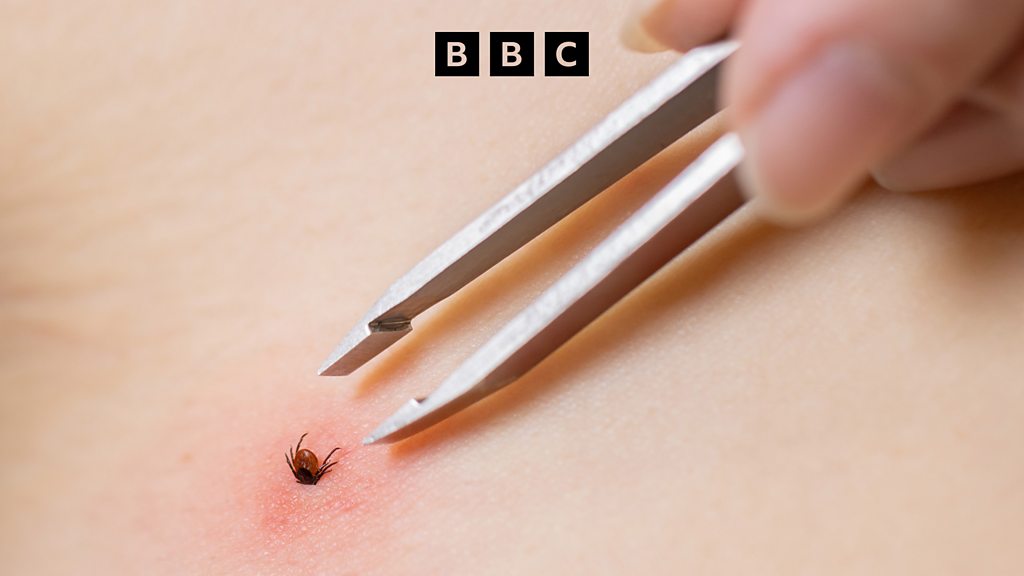
Lyme disease is a bacterial infection passed on to humans by infected ticks. Symptoms can range from fatigue, joint pain and a circular shaped rash to facial paralysis and heart arrythmia.

According to a British Medical Journal (BMJ) global health review, Lyme disease has likely infected about one in 10 people across the globe.

Recently, pop star Justin Timberlake went public about contracting the condition.

If treated quickly, most people will recover but there are still issues around diagnosing and treating Lyme disease.

And globally, cases are on the rise. In this edition of The Inquiry, Charmaine Cozier explores what's behind the increase and hears about new tests and vaccines currently being developed.

Contributors:
Dr Sally Mavin, clinical scientist and Director of the Scottish Lyme Disease and Tick-Borne Infections Reference Laboratory, Raigmore Hospital, Inverness, Scotland
Dr Armin Alaedini, Chief Scientific Officer, Global Lyme Alliance
Dr Gábor Földvári, research group leader, Centre for Ecological Research, Institute of Evolution, Budapest, Hungary
Dr Alessandra Luchini, Professor, School of Systems Biology, George Mason University, USA.

Presenter: Charmaine Cozier
Producers: Jill Collins and Emma Forde
Researcher: Maeve Schaffer
Technical producer: Richard Hannaford
Production Coordinator: Tammy Snow
Editor: Tara McDermott
 
Yes, interesting. Story from Wikipedia:
In 1988, McSweegan joined the National Institutes of Health's National Institute of Allergy and Infectious Diseases, and eventually became program officer for Lyme disease.[5] McSweegan was among a number of Lyme disease experts who were worried about the influence that an advocacy group was having over the NIH, some politicians, and the general public. The group, called Lyme Disease Foundation, promoted the belief in "chronic Lyme disease" and claimed that it required long-term, expensive, and unproven antibiotic treatments. The group was operated by two accountants, received funding from companies that sold intravenous antibiotics, and made claims that lacked scientific support. It also referred people with indeterminate symptoms to chronic Lyme disease-believing doctors who would diagnose them, even though evidence indicated most did not have Lyme disease.[6]

Beginning in 1995, McSweegan denounced the Lyme Disease Foundation in his personal time and continued to speak out against the group's influence on the NIH.[7][5] The NIH eventually removed him from responsibilities, both related and unrelated to Lyme disease. The media characterized the NIH's actions as retaliation for McSweegan blowing the whistle on NIH mismanagement.[8] In 1997, after noticing that his personal web site characterized the Lyme Disease Foundation as "whacko", the NIH suspended him for two weeks.[6] However, the NIH's own lawyers felt there was no basis for firing him. The Lyme Disease Foundation later sued McSweegan for slander, but lost. McSweegan won a countersuit against them. Through the process, he continued to receive positive job reviews.[7]

The NIH said it reassigned him to a post as director of the U.S.-Indo Vaccine Action Program. McSweegan told The Washington Post in 2003 that he did not know he was director of that program, and was instead assigned tasks better suited for an intern.[5]

Reports by the Post and CBS News led Senator Chuck Grassley, then the chairman of the Senate Finance Committee, to demand that the NIH give McSweegan work. In a letter to Health and Human Services Secretary Tommy Thompson, Grassley questioned the NIH's uses of taxpayer money, saying it was unacceptable for the NIH to "come rattling a tin cup asking for more money" when it was forcing taxpayers to "pay for full-time novelists".[7] The NIH promised to investigate the allegations.[9]
 
Back
Top Bottom