Trial Report Clinical Improvements Following a Non-Aerobic Therapeutic Exercise in Women with Long COVID, 2025, Miana et al

forestglip

Moderator
Staff member
Clinical Improvements Following a Non-Aerobic Therapeutic Exercise in Women with Long COVID

Miana, María; Moreta-Fuentes, César; Moreta-Fuentes, Ricardo; Varillas-Delgado, David; Jiménez-Antona, Carmen; Laguarta-Val, Sofía

[Line breaks added]

Background/Objectives: Long COVID (LC) is characterized by persistent symptoms such as fatigue, pain, and reduced quality of life, often lasting months after acute infection. Exercise-based interventions have shown promise, but evidence for non-aerobic programs remains limited. This study aimed to evaluate the effects of a 12-week motor control exercise program on body composition and fatigue in women with LC and to explore associations with physical activity and psychosocial factors.

Methods: An exploratory pre–post non-controlled intervention study was conducted in 17 women with LC symptoms persisting for over one year. Participants completed 24 individualized sessions of a non-aerobic therapeutic exercise program focused on trunk stabilization.

Outcomes included body composition (bioimpedance analysis), fatigue (Modified Fatigue Impact Scale), health-related quality of life (EQ-5D-5L), physical activity (IPAQ), and kinesiophobia (TSK-11). Paired t-tests, effect sizes, correlations, and regression models were applied.

Results: The intervention significantly reduced total body fat (37.09% to 35.41%, p < 0.001) and trunk fat (35.82% to 33.82%, p < 0.001), with large effect sizes. Physical and psychosocial fatigue improved markedly (MFIS physical: 29.71 to 21.06, p < 0.001; psychosocial: 6.00 to 4.29, p = 0.001), while cognitive fatigue showed non-significant change. Pain/discomfort scores decreased substantially (2.86 to 1.79, p < 0.001).

Vigorous activity and walking time increased, and sedentary time decreased. No significant changes were observed in muscle mass or kinesiophobia.

Conclusions: A structured, non-aerobic exercise program can effectively reduce body fat, alleviate fatigue, and improve pain perception in women with LC, supporting its role in rehabilitation. Multimodal strategies may be required to address cognitive symptoms and fear of movement.

Web | DOI | PMC | PDF | Journal of Clinical Medicine | Open Access
 
Clinical manifestations are diverse and frequently include persistent fatigue, dyspnea, cognitive deficits, sleep disturbances, myalgia, headaches, impaired concentration, and psychological symptoms such as anxiety and post-traumatic stress.

Not sure why the following needs to be stated twice. I guess when you don't have reliable evidence just repeating the lie should work?

Beyond LC, non-aerobic exercise modalities have demonstrated benefits in other medically unexplained fatigue conditions, such as chronic fatigue syndrome (CFS) and fibromyalgia. Non-aerobic exercise modalities have shown benefits in conditions like chronic fatigue syndrome and fibromyalgia, suggesting potential for LC rehabilitation.

Aerobic exercise improves LC symptoms but may not be tolerated by all patients, highlighting the need for non-aerobic alternatives. However, these approaches may not be suitable for all patients, particularly those experiencing post-exertional malaise or severe fatigue. Non-aerobic interventions, including resistance training, core stabilization, and mind–body practices like tai chi and qigong, have shown promising results in related conditions such as chronic fatigue syndrome and fibromyalgia

However, tolerance varies considerably, and a substantial proportion of LC patients—particularly those experiencing post-exertional malaise—may not tolerate aerobic exercise.

An exploratory pre–post non-controlled intervention study was conducted […] attend a screening appointment with the Rehabilitation Physician […] resulting in an initial sample of 17 women. Compliance was 100%, and no participants dropped out during the 12-week intervention period.
 
The Tampa Scale of Kinesiophobia (TSK-11) was administered at both pre- and post intervention time points to assess fear of movement and (re)injury. The TSK-11 is a shortened version of the original 17-item instrument, excluding items 4, 8, 9, 12, 14, and 16. […] The total score is calculated by summing the responses across the 11 items, yielding a possible range from 11 to 44 points. Higher scores reflect greater levels of kinesiophobia, indicating a stronger fear of movement or reinjury. Interpretation of the TSK-11 is based on the total score, where a minimum score of 11 denotes negligible or absent kinesiophobia, and a maximum score of 44 indicates a severe fear of movement due to anticipated pain or injury. This scoring framework allows for the quantification of psychological barriers to physical activity, which may influence rehabilitation outcomes and adherence to exercise-based interventions.

Question from the back of the class. What score would you expect for someone with an uncasted both-bone mid-shaft forearm fracture? Does that indicate a psychological barrier to physical activity, rehabilitation and exercise-based interventions?

Participants engaged in a therapeutic exercise program designed to promote correct body alignment and optimal biomechanics […] The intervention focused on trunk stabilization through plank-based exercises […] Each session was structured into three phases: a 10 min warm-up, a 40 min core training segment, and a 10 min cool-down. The warm-up included 3 min of specific exercises (e.g., wall sits), 1 min of anterior plank on elbows and feet, 50 sit-ups, and 1 min of sustained sit-ups.

That's the warm-up.

The core training phase focused on trunk musculature and incorporated exercises targeting the abdominal muscles, gluteus maximus and medius, pelvic bridge, and various plank positions (anterior plank on elbows or hands with extended arms, and side plank). The cool-down phase consisted of breathing exercises, stretching, and muscle relaxation techniques.

Participants progressively increased their workload throughout the intervention. In the initial sessions, they performed between 150 and 200 sit-ups per class, reaching 300 to 400 repetitions by the end of the program.

no participant experienced adverse effects or required discontinuation of the program.

Erm. I'm pretty confident we can say none of these patients had ME/CFS.

Following the intervention, several dimensions of physical activity assessed by the IPAQ showed meaningful changes. Notably, vigorous physical activity (IPAQ-1) significantly increased from 0.77 to 1.85 days per week (p = 0.048, ES = −0.698), indicating a substantial improvement in high-intensity exercise engagement. Similarly, time spent walking (IPAQ-4.2) rose markedly from 27.50 to 63.75 min per day (p = 0.041, ES = −1.415), and the number of days walking at least 10 min (IPAQ-4.1) decreased significantly from 1.80 to 1.03 (p = 0.020, ES = 1.789). Additionally, time spent sitting on weekdays (IPAQ-6) decreased significantly from 1.57 to 1.13 h (p = 0.036, ES = 1.069), suggesting a reduction in sedentary behavior.

I don't know anyone that sits only for an hour or two: sick or healthy. As best I can see the normal range should be at least 6-7 hours.
 
Changes in kinesiophobia were evaluated using the TSK-11. The total score showed a slight reduction from 24.29 pre-intervention to 23.29 post-intervention, with no statistically significant difference and a small effect size (p = 0.863, ES = 0.172). This suggests that the intervention had a limited impact on overall fear of movement or reinjury. Among individual items, the greatest improvements were observed in the statements “I’m afraid that I might injure myself if I exercise” and “Pain always means I have injured my body,” with moderate effect sizes although neither reached statistical significance (p = 0.112, ES = 0.473 and p = 0.219, ES = 0.387, respectively). These trends may indicate a partial shift in pain-related beliefs and attitudes toward physical activity.

Conversely, some items showed minimal or even negative changes, such as “My body is telling me I have something dangerously wrong” and “My accident has put my body at risk for the rest of my life,” with negligible effect sizes and non-significant p-values. Interestingly, the item “I wouldn’t have this much pain if there weren’t something potentially dangerous going on in my body” increased slightly post-intervention, suggesting a potential reinforcement of maladaptive beliefs in some participants.

Maybe some did have PEM after all?

Overall, while the intervention did not significantly reduce kinesiophobia, certain cognitive aspects related to fear of movement showed promising trends that warrant further investigation in larger samples or with more targeted psychological strategies.

Of course. Always with the "promising."

no significant correlations were observed between muscle mass change and MFIS or TSK-11, suggesting that psychological factors may have a limited direct influence on muscle hypertrophy in this context.

Or maybe your questionnaires are not fit for purpose. (Perhaps they can be rehabilitated.)
 
Not sure why the following needs to be stated twice. I guess when you don't have reliable evidence just repeating the lie should work?
Repeating a previous statement or claim, just with different wording, is something that AI generated text frequently does.

--------

Participants engaged in a therapeutic exercise program designed to promote correct body alignment and optimal biomechanics

And the evidence for patients having significantly greater incorrect body alignment and sub-optimal biomechanics compared to the general population is...?

The total score showed a slight reduction from 24.29 pre-intervention to 23.29 post-intervention, with no statistically significant difference and a small effect size (p = 0.863, ES = 0.172). This suggests that the intervention had a limited impact on overall fear of movement or reinjury.

Or that kinesiophobia isn't a factor.

Or maybe your questionnaires are not fit for purpose. (Perhaps they can be rehabilitated.)
How do you expect to succeed in modern BPS medicine with that attitude, Dr G?
 
Last edited:
Similarly, time spent walking (IPAQ-4.2) rose markedly from 27.50 to 63.75 min per day (p = 0.041, ES = −1.415), and the number of days walking at least 10 min (IPAQ-4.1) decreased significantly from 1.80 to 1.03 (p = 0.020, ES = 1.789).
So they walked more overall, but had more days where they walked less then 10 minutes?
Does the time spent walking only include days where they walked more then 10 minutes?
 
Same author and same number of participants as this paper, which likewise makes several extremely unlikely claims. Frankly none of it passes the sniff test.
 
So they walked more overall, but had more days where they walked less then 10 minutes?
Does the time spent walking only include days where they walked more then 10 minutes?
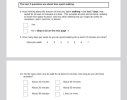
I think you're right. The questions of the International Physical Activity Questionnaire (IPAQ) related to walking look like what you suggest:
iMarkup_20251231_085825.jpg

So they walked an average of 27.5 minutes on active days and an average 1.8 active days a week before, and they walked 63.75 min on active days, and 1.03 active days per week after.

Maybe the exercise program trained them to be much more active on one day a week, but they are in a crash and lost the ability to be active any other days of the week now.

Additionally, time spent sitting on weekdays (IPAQ-6) decreased significantly from 1.57 to 1.13 h (p = 0.036, ES = 1.069), suggesting a reduction in sedentary behavior.
I don't know anyone that sits only for an hour or two: sick or healthy. As best I can see the normal range should be at least 6-7 hours.
It's a weird question:
11. Now thinking about the amount of time you spent sitting in the last 7 days. Include time spent at work, at home, while doing course work and during leisure time. This may include time spent sitting at a desk, visiting friends, reading, or sitting or lying down to watch television.

Since when does sitting include lying down? I can imagine someone getting confused here and not counting all the time spent lying down for the sitting question. Maybe a decrease in sitting time is just an increase in non-TV lying down time.

[Edit: If sitting includes lying down], I agree baseline <2 hours sitting in a population that is fatigued seems strange. Are they working jobs where they're always standing? Or unemployed, yet still walking all the time?

Links: Long form questionnaire, short form, guidelines
 
Last edited:
I guess it's an approach. Looking at the exercise program, it's a pretty normal exercise routine that healthy people can see significant improvements on, as long as they have slightly above average level of fitness to begin with. It actually takes pretty good fitness and a lot of energy to even do the starting phase.

So why would people able to do a pretty rigorous exercise program need exercise coaching? Here the goal was to lose weight, which is not a problem in LC. They can already perform at an average level of performance for the general population, so clearly even if they do have some symptoms, they are not in need of any of this. Plus they achieved a very rare 100% adherence, meaning that every participant was clearly physically capable and in no need of doing more.

They lost weight. OK. So? It's not a problem in LC, and this is exactly what is expected from people who engage in a rigorous exercise program. But the people who see health care professionals are not capable of that level of performance, it's why we go and seek help.

Also, what the hell does asking about this fantasy "fear of exercise" in people who can engage in such rigorous physical activity? It makes zero sense, the self-selection effect is stronger here than asking about beliefs in astrology at an astrology convention. This is such a extremely biased study that even having good controls wouldn't matter.

Then you have to consider the fact that they assessed the participants as meeting their criteria for requiring being coached into a rigorous training program, which only emphasizes just how useless those assessments can be. Does it really make sense to anyone that someone who is able to do 150-200 sit-ups, among many other exercises, is someone who is ill with disabling fatigue? Or is representative of what people mean by Long Covid, even ignoring the fact that for many the symptoms are loss of smell and other things that have nothing to do with physical function.

The Modified Fatigue Impact Scale physical sub-scale has a 36 maximum, this group rated an average of 29, and they were able to perform a pretty standard exercise routine for someone with good fitness and even increase it with 100% adherence. And this makes sense to them. These people are close to the highest level of fatigue, but they can perform at an average level of exertion with no problem. And none of the professionals involved find anything wrong with that? Or the peer reviewers. Or anyone who approved of the study. This obviously proves those questionnaires are unfit for purpose. Which, duh. Look at the questions and how weird and ambiguous some of the questions are. They're basically the ink blot version of words.

Junk studies like this are actually passing what the tobacco industry did in sheer nonsense and dishonesty.
 
The participants sat for less than 2 hours a day, but also only walked 10+ minutes at a time 1 or 2 days a week? Maybe they were paying musical chairs the whole time?

This study seems like a good example of how unreliable questionaries are -- both in terms of people trying to accurately recall the time they spent on things and in researchers/us trying to interpret what they meant.

In an attempt to make this make sense I'm wondering if this part
[...] the number of days walking at least 10 min (IPAQ-4.1) decreased significantly from 1.80 to 1.03 (p = 0.020, ES = 1.789).
might not actually mean 1.8 or 1.03 *days*? I found a version of the IPAQ where this question got scored on a 1-3 scale with 1 being "few days per week" and 3 being "many". [Edited to add:] But that would be a really weird reading of that sentence, and still leaves the participants seemingly claiming they both walked and sat very little.
 
Last edited:
might not actually mean 1.8 or 1.03 *days*. I found a version of the IPAQ where this question got scored on a 1-3 scale with 1 being "few days per week" and 3 being "many". But that still leaves the participants seemingly claiming they both walked and sat very little.
If that is the case, they worded it wrong in the text by saying number of days. Still would mean they are walking less anyway.

---

A paper talking about the sitting question being unclear:

What do IPAQ questions mean to older adults? Lessons from cognitive interviews (2010, International Journal of Behavioral Nutrition and Physical Activity)
Participants were 41 community-dwelling adults aged 65-89 years. They each completed IPAQ in a face-to-face semi-structured interview, using the "think-aloud" method, in which they expressed their thoughts out loud as they answered IPAQ questions.
Data gathered about the sitting question revealed that some participants were unclear which activities not listed as examples of sitting were to be included. Some participants reasoned that lying down activities should not be included while others concluded that naps and lying down while not reading or watching television should be counted as sitting. One woman asked, "I mean, is sitting down not standing up?"

The thread paper also just glosses over the decreased number of days walking >10 minutes and never references it when making conclusions about how activity changed.
 
If that is the case, they worded it wrong in the text by saying number of days. Still would mean they are walking less anyway.
Yes I agree completely. It literally says “days” — I was just trying to come up with some way of making their combined claims about walking+sitting make any sense at all, but it’s pretty feeble.

That paper on the unclear questionnaire is a good find.
 
I submitted a comment to PubPeer, though it still needs to be approved before showing up. I can still update in case anyone sees any glaring issues.


From the results section of Miana et al.:
Notably, vigorous physical activity (IPAQ-1) significantly increased from 0.77 to 1.85 days per week (p = 0.048, ES = −0.698), indicating a substantial improvement in high-intensity exercise engagement. Similarly, time spent walking (IPAQ-4.2) rose markedly from 27.50 to 63.75 min per day (p = 0.041, ES = −1.415), and the number of days walking at least 10 min (IPAQ-4.1) decreased significantly from 1.80 to 1.03 (p = 0.020, ES = 1.789). Additionally, time spent sitting on weekdays (IPAQ-6) decreased significantly from 1.57 to 1.13 h (p = 0.036, ES = 1.069), suggesting a reduction in sedentary behavior.

According to interviewer instructions for the International Physical Activity Questionnaire (IPAQ), the question related to sitting is meant to also include all time spent lying down while awake. [1] If this is the case, the finding of sitting or lying down less than approximately 2 hours per day seems very low for a population that suffers from fatigue due to long COVID. A study which used the IPAQ to assess sitting time of representative populations from 20 countries found a median sitting time of 300 minutes and a mean sitting time of 346.2 minutes when considering the total population. When only considering Spain, the country in which Miana et al. tested their intervention, the median sitting time was also 300 minutes per day. [2] It seems implausible that, at baseline, a population suffering from long COVID would be sitting/lying down about three times less than general population averages.

It is possible that the participants thought that the sitting question did not include time lying down, and a decrease in sitting time might have indicated an increase in lying down time, and thus an increase in sedentary behavior. The question in the IPAQ itself is not very clear, only giving an example of lying down in the context of watching TV [1] :
Now think about the time you spent sitting on weekdays during the last 7 days. Include time spent at work, at home, while doing course work, and during leisure time. This may include time spent sitting at a desk, visiting friends, reading or sitting or lying down to watch television.

A study which assessed older adults' understanding of the IPAQ questions found that there was confusion about the sitting question [3] :
Data gathered about the sitting question revealed that some participants were unclear which activities not listed as examples of sitting were to be included. Some participants reasoned that lying down activities should not be included while others concluded that naps and lying down while not reading or watching television should be counted as sitting. One woman asked, "I mean, is sitting down not standing up?"

It should also be noted that Miana et al. report a decreased number of days in which a participant walks for at least 10 minutes at a time (from 1.80 to 1.03 days/week). While this may be due to walking being replaced by vigorous physical activity (which increased from 0.77 to 1.85 days/week), the participants may have walked less due to rebound fatigue after the days that they performed vigorous physical activity. This would be consistent with the symptom of post-exertional malaise (PEM), which commonly occurs in patients with long COVID, and refers to substantially increased and prolonged symptoms after even minor physical or cognitive exertion. [4]

The authors do not note the above potential limitations in the discussion of their results. It is important to consider whether the sitting finding is accurate, and whether the findings might in fact be consistent with worsening due to PEM.

1. Craig, CORA L., et al. “International Physical Activity Questionnaire: 12-Country Reliability and Validity.” _Medicine & Science in Sports & Exercise_, vol. 35, no. 8, Aug. 2003, pp. 1381–95, https://doi.org/10.1249/01.MSS.0000078924.61453.FB.

2. Bauman, Adrian, et al. “The Descriptive Epidemiology of Sitting.” _American Journal of Preventive Medicine_, vol. 41, no. 2, Aug. 2011, pp. 228–35, https://doi.org/10.1016/j.amepre.2011.05.003.

3. Heesch, Kristiann C., et al. “What Do IPAQ Questions Mean to Older Adults? Lessons from Cognitive Interviews.” _International Journal of Behavioral Nutrition and Physical Activity_, vol. 7, no. 1, 2010, p. 35, https://doi.org/10.1186/1479-5868-7-35.

4. Pouliopoulou, Dimitra V., et al. “Prevalence and Impact of Postexertional Malaise on Recovery in Adults with Post-COVID-19 Condition: A Systematic Review with Meta-Analysis.” _Archives of Physical Medicine and Rehabilitation_, W.B. Saunders, Feb. 2025, https://doi.org/10.1016/j.apmr.2025.01.471.

---

Edit: I removed this paragraph because even though they don't say when they assessed activity, it's hard to imagine they would ask about the last 7 days of physical activity immediately after the trial:
The study does not state how long after the trial the physical activity levels were assessed with the IPAQ, thus it is unclear if the participants may have included time spent performing the study's intervention when considering days spent performing vigorous activity, in which case the results would not accurately reflect post-intervention activity levels.
 
Last edited:
I submitted a comment to PubPeer, though it still needs to be approved before showing up. I can still update in case anyone sees any glaring issues.


From the results section of Miana et al.:


According to interviewer instructions for the International Physical Activity Questionnaire (IPAQ), the question related to sitting is meant to also include all time spent lying down while awake. [1] If this is the case, the finding of sitting or lying down less than approximately 2 hours per day seems very low for a population that suffers from fatigue due to long COVID. A study which used the IPAQ to assess sitting time of representative populations from 20 countries found a median sitting time of 300 minutes and a mean sitting time of 346.2 minutes when considering the total population. When only considering Spain, the country in which Miana et al. tested their intervention, the median sitting time was also 300 minutes per day. [2] It seems implausible that, at baseline, a population suffering from long COVID would be sitting/lying down about three times less than general population averages.

It is possible that the participants thought that the sitting question did not include time lying down, and a decrease in sitting time might have indicated an increase in lying down time, and thus an increase in sedentary behavior. The question in the IPAQ itself is not very clear, only giving an example of lying down in the context of watching TV [1] :


A study which assessed older adults' understanding of the IPAQ questions found that there was confusion about the sitting question [3] :


It should also be noted that Miana et al. report a decreased number of days in which a participant walks for at least 10 minutes at a time (from 1.80 to 1.03 days/week). While this may be due to walking being replaced by vigorous physical activity (which increased from 0.77 to 1.85 days/week), the participants may have walked less due to rebound fatigue after the days that they performed vigorous physical activity. This would be consistent with the symptom of post-exertional malaise (PEM), which commonly occurs in patients with long COVID, and refers to substantially increased and prolonged symptoms after even minor physical or cognitive exertion. [4]

The authors do not note the above potential limitations in the discussion of their results. It is important to consider whether the sitting finding is accurate, and whether the findings might in fact be consistent with worsening due to PEM.

1. Craig, CORA L., et al. “International Physical Activity Questionnaire: 12-Country Reliability and Validity.” _Medicine & Science in Sports & Exercise_, vol. 35, no. 8, Aug. 2003, pp. 1381–95, https://doi.org/10.1249/01.MSS.0000078924.61453.FB.

2. Bauman, Adrian, et al. “The Descriptive Epidemiology of Sitting.” _American Journal of Preventive Medicine_, vol. 41, no. 2, Aug. 2011, pp. 228–35, https://doi.org/10.1016/j.amepre.2011.05.003.

3. Heesch, Kristiann C., et al. “What Do IPAQ Questions Mean to Older Adults? Lessons from Cognitive Interviews.” _International Journal of Behavioral Nutrition and Physical Activity_, vol. 7, no. 1, 2010, p. 35, https://doi.org/10.1186/1479-5868-7-35.

4. Pouliopoulou, Dimitra V., et al. “Prevalence and Impact of Postexertional Malaise on Recovery in Adults with Post-COVID-19 Condition: A Systematic Review with Meta-Analysis.” _Archives of Physical Medicine and Rehabilitation_, W.B. Saunders, Feb. 2025, https://doi.org/10.1016/j.apmr.2025.01.471.

---

Edit: I removed this paragraph because even though they don't say when they assessed activity, it's hard to imagine they would ask about the last 7 days of physical activity immediately after the trial:
Amazing! You put my thoughts into words.
 
Back
Top Bottom